
 Share
Share


 Print
PrintShenzhen-Milan fashion week expands global cooperation
Writer: Song Yingwen | Editor: Cao Zhen | From: Original | Updated: 2026-07-20
The 2026 Shenzhen-Milan Lifestyle Week brought together fashion professionals, designers and cultural representatives from Italy, Peru, Malaysia, South Korea and other countries and regions on July 17-19 to explore new opportunities at the intersection of fashion, technology and industry.
Held under the theme “Digital Fashion, Oriental Expression,” the event marked the third edition of the fashion week, which has evolved from a China-Italy exchange platform into a broader international cooperation network involving Europe and the Asia-Pacific region.
At the opening ceremony, traditional Chinese cultural elements, including Cantonese opera and digital light displays, were combined with contemporary fashion presentations. Chinese and Italian brands shared the runway, showcasing different approaches to aesthetics, craftsmanship and design.
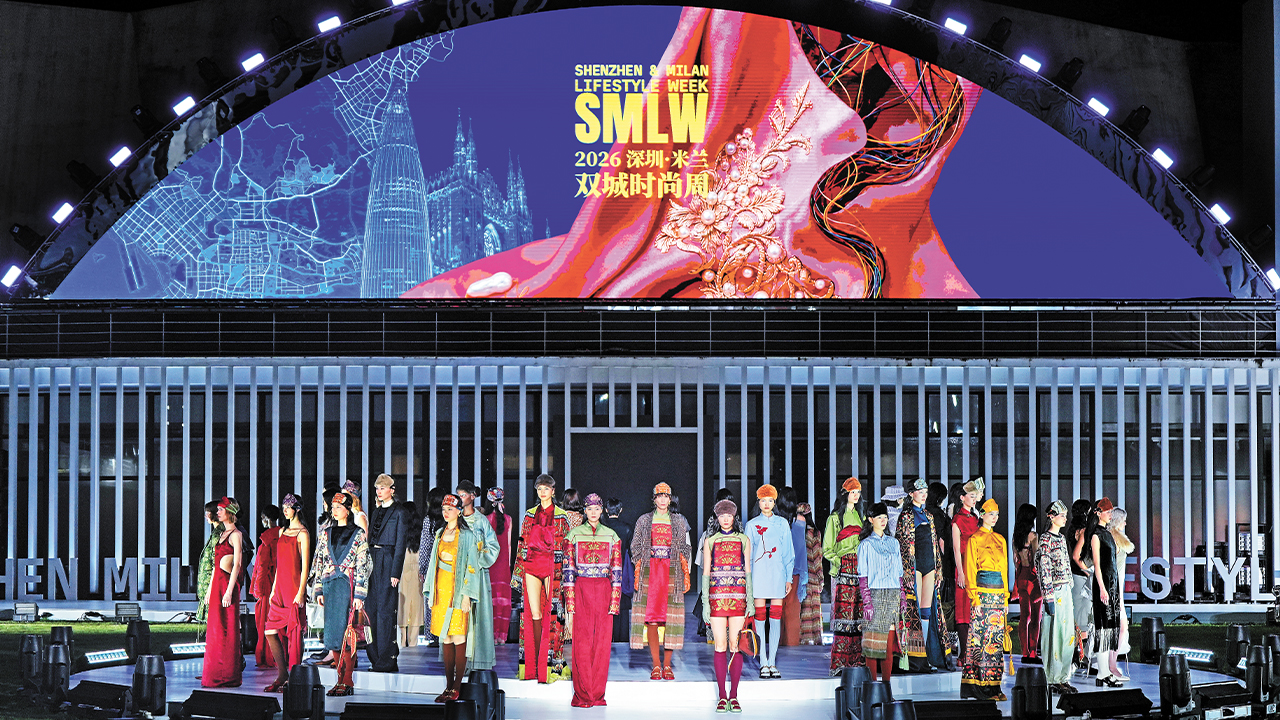
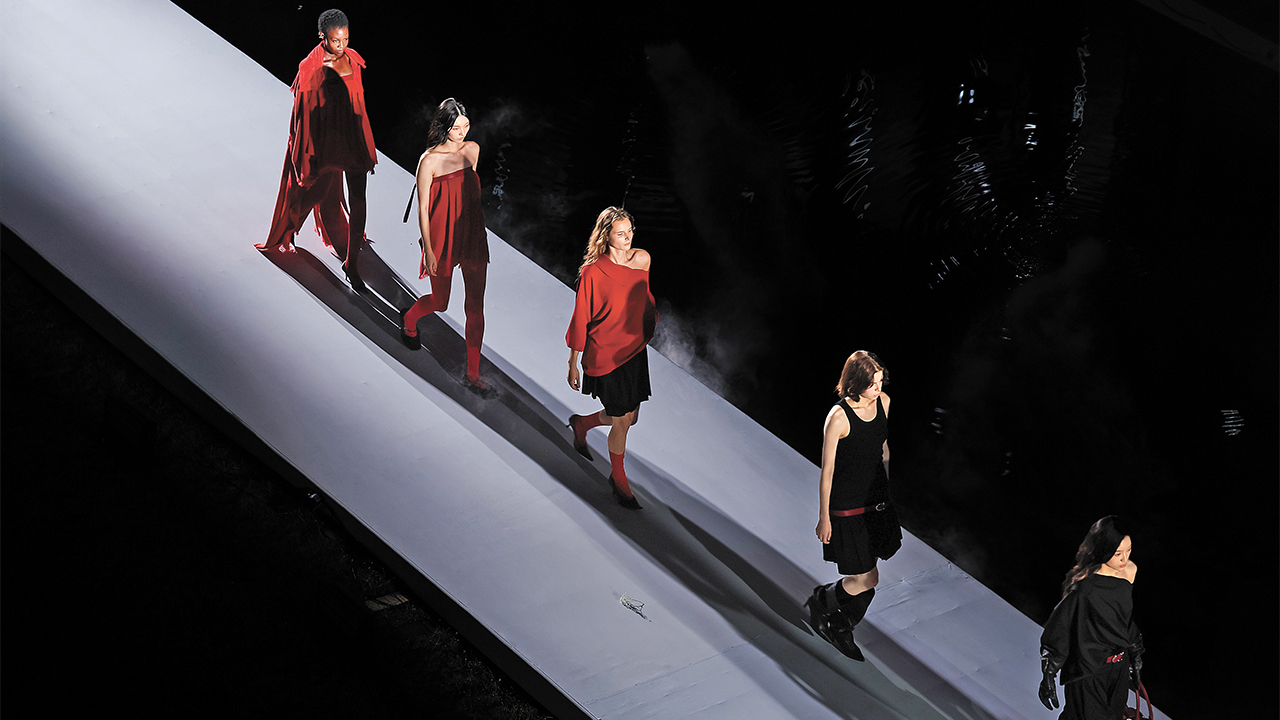
Models present designs during the 2026 Shenzhen-Milan Lifestyle Week. Photos by Cai Weize and Yang Zixuan
For Zhao Huizhou, founder and chief designer of Shenzhen-based fashion group EACHWAY and founder of high-end womenswear brand HUI, the event represents more than a fashion showcase.
“The significance of the dual-city fashion week lies not only in presenting fashion, but also in building a bridge for continuous communication and cooperation between the Chinese and Italian fashion industries,” Zhao said.
Feng Changhong, chairwoman of the Shenzhen Industrial Design Association, said the event reflected a shift in Chinese design — from introducing products overseas to engaging in global creative collaboration.
“Chinese brands and Italian brands can meet on the same runway to exchange ideas, integrate different design approaches and allow audiences to experience both the appeal of Eastern aesthetics and the craftsmanship of Italian fashion,” Feng said.
This transformation is supported by Longhua’s growing fashion ecosystem. Dalang Fashion Town has attracted more than 700 fashion-related companies and over 300 independent brands, forming an industrial chain covering design, manufacturing, branding and supply-chain services.
Meanwhile, technologies such as artificial intelligence-assisted design, digital research and development, and intelligent manufacturing are reshaping the traditional fashion industry, creating new possibilities for collaboration between creativity and technology.
Fashion as a language of cultural exchange
During the event, the “Digital Fashion: Oriental Expression” immersive exhibition presented a creative journey combining traditional materials such as silk, ceramics and jewelry with digital interaction and smart technologies.
Cultural activities held during the fashion week, including the China-Italy Cultural Exchange Forum and Luhu Fashion Night, further explored how heritage and innovation can inspire new forms of international communication.
Han Han, an associate professor of design at Shenzhen University and a Ph.D. graduate of Politecnico di Milano, said Shenzhen and Milan share a common understanding of design as a driver of urban development.
“Milan represents historical heritage and accumulated design traditions, while Shenzhen represents innovation, rapid transformation and efficient industrial implementation,” Han said. “The combination of these strengths creates great potential for future cooperation in fashion, creativity and design.”
For Han, fashion has expanded beyond clothing to become a way of connecting industries, lifestyles and cultures. In the digital era, Han said, Oriental expression is not simply about presenting traditional culture, but about creating new forms of international communication.
From a two-city partnership to broader cooperation
Compared with previous editions, this year’s fashion week saw wider international participation, with guests from multiple countries joining discussions and visiting local fashion, technology and cultural sites.
During the “Digital Fashion Exploration Tour,” international guests visited the EACHWAY Fashion Museum, Yinger Fashion Group headquarters, HarmonyOS ecosystem facilities and Guanlan Ancient Market to experience how Longhua integrates fashion, technology and cultural resources.
Victor Gustavo Frente Melendez, director of FabLab Peru, said Shenzhen’s strength lies in the close connection between technology, design, industry and innovation. He suggested expanding cooperation beyond Shenzhen and Milan by exploring potential collaboration among Shenzhen, Milan and Lima.
Li Jianye, a representative from Malaysia, said Shenzhen and Milan complement each other, with Milan’s international fashion influence and Shenzhen’s ability to rapidly transform ideas into products and industrial applications.
As Shenzhen continues to strengthen international exchanges ahead of the 33rd APEC Economic Leaders’ Meeting, the fashion week reflects a broader trend: fashion is becoming not only a creative industry, but also a platform connecting cities, cultures and global innovation networks.