
 Share
Share


 Print
PrintCutting-edge tech in Longhua wows American youth
Writer: Zhang Yu | Editor: Lin Qiuying | From: Original | Updated: 2026-07-15
Video by Wang Haolan
“I just texted my dad — we really need one of these for our yard!” Standing in the exhibition hall of Shenzhen Hanyang Co., Ltd., Brogen O’Leary, a graduate from the University of Wisconsin-River Falls, pointed at the Yarbo multi-functional yard robot, brimming with excitement as if he had stumbled upon a game-changing invention.
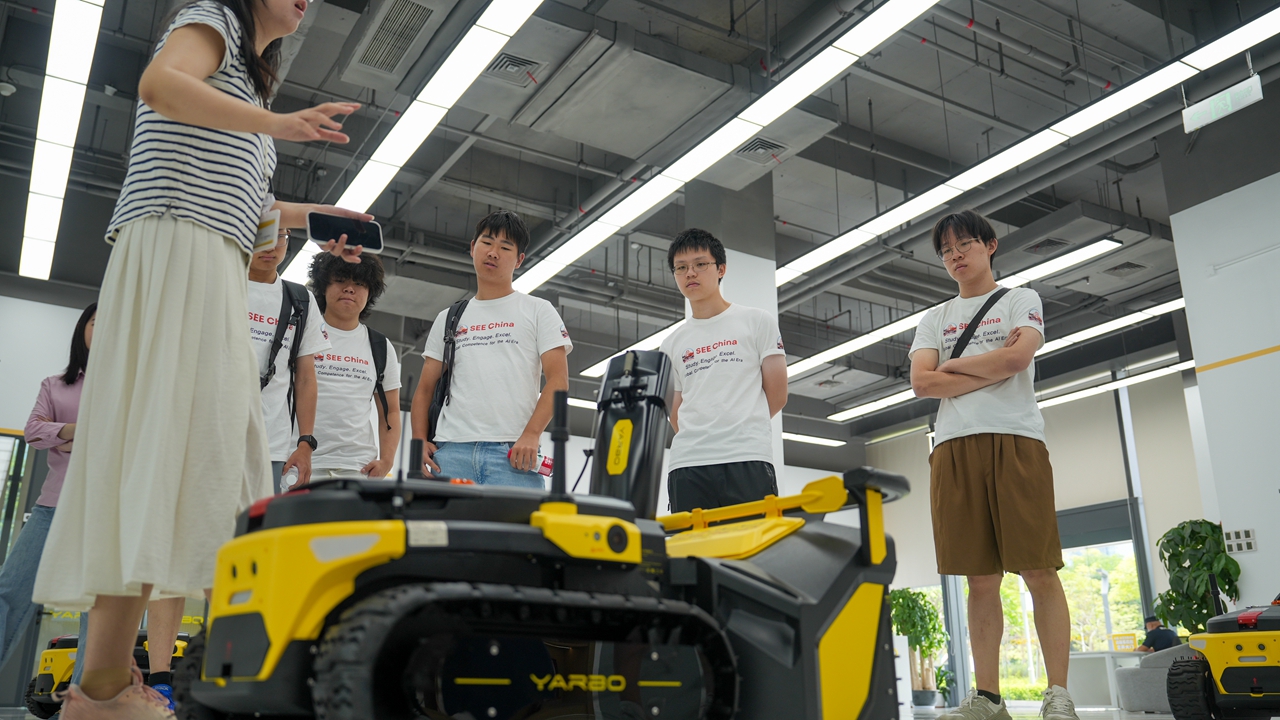
American students participating in the "SEE China" educational program listen to a presentation on the Yarbo multifunctional yard robot at Shenzhen Hanyang Co., Ltd. in Shenzhen's Longhua District on July 13. Photos by Lin Jianping
On July 13, 13 young American students participating in the “SEE China” educational program organized by U.S. nonprofit organization Youth4AM visited Longhua District in Shenzhen.
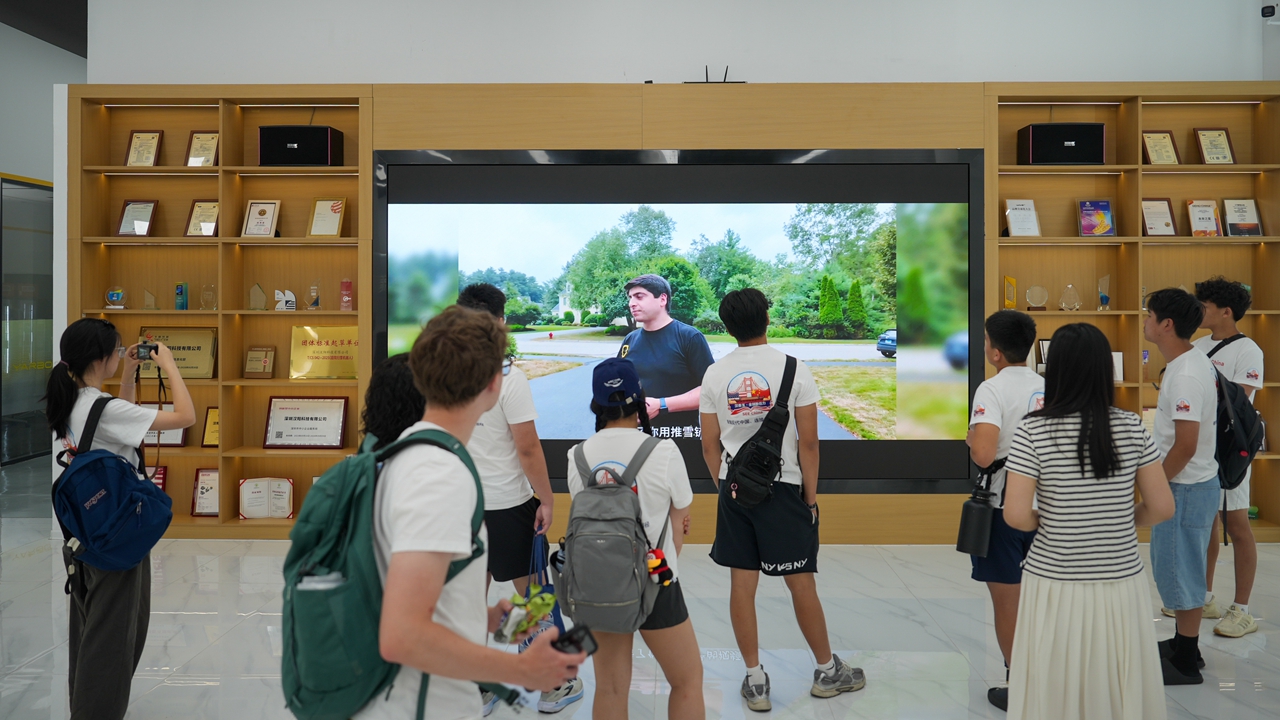
American students participating in the "SEE China" educational program watch a product demonstration at Shenzhen Hanyang Co., Ltd. in Longhua District on July 13.
Their first stop was the Longhua International Cooperation Center (LICC), followed by tours in the Harmony Ecosystem Innovation Center Experience Hall, Shenzhen Hanyang Co., Ltd., Leyard, and the Zhifei Global UAV Training Academy. They got hands-on experience with smart devices, cross-scenario interconnected systems, yard robots, high-definition LED displays, low-altitude economy drones and other cutting-edge innovations, gaining firsthand insight into Shenzhen’s digital innovation landscape.
Yard robots, LED displays impress US students
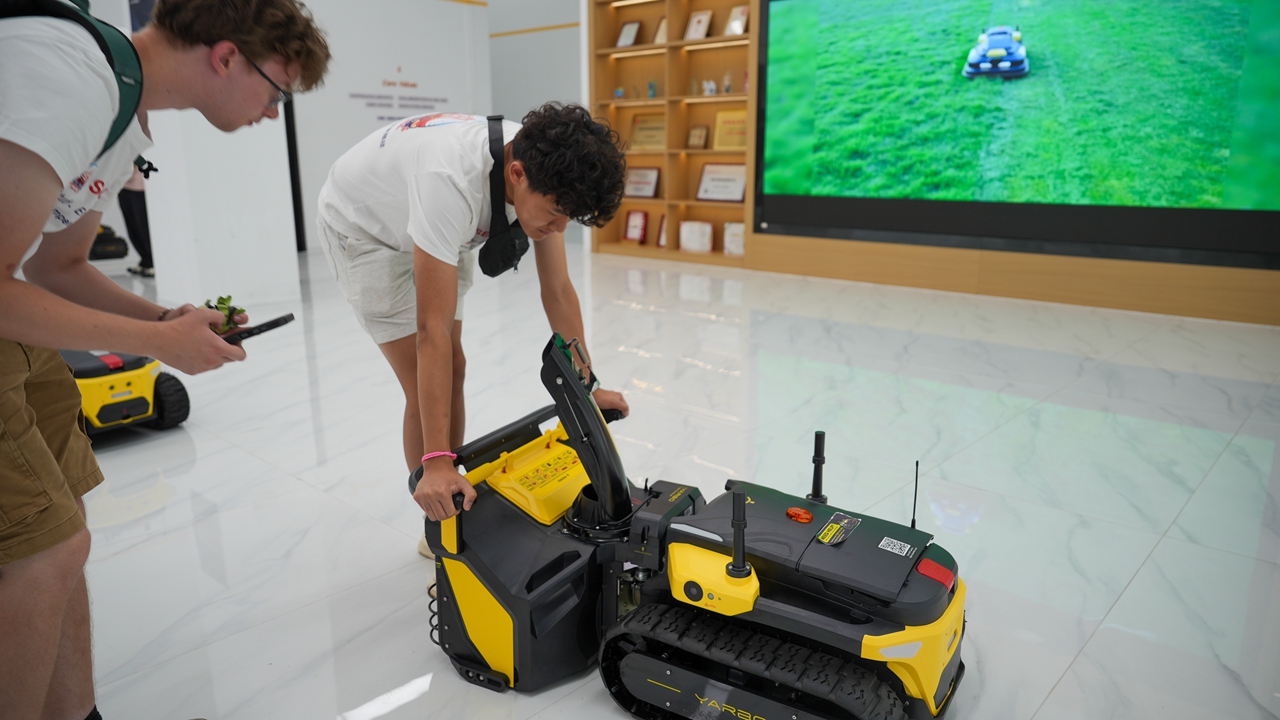
American students examine the Yarbo multifunctional yard robot during a visit to Shenzhen Hanyang Co., Ltd. in Longhua District on July 13 as part of the "SEE China" educational program.
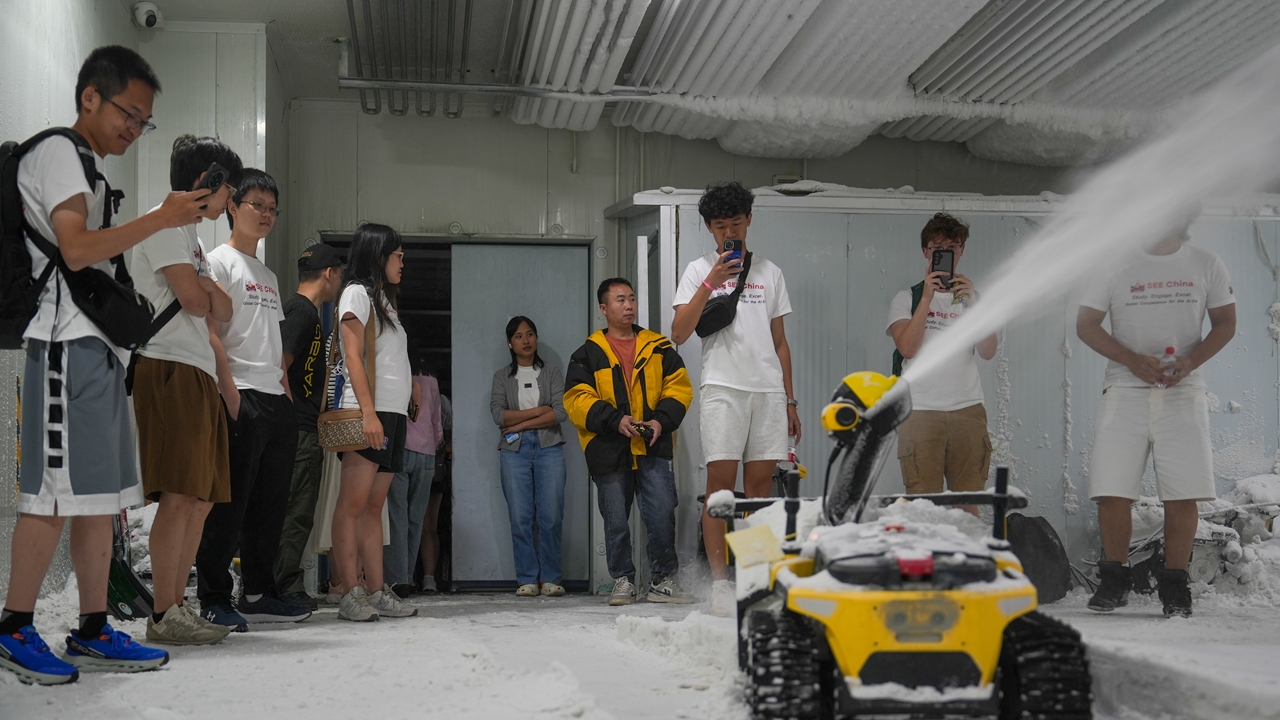
American students watch a demonstration of the Yarbo multifunctional yard robot's snow-removal attachment inside a simulated winter testing environment at Shenzhen Hanyang Co., Ltd. in Longhua District on July 13.
For O’Leary, the site visit felt like a custom tour tailored to his family’s daily needs. His family owns roughly six acres (24,280 square meters) of land with a 200-meter private driveway, which means hours of grueling labor mowing grass in summer and shoveling snow every winter.
“In the U.S., most yard equipment is manual lawn mowers and snow blowers. The most advanced option we have is a Roomba indoor vacuum — there’s nothing fully automated for year-round outdoor work,” Brogen lingered by the Yarbo display. Equipped with interchangeable attachments, the robot can mow lawns, blow leaves and remove snow throughout the year, with impressive battery life and wide coverage range. He immediately told his family about the robot after the tour and is considering purchasing one for their property.
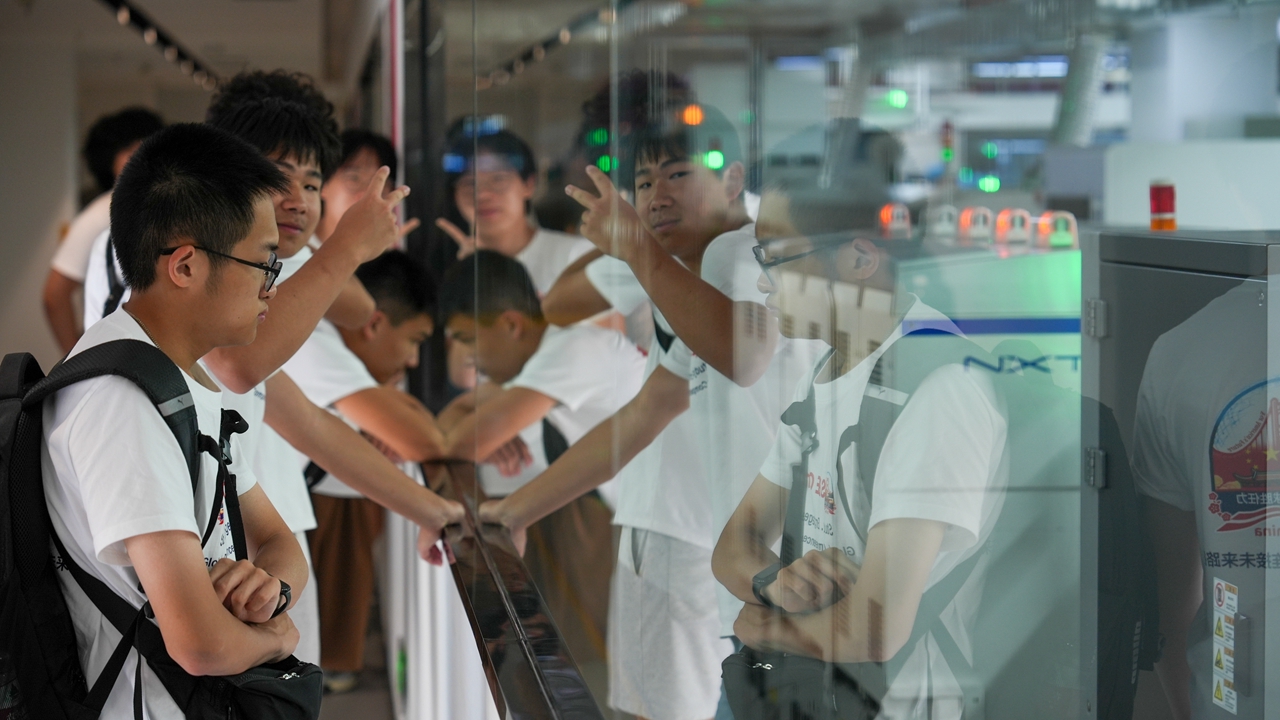
American students participating in the "SEE China" educational program observe an automated production line at Leyard in Longhua District on July 13.
Leyard’s immersive LED displays made an even stronger impression on him.“The screens at the shooting simulation zone realistically simulate gun recoil with highly accurate tracking.” He was equally amazed by the theater-grade giant screens: “Picture quality stays crisp and vivid no matter how bright the room is. Back home, I always have to close all the blinds to avoid screen glare when watching TV.”
Unlike traditional LCD displays, which can be costly to repair when damaged, these LED panels feature a modular design — damaged segments can be replaced individually, drastically boosting practicality, he said.
If the yard robot and LED displays solved everyday pain points familiar to American households, Shenzhen’s mature low-altitude economy gave O’Leary a new perspective onurban tech efficiency.
“We tried drone food delivery at a city park a few days ago. We ordered bubble tea, and it arrived lightning-fast with all the drinks intact, at a very affordable price.” He noted that large-scale commercial drone delivery services are not yet widely available in the United States. “Shenzhen lets us experience the future right here.” After piloting drones at the Zhifei Global UAV Training Academy, he marveled at Shenzhen’s complete industrial chain for low-altitude innovation and its wide range of real-world applications.
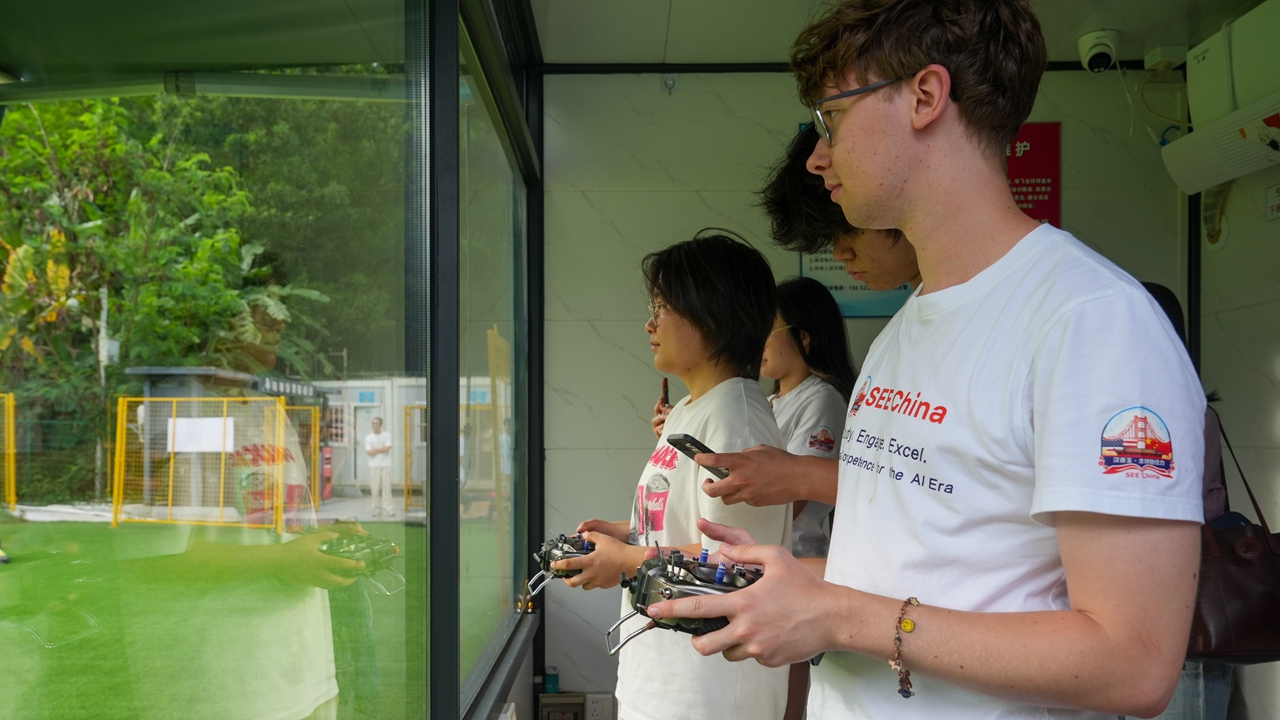 American students operate drones under instructors' guidance at the Zhifei Global UAV Training Academy in Longhua District on July 13.
A new vision for smart living
While heavy-duty outdoor tech captivated O’Leary, Sophia Lin, an incoming freshman at Cornell University, was blown away by the fully interconnected Harmony digital ecosystem.
“Every device seamlessly links together — phones, cars, home appliances, classroom whiteboards and student tablets. It’s absolutely stunning,” Lin has visited China multiple times, but this was her first deep dive into the Harmony ecosystem. She was particularly fascinated by smart classroom solutions.
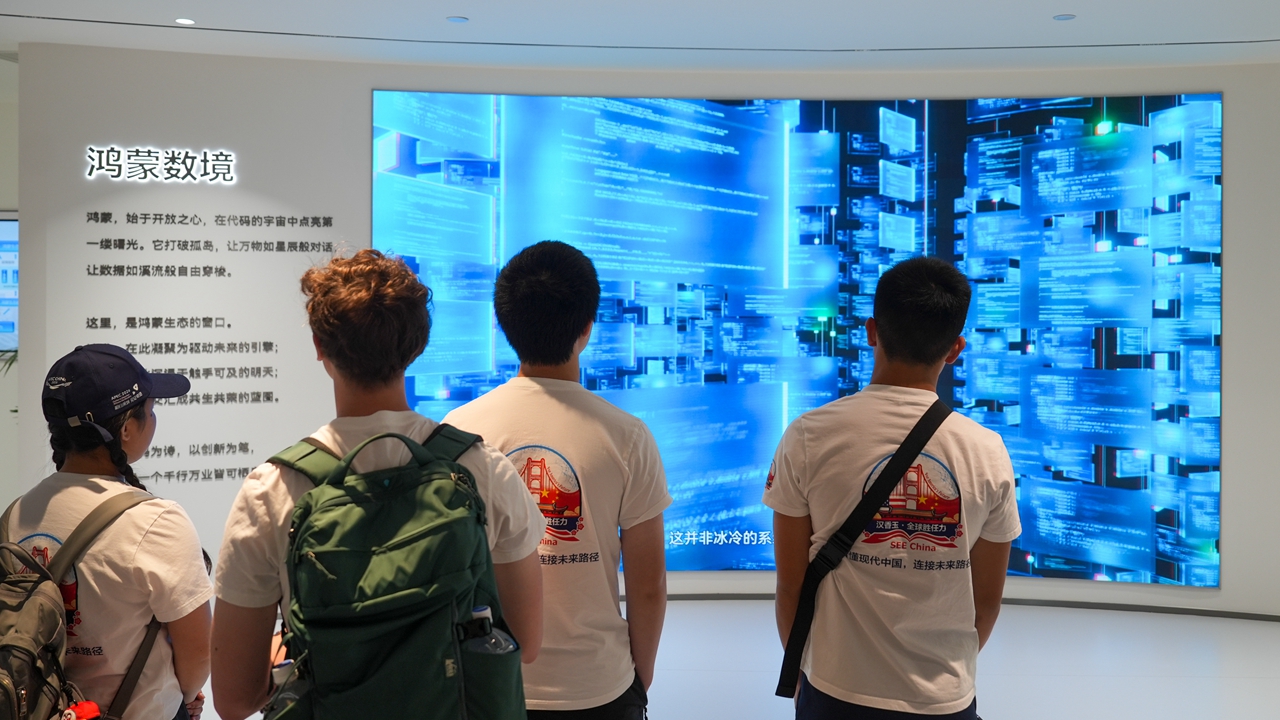
American students view an interactive digital exhibition at the Harmony Ecosystem Innovation Center Experience Hall in Longhua District on July 13.
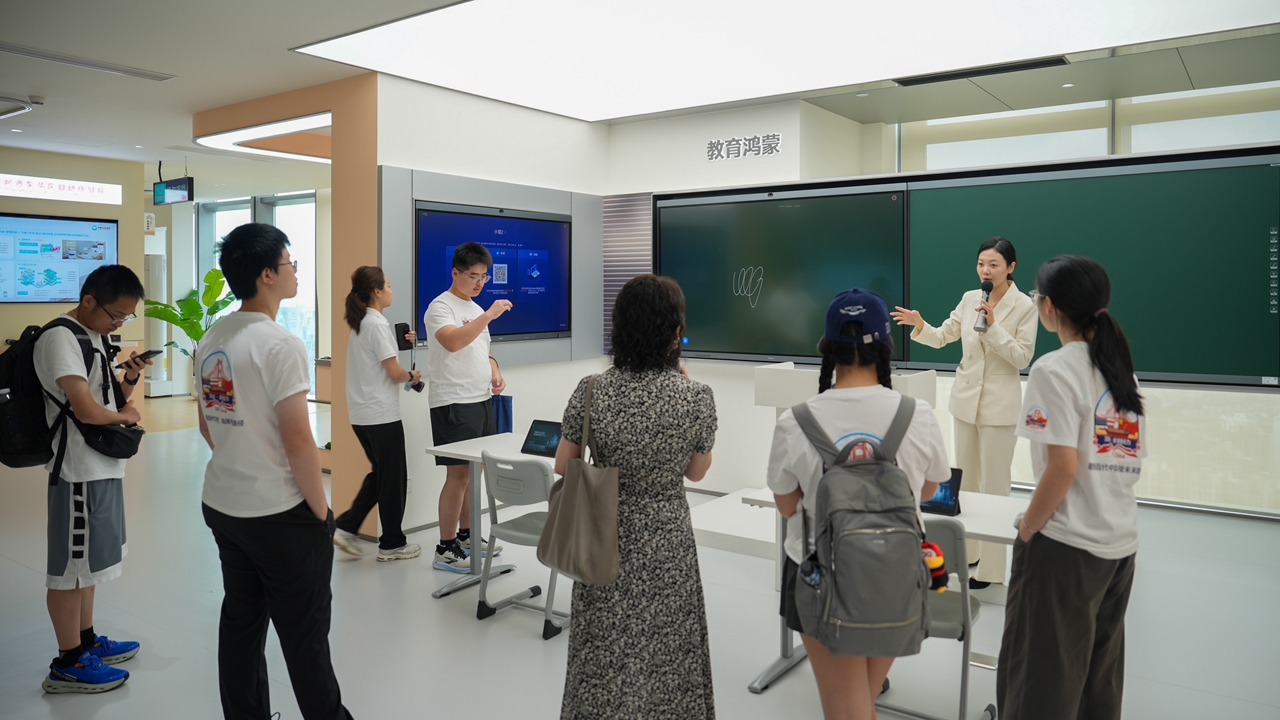
A staff member demonstrates a smart classroom powered by the Harmony ecosystem to American students participating in the "SEE China" educational program at the Harmony Ecosystem Innovation Center Experience Hall in Longhua District on July 13.
“Students can submit homework instantly via tablets, teachers can send annotated feedback back in one tap, and courseware syncs to every student’s device and the main smart screen. This streamlined digital teaching workflow is something I’ve never seen in U.S. schools,” Lin said. To her, Shenzhen is a young, dynamic city driven by constant innovation, and universal interconnected smart technology holds massive potential across all industries.
Michelle Chen, an education student at New York University, was equally impressed by the Yarbo multi-purpose yard robot, Leyard’s naked-eye 3D displays, and the academy’s drone training programs. She praised the robot’s interchangeable attachments, which adapt perfectly to seasonal yard maintenance tasks. The naked-eye 3D screens deliver immersive visuals that rival VR experiences, with vibrant imagery ideal for gaming and film, sparking public enthusiasm for technological advancement.
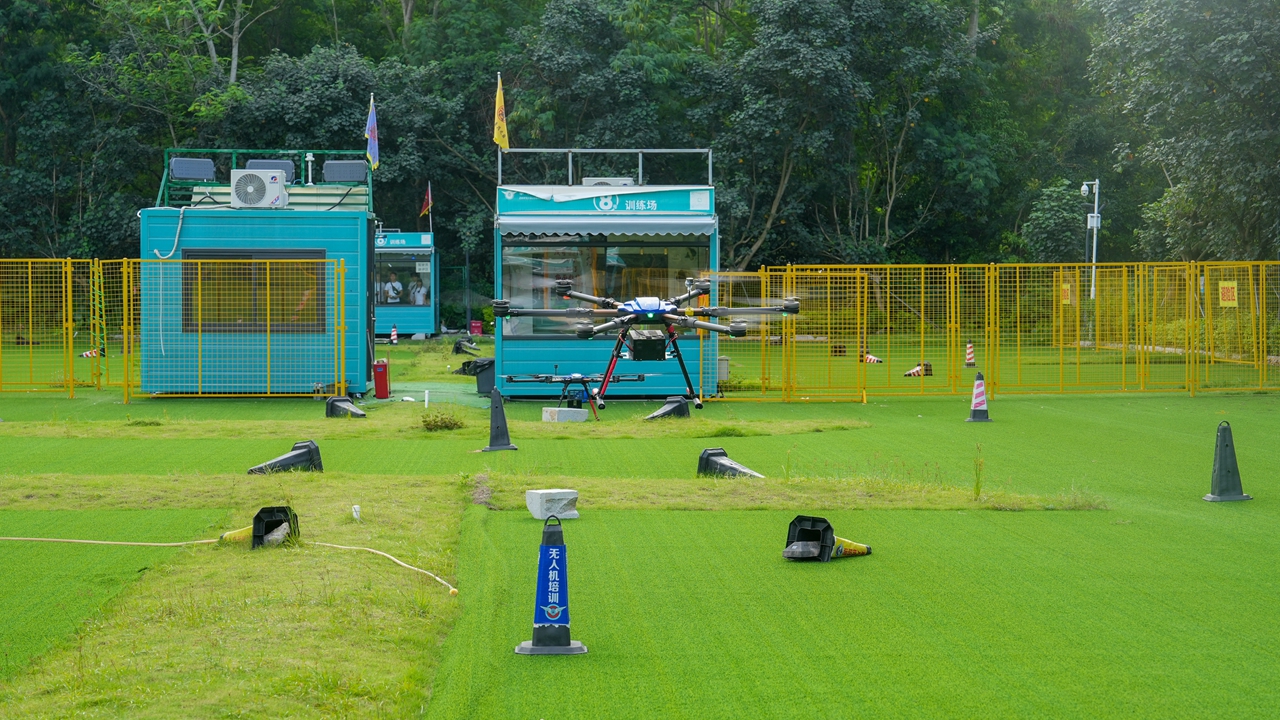
A drone takes part in a flight demonstration at the Zhifei Global UAV Training Academy in Longhua District on July 13 during a visit by American students participating in the "SEE China" educational program.
As a New Yorker surrounded by limited airspace for drone operations, Chen found the drone training experience eye-opening. “Systematic drone training institutes and urban drone delivery networks simply don’t exist back in the U.S.” She plans to integrate all the tech insights she gathered during the trip into her future lessons, using yard robots, low-altitude economy systems and smart connectivity as vivid real-world case studies for elementary science and cross-cultural curricula to broaden her students’ global perspectives.
Discovering Chinese innovation in Longhua
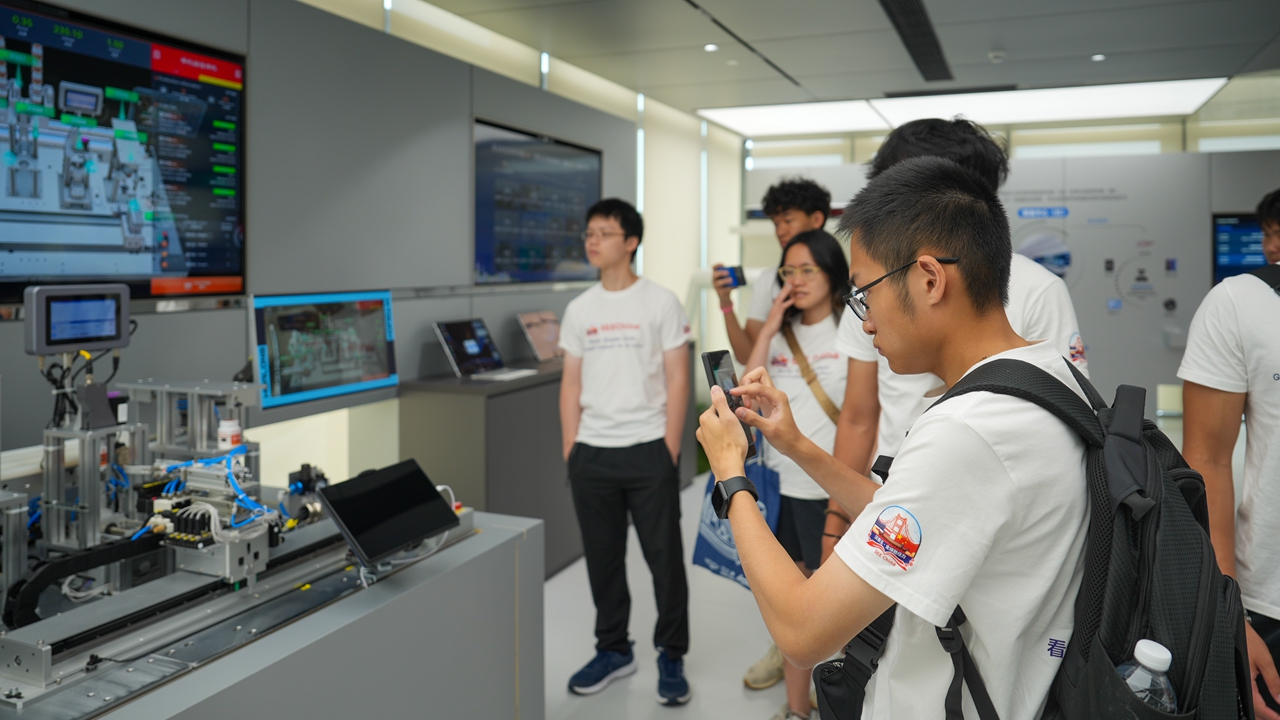
American students tour the Harmony Ecosystem Innovation Center Experience Hall in Longhua District on July 13 to learn about smart manufacturing and interconnected digital technologies.
The “SEE China” program invites young Americans to travel beyond textbooks and explore industrial frontlines in person, helping them form rational, firsthand understandings of China. For these Gen Z visitors, Longhua offers a window into the most vibrant side of modern Chinese innovation.
“Shenzhen is such a young city, buzzing with innovative energy everywhere,” Sophia reflected. This deep dive into local tech hubs allowed her to better understand the city’s technological development trajectory. Chen offered a unique comparative observation: “New York lacks open airspace to support a robust drone industry, but here in Shenzhen, technology isn’t just confined to labs — it’s woven into residents’ daily lives as convenient public services.”
The LICC exhibition hall also showcased hydrogen-powered bikes, electronic drums and other creative products, showing O’Leary the center’s unique strength in bringing together global innovators and connecting domestic and international businesses. “This platform not only helps overseas companies break into Shenzhen’s market but also makes foreign partners feel welcome and at home. The open, inclusive atmosphere here is impressive.”
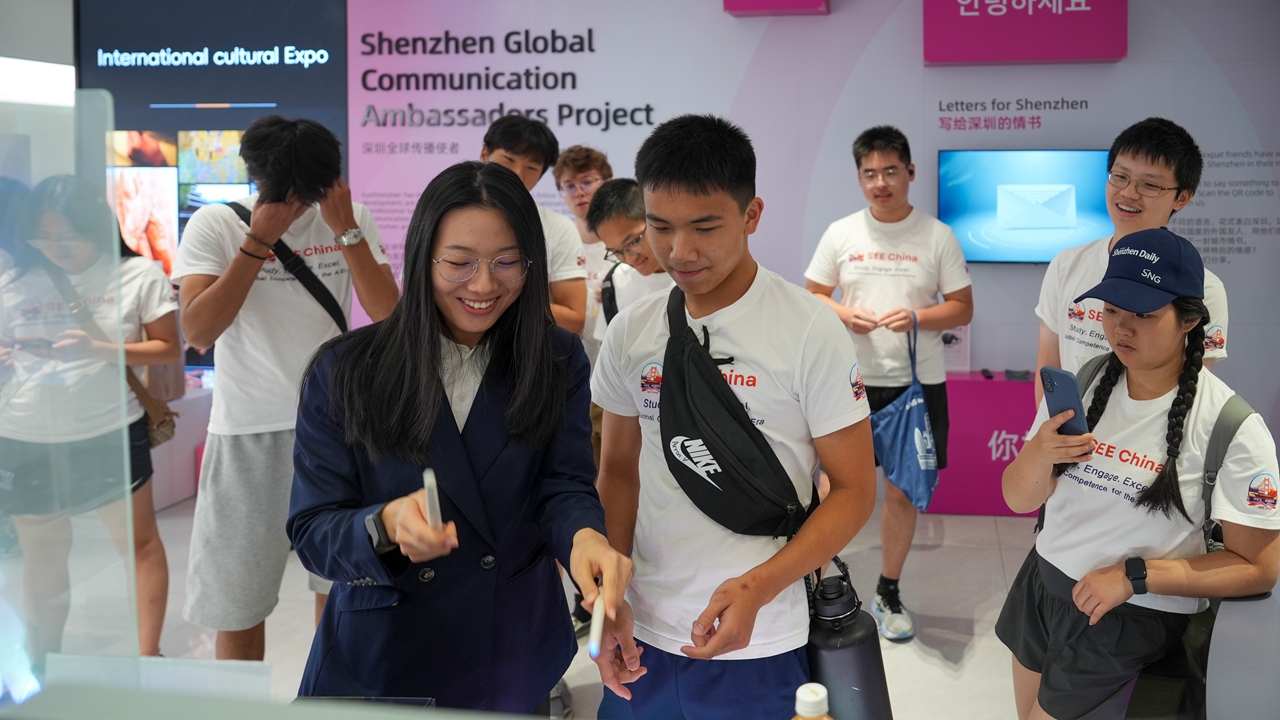
A staff member demonstrates an interactive exhibit to American students at the Longhua International Cooperation Center in Shenzhen on July 13 during the "SEE China" educational program.
From all-season yard robots and drone food delivery to cross-device Harmony connectivity and immersive LED screens, every technological sight in Longhua is challenging these young Americans’ preconceived notions about “Made in China” and Chinese tech. As Chen put it, these innovations that improve everyday life are not just exciting — they inspire young people from both countries to collaborate and explore technological progress together.