
 Share
Share


 Print
Print'APEC empowers Shenzhen, Shenzhen unites GBA'
Writer: Li Jing | Editor: Lin Qiuying | From: Shenzhen Daily | Updated: 2026-07-09
In November 2025, Shenzhen was officially named the host of the 33rd APEC Economic Leaders’ Meeting. For Prof. Han Yonghui, executive dean of the Guangdong Institute for International Strategies and a longtime scholar of world economics and global economic governance, the announcement is a catalyst for his ongoing fieldwork across the Guangdong–Hong Kong–Macao Greater Bay Area (GBA) to refine regional policy recommendations.
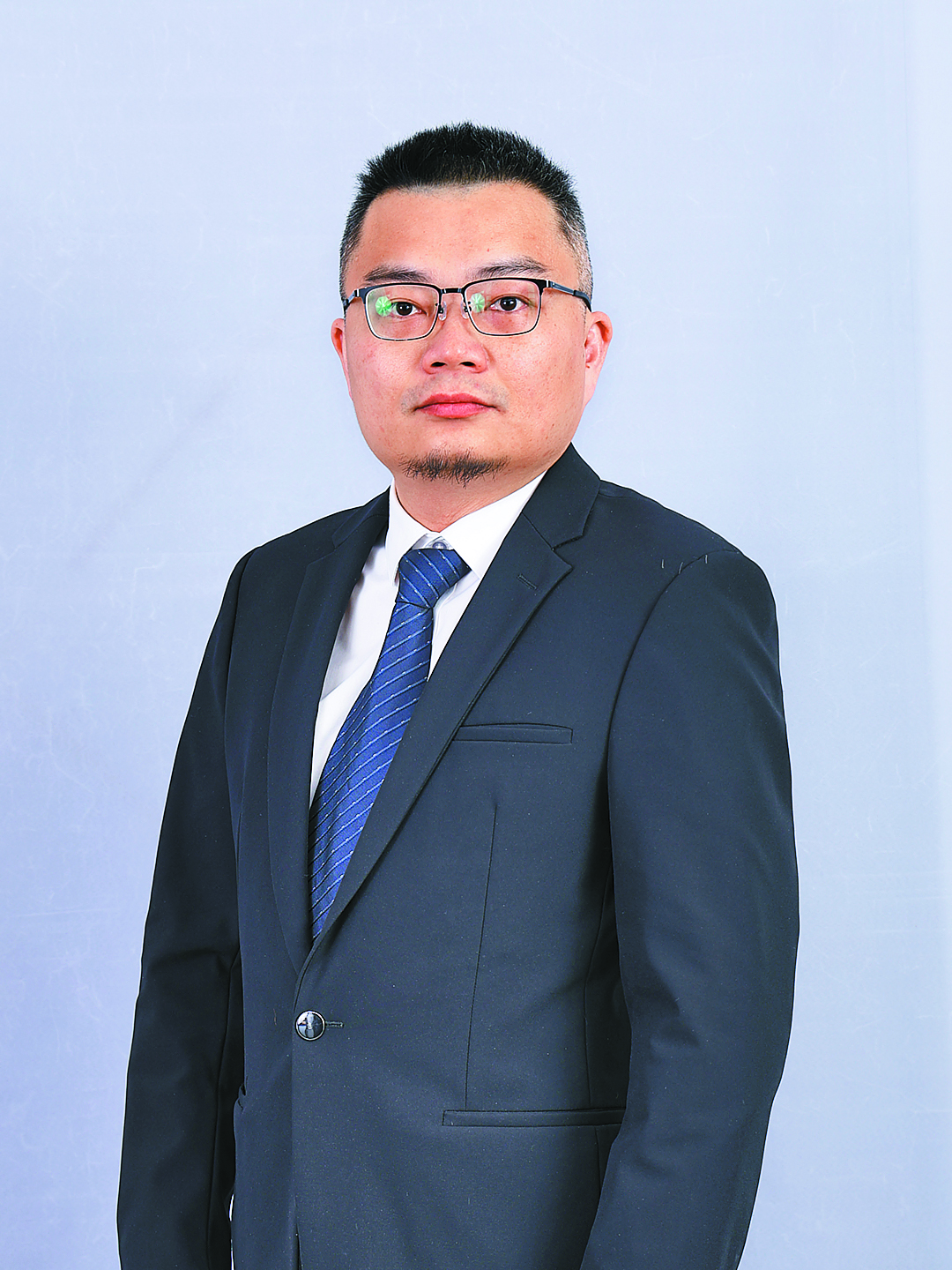
Han Yonghui
Han sees a clear strategic logic in the trio of China’s APEC host cities: Shanghai (2001), Beijing (2014), and now Shenzhen. “The shift from the Yangtze River Delta to the Beijing-Tianjin-Hebei region, and then to the GBA, mirrors the evolution of China’s regional development strategy,” he said. “It tracks China’s opening-up trajectory from integrating into the global system to taking a proactive, leading role in international affairs.”
Each APEC summit reflects the spirit of its era. Shanghai 2001 rode the optimistic tide of China’s WTO accession, and Beijing 2014 centered on post-financial-crisis recovery, yet the landscape for 2026 is far more challenging. Among the 21 APEC economies, 13 recorded lower GDP growth than the previous year. Oil prices have surged more than 50% since February 2026 amid Middle East turmoil, and supply-chain priorities have shifted decisively from efficiency to security. At the 2026 APEC trade ministers’ meeting, the U.S. shunned calls for lower tariffs in favor of a “balanced trade” agenda. Faced with slowing growth, resurgent protectionism, and deepening geopolitical fractures, APEC 2026 in Shenzhen is no longer merely a rhetorical pledge for openness — it is a critical test of whether multilateral cooperation can withstand powerful headwinds.

A visitor photographs the signature ceiling of Gangxia North Metro Station in Futian District. File photo
Meanwhile, the meeting’s thematic scope has evolved alongside its hosts. While the 2001 summit focused on tariffs and investment facilitation, and the 2014 one added connectivity and sustainable growth, the 2026 agenda will tackle digital economy rules, AI governance, and supply chain resilience. Shenzhen’s strength lies in its robust industrial ecosystems and clusters of industry titans in digital tech, new energy, and AI — endowing the city with the strategic depth required to host a summit of this caliber.
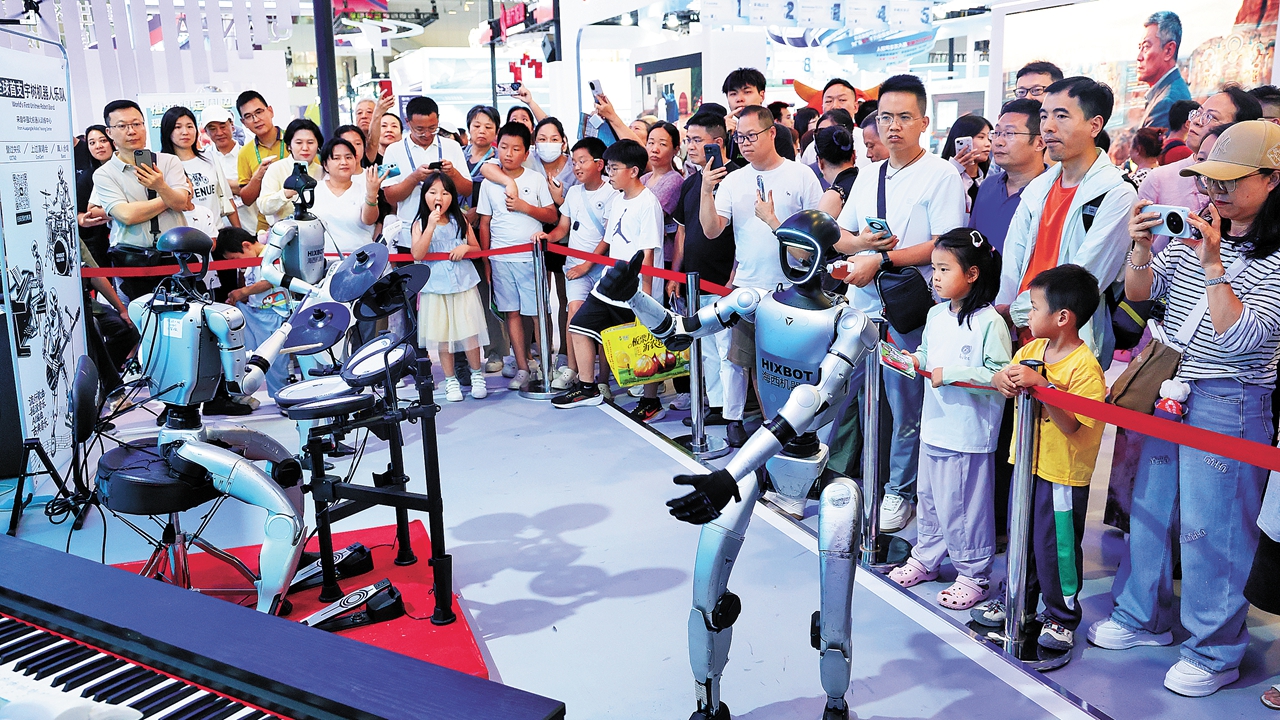 Visitors watch a robot “band” perform at the International Cultural Industries Fair (ICIF) in Shenzhen on May 24. Xinhua
Han emphasized the evolving missions of China’s APEC hosts: Shanghai’s commercial legacy, Beijing’s political significance, and now, Shenzhen’s prowess as a high-tech powerhouse defined by Silicon-Valley-style tech ecosystem and corporate-led innovation. With a median age of just 32.5, the city’s pragmatic, efficiency-oriented culture aligns well with APEC’s current push for actionable outcomes.
He highlighted Shenzhen-based global leaders like DJI and BYD as benchmarks for industrial transformation and the low-carbon transition. “What impresses me most is Shenzhen’s vibrant industry-university-research collaboration,” Han said. He believes this year’s summit can facilitate practical paths for technical standard mutual recognition and deeper industrial synergy across the Asia-Pacific.
Han anticipates that the summit’s legacy will yield transformative impacts across three strategic dimensions.
First, it will catalyze institutional connectivity. By upgrading smart customs systems, launching a comprehensive nine-language government portal, and aligning regional regulations with global standards for cross-border data flows and digital payments, Shenzhen is cultivating “institutional assets” that will solidify its standing in global governance.
Second, the event will drive urban functional upgrades. With approximately 300 side events scheduled throughout 2026, the influx of global resources and expertise will accelerate Shenzhen’s modernization in public services and its rule-of-law environment.
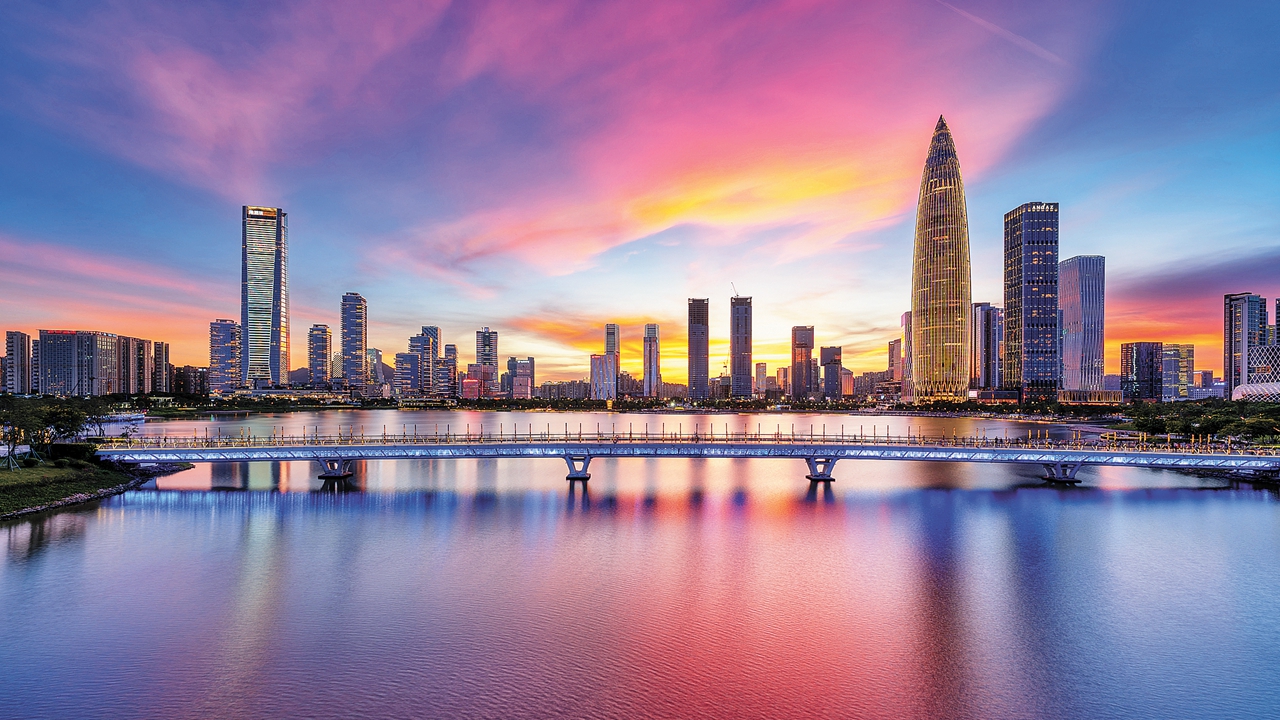
A view of the Houhai area in Nanshan District. File photo
Third, it will accelerate the integration of the GBA. Through a “Shenzhen-Hong Kong twin-city synergy” model, delegates will experience a seamless “one-hour living circle” via the Guangzhou-Shenzhen-Hong Kong Express Rail Link. Supported by smart customs clearance, this integrated approach serves as a premier showcase of the region’s sophisticated connectivity to the global stage.
To sustain the summit’s momentum, Shenzhen plans to establish an APEC Digital Technology Empowerment Center to translate summit consensus into long-term cooperation, enhancing the GBA’s rulemaking authority in frontier fields like AI, the digital economy, and green technology.