
 Share
Share


 Print
PrintSZ's office market shows signs of stabilization as tech sector drives demand
Writer: Zhang Yu | Editor: Lin Qiuying | From: Original | Updated: 2026-07-08
Shenzhen’s Grade A office market is showing clear signs of a structural recovery in the first half of 2026, with net absorption surging year on year and vacancy rates falling for three consecutive quarters, according to a report released by real estate services provider Jones Lang LaSalle (JLL) on Tuesday.
While rental rates remain in a downward cycle, the pace of decline has slowed for two straight quarters, signaling a potential floor for the market after years of correction. The improvement is largely driven by expansion in high-growth technology sectors, increased absorption in emerging business districts, and cost-conscious upgrade relocations.
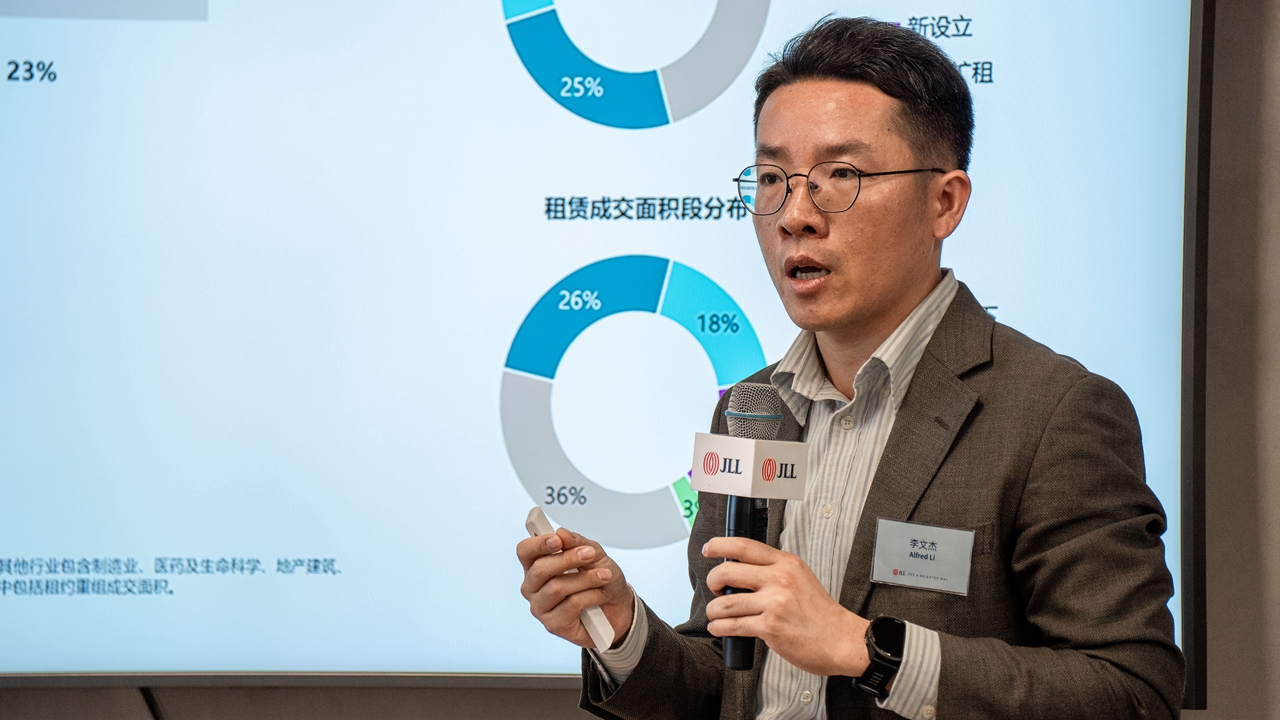 Alfred Li, managing director of JLL South China, shares with media at a press briefing in Shenzhen on Tuesday. Photos courtesy of JLL Shenzhen
“After several years of deep market adjustment, Shenzhen’s office market is gradually entering a more rational recovery phase,” said Alfred Li, managing director of JLL South China.
“Landlords have shifted their mindset from aggressive price cuts to a more balanced approach between occupancy and pricing. Quality assets in prime locations with strong operational capabilities are gaining marginal bargaining power, though the overall market still needs time to digest new supply,” Li said.
Net absorption in the second quarter remained robust, with leasing activity increasing significantly compared to both the previous quarter and the same period last year, according to the report. The most active demand came from technology and new economy sectors, including smart hardware, artificial intelligence applications, and cross-border e-commerce. These industries accounted for nearly 30% of total leasing volume in the first half.
Smart hardware companies are expanding as edge AI and embodied intelligence technologies commercialize, driving demand for R&D and operations space. AI firms are accelerating vertical integration across finance, education, and healthcare, requiring larger sales and delivery teams. Cross-border e-commerce players are scaling global operations, adding roles in supply chain, compliance, and overseas management.
In contrast, the financial sector, traditionally a major source of demand, remained cautious, with most transactions under 1,000 square meters, according to the report.
Large-space leases were concentrated in emerging business districts, particularly in Nanshan District’s Qianhai and Houhai areas, where new, high-quality projects offer full-floor units. These locations also benefit from proximity to tech parks and industry clusters, making them attractive to technology tenants.
By the end of June, Shenzhen’s Grade A office vacancy rate stood at 24.9%, down 1 percentage point from the end of the first quarter and 1.5 percentage points from the end of 2025. The rate has fallen sequentially for three quarters.
Looking ahead to the second half, JLL expects demand to maintain its structural recovery, driven by three primary sources: continued expansion in AI, smart hardware, and cross-border e-commerce.
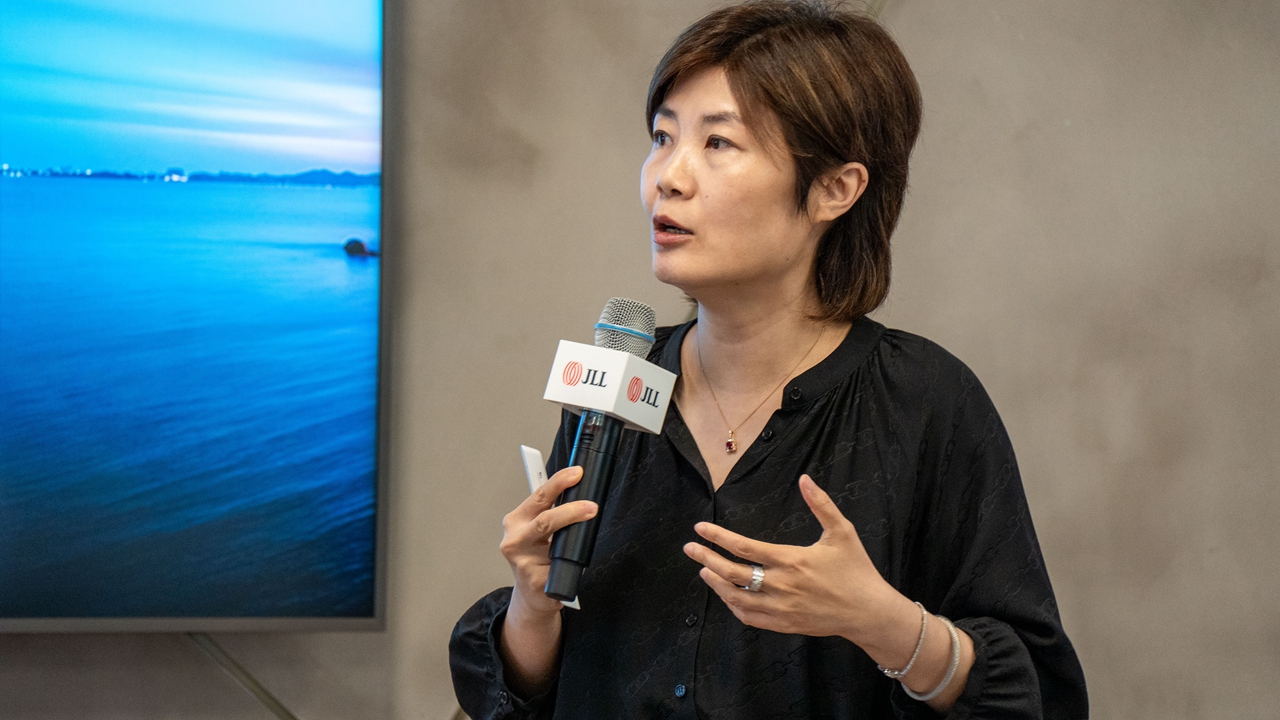
Silvia Zeng, senior director and head of logistics research for JLL China, speaks to media at the press briefing.
“The key variable for Shenzhen’s office market in the second half is whether industrial momentum can consistently translate into physical leasing absorption,” said Silvia Zeng, senior director and head of logistics research for JLL China.