
 Share
Share


 Print
PrintAPEC forestry meeting set for July 27-28 in Shenzhen
Writer: Claudia Wei | Editor: Lin Qiuying | From: Original | Updated: 2026-07-01
The 2026 APEC Ministerial Meeting on Forestry is scheduled to take place in Shenzhen from July 27 to 28.
Under the theme "Building a Green Asia-Pacific, Sharing Ecological Well-being," the high-level gathering will bring together regional leaders to discuss sustainable forest management and ecological governance in one of the world's most dynamic urban environments.
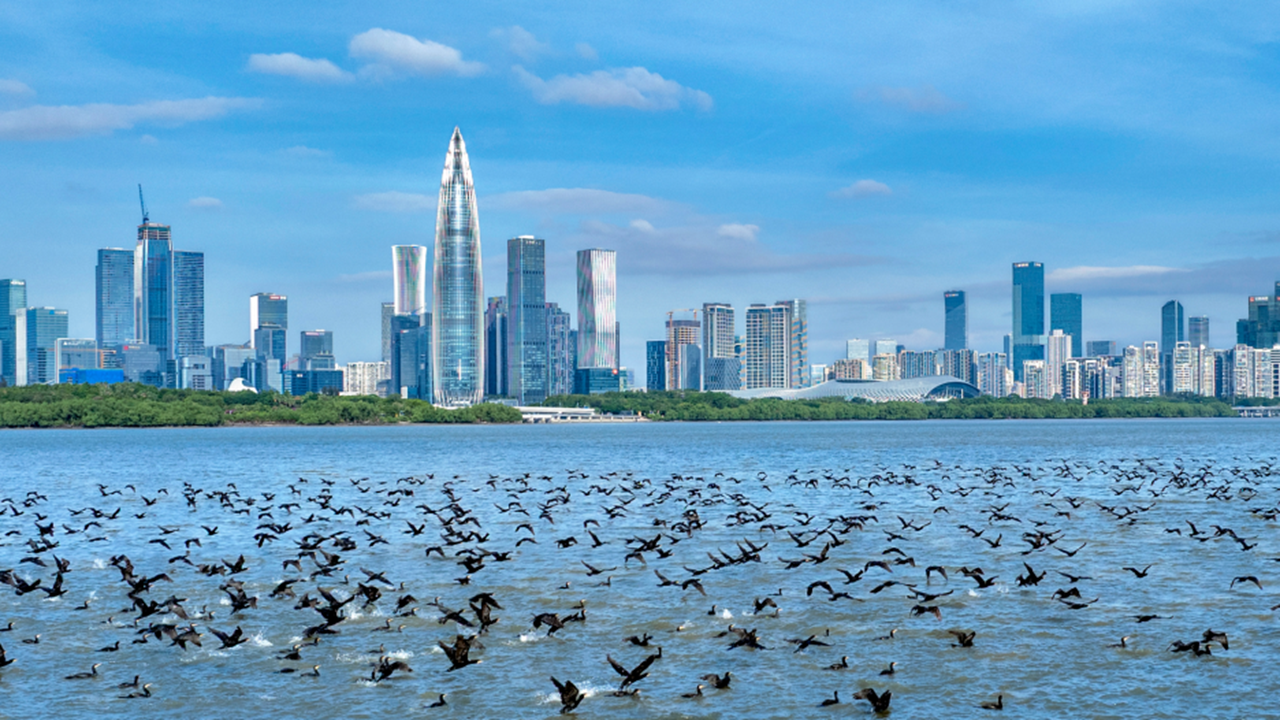 Migratory birds gather over Shenzhen Bay, with the city's skyline in the background. The bay's coastal wetlands provide an important stopover and wintering habitat for migratory waterbirds. File photos
Situated on the shores of the South China Sea, Shenzhen covers a land area of just 1,997 square kilometers but is home to a population of over 22 million. Despite its rapid urbanization, the city has consistently prioritized the harmony between humans and nature, striving to become a modern city that is innovative, livable, resilient, and smart.
Since China's reform and opening-up began in 1979, Shenzhen has transformed from a small fishing village into an economic powerhouse. By 2025, the city’s gross domestic product (GDP) reached 3.87 trillion yuan (US$540 billion), ranking third among Chinese cities and fourth in Asia. Its growth is driven by advanced manufacturing and strategic emerging industries. Shenzhen serves as the global headquarters for tech giants such as Huawei, DJI, Tencent, and BYD.
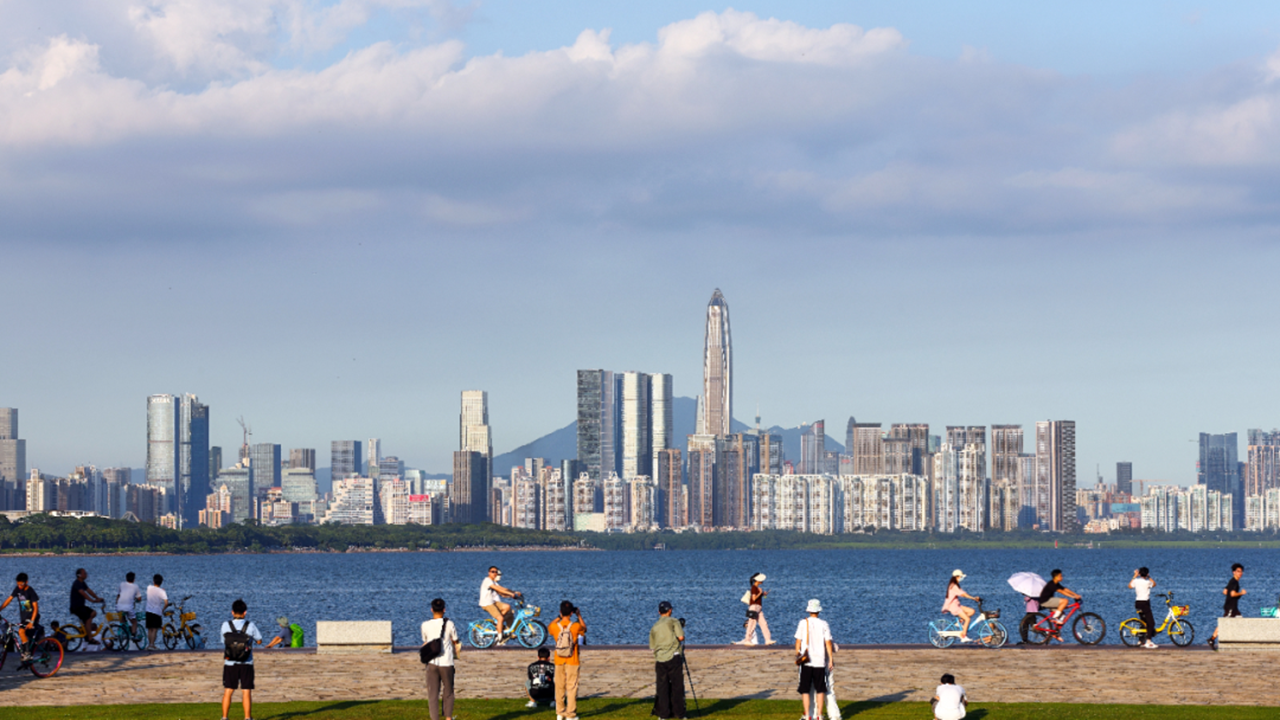
People enjoy the waterfront at Shenzhen Bay, with the city's skyline in the background. Shenzhen's urban landscape reflects its vision of balancing modern development with access to nature.
The city’s economic development has been matched by a pioneering commitment to green development. As early as the 1990s, Shenzhen rerouted the planned alignment of Binhai Boulevard 260 meters inland to protect precious mangrove wetlands. In 2005, Shenzhen became the first city in China to implement an ecological “red line” system, placing nearly half of its land under development restrictions to ensure long-term sustainability.
In recent years, Shenzhen has made efforts to further integrate its natural landscape, creating an ecological framework consisting of over 1,350 parks, 4,000 kilometers of hiking trails, and 1,000 kilometers of scenic "waterfront belts." The green network ensures a seamless connection between the mountains, the sea, and the urban areas.
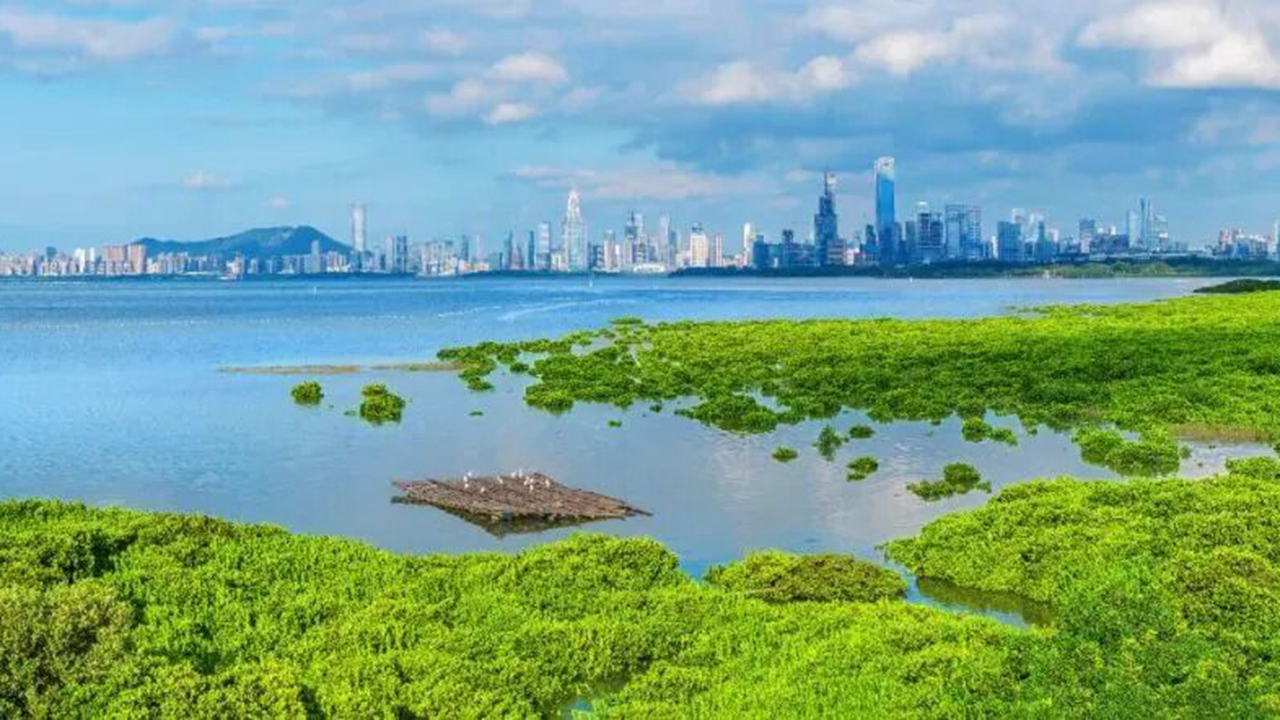
The Futian Mangrove National Nature Reserve, a wetland along Shenzhen Bay, provides critical habitat for migratory birds while bordering one of China's largest financial districts.
Shenzhen’s conservation efforts have resulted in several national milestones, including the first soundproof wall for bird protection and the first set of urban planning guidelines for bird-friendly designs. Innovative practices, such as the "Lights Out for Birds" campaign and anti-bird-strike retrofitting on skyscrapers like the Tencent Binhai Building, have set a benchmark for urban biodiversity.
The Futian Mangrove National Nature Reserve, the only national-level reserve located in the heart of a city in China, serves as a vital stopover for over 100,000 migratory birds annually, including endangered species like the black-faced spoonbill. The restoration project was recognized by the International Union for Conservation of Nature (IUCN) as one of its 10 global flagship cases.
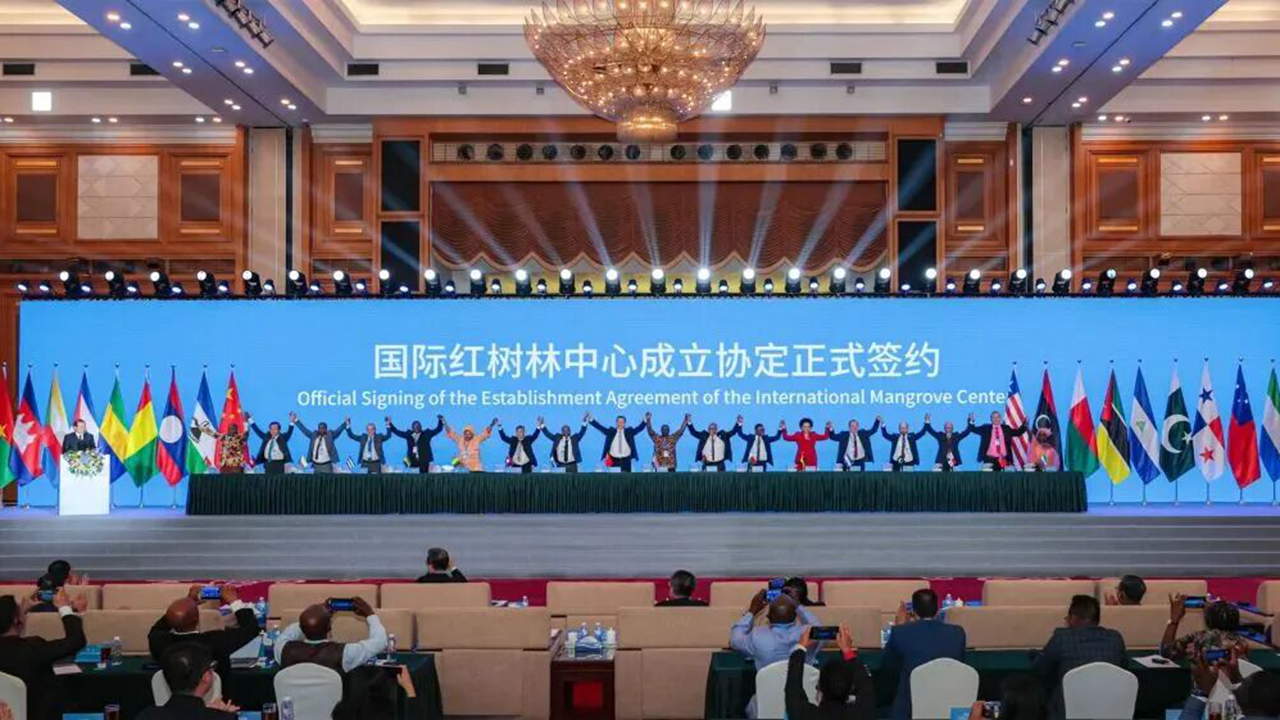
Delegates attend the official signing ceremony for the establishment of the International Mangrove Center in Shenzhen on Nov. 6, 2024.
International cooperation remains a cornerstone of Shenzhen's ecological strategy. On Nov. 6, 2024, the International Mangrove Center (IMC) was officially inaugurated in the city. With 21 member countries across Asia, Africa, and the Americas, the IMC serves as a global hub for wetland conservation.
This year, Shenzhen has hosted numerous international delegations, including diplomats and students, to showcase its innovations in ecological restoration. The first meeting of the IMC Council is expected to coincide with the APEC ministerial gathering, fostering broader consensus on environmental governance.
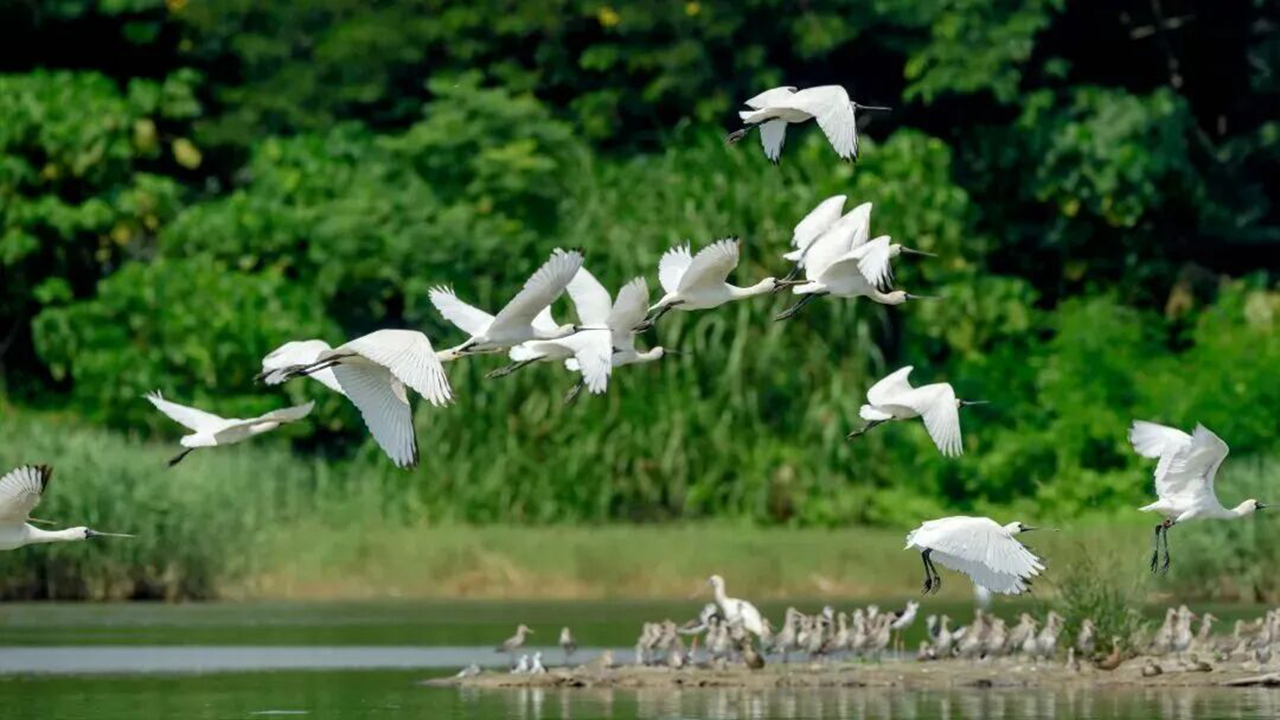
Black-faced spoonbills fly over the Futian Mangrove National Nature Reserve in Shenzhen.
In addition, the Urban Index of Shenzhen (UIS), a standardized framework developed with guidance from the Ministry of Natural Resources, has gained endorsement from UN-Habitat and the UNDP, sharing Shenzhen's 40 years of megacity governance experience with the world as a model for sustainable urban development.