
 Share
Share


 Print
PrintYoung coder builds musical bridge for autistic kids
Writer: Debra Li | Editor: Lin Qiuying | From: Shenzhen Daily | Updated: 2026-06-16
Music therapy, employed since the 1940s as a key intervention for autism, has shown benefits in improving children’s social and communication skills. Musical activities have been proven to enhance various cognitive functions crucial for learning, including memory retention, attention span, language acquisition, cognitive flexibility, and inhibitory control.
Teaching autistic children music, however, is never easy.
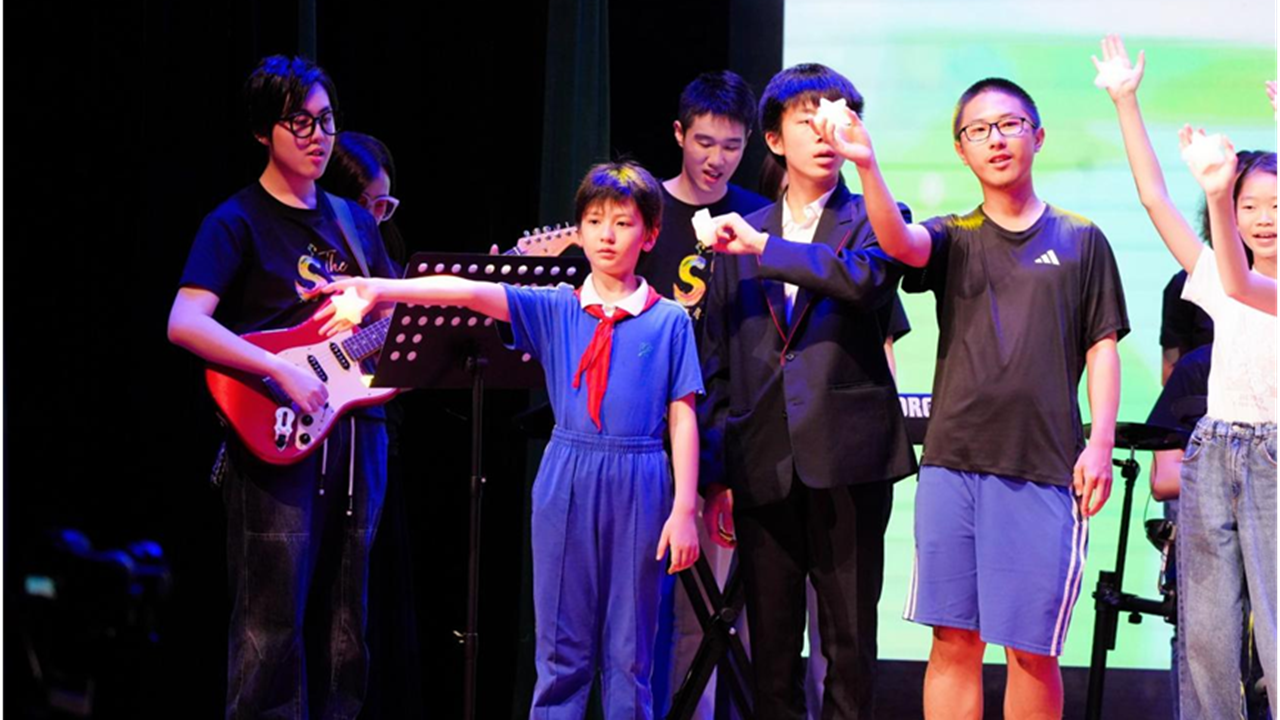
Wan Zijia (2nd R) during a performance to raise donations for autistic children. File photos
To address that challenge, Wan Zijia, an 11th-grader at Shenzhen Middle School, spent the past three years crafting software to help autistic children play instruments in an ensemble.
The software, named StarEcho AI Rehearsal System, is now the subject of a national invention patent application and will be open-sourced for free use, according to Wan and his team.

Wan Zijia participates in a charity initiative.
Using Python as the coding language and incorporating the Figurenotes music notation system, StarEcho AI helps autistic children play instruments more easily. Instead of traditional music notation, which is rather abstract, Figurenotes uses 12 unique colors to represent different notes and different shapes (like crosses, squares, circles, and triangles) to represent different octaves. A note’s duration is shown by the horizontal length of its colored symbol, which is much easier to grasp for those with autism.
 Wan Zijia is one of the co-initiators of a public benefit gala to support people with autism held in Futian District in April.
To help autistic children play in an ensemble, Wan and his team also incorporated a computer vision‑based music score recognition function and a live interactive engine into the AI assistant. With StarEcho AI, regular sheet music can be scanned and transcribed into Figurenotes notation, complete with a smart metronome and highlighted notes to cue the players in real time.
The system also supports recording of separate parts, which can later be arranged into a complete ensemble piece in case some band members cannot attend a rehearsal.
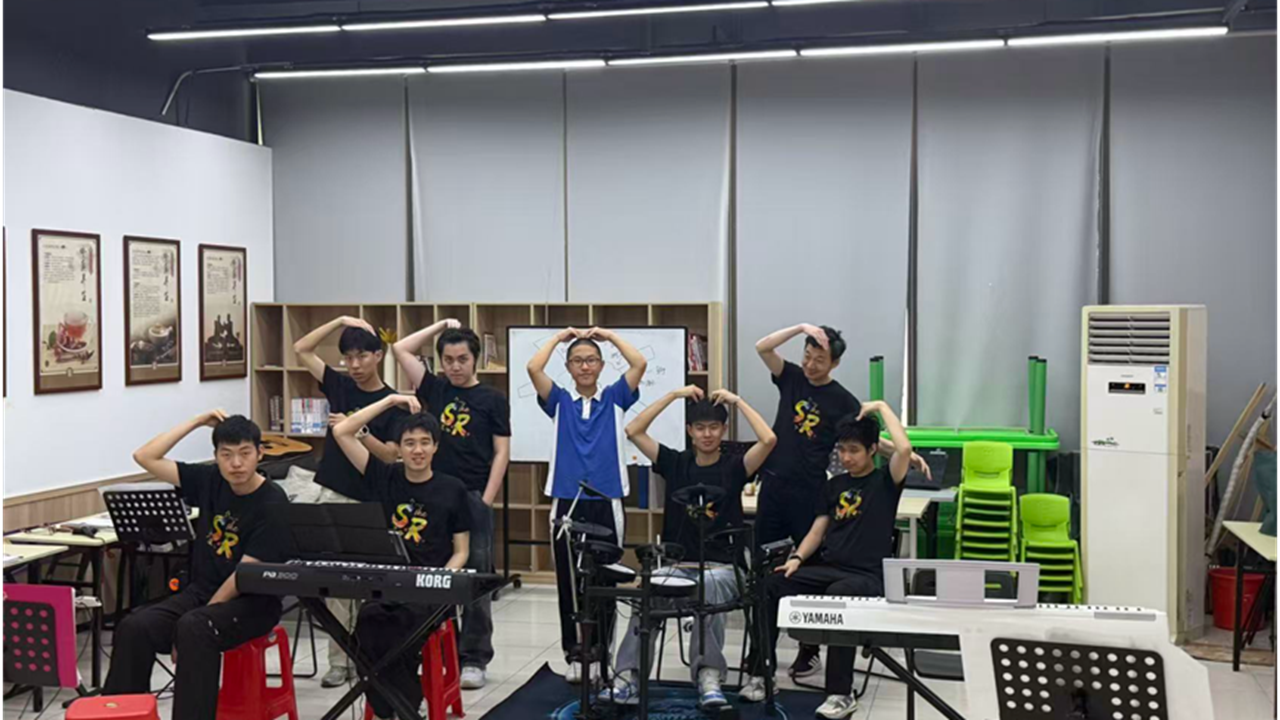
Wan Zijia (C) poses for a photo with autistic members of the Stars Rover Band.
Wan started learning to code at the age of 10 and has had a passion for it ever since. With various accolades in computer coding competitions to his name, Wan got to know the Stars Rover Band — a group of music‑loving autistic children — during a charity event.
He discovered that these children had a deep passion for music, yet they faced challenges at every step of making music. The abstract notation was difficult for them to memorize; without a teacher's guidance, it was almost impossible for them to rehearse; and when playing together, they struggled to grasp how their own part fit in with the others.
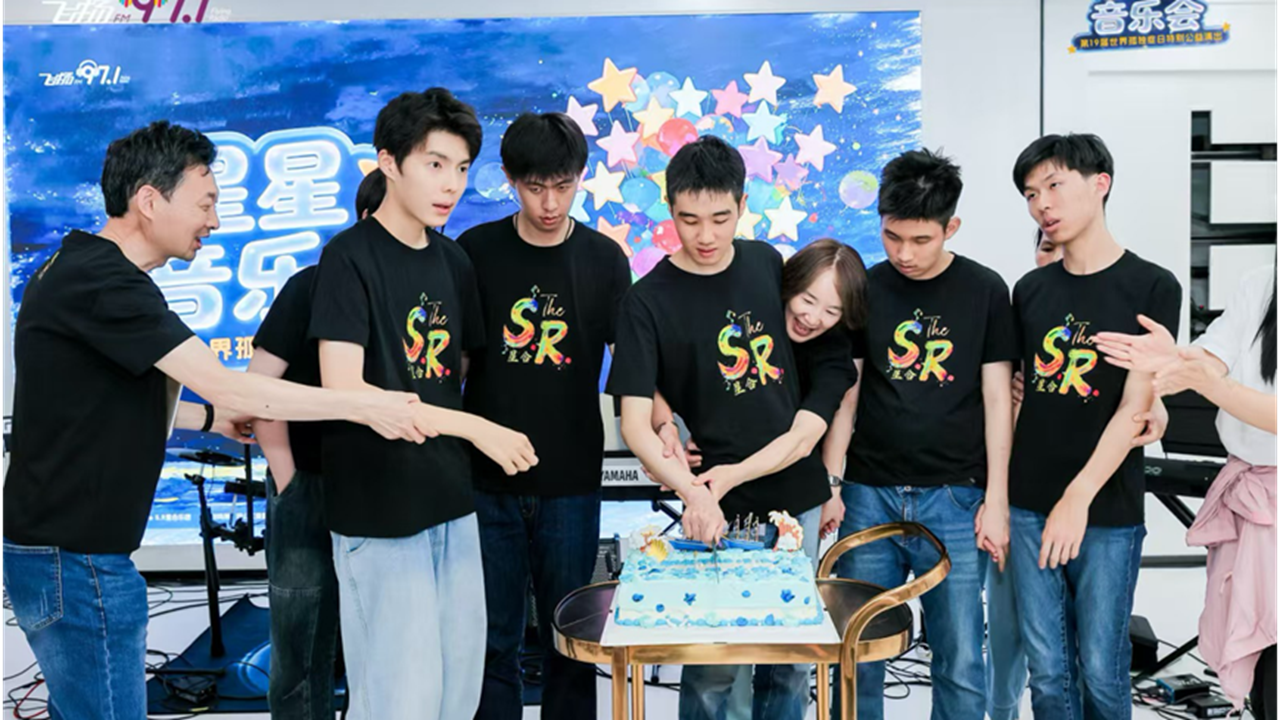
Members of the Stars Rover Band.
“It took us three long years to come up with viable software to help autistic children rehearse,” said the teen, “and the journey has been full of trials. But the result is worth the effort.”