
 Share
Share


 Print
PrintOceanian treasures make waves at Nanshan Museum
Writer: Cao Zhen | Editor: Cao Zhen | From: Original | Updated: 2026-06-15
The Pacific Ocean, which covers about a third of the Earth, is studded with tens of thousands of islands scattered like stars. Over these waters, people set sail, uncovered new lands, and eventually settled — allowing Oceanian cultures to grow, take root, and thrive.
Featuring Oceanian arts and philosophy, the exhibition “Arts of the Great Ocean” at Nanshan Museum presents 171 artifacts (sets) from the Musée du quai Branly–Jacques Chirac in France.
Visitors can explore canoe ornaments, ritual objects, sculptures, accessories, and more — admiring dazzling works shaped by the ocean and nature that nurtured diverse communities across thousands of islands.
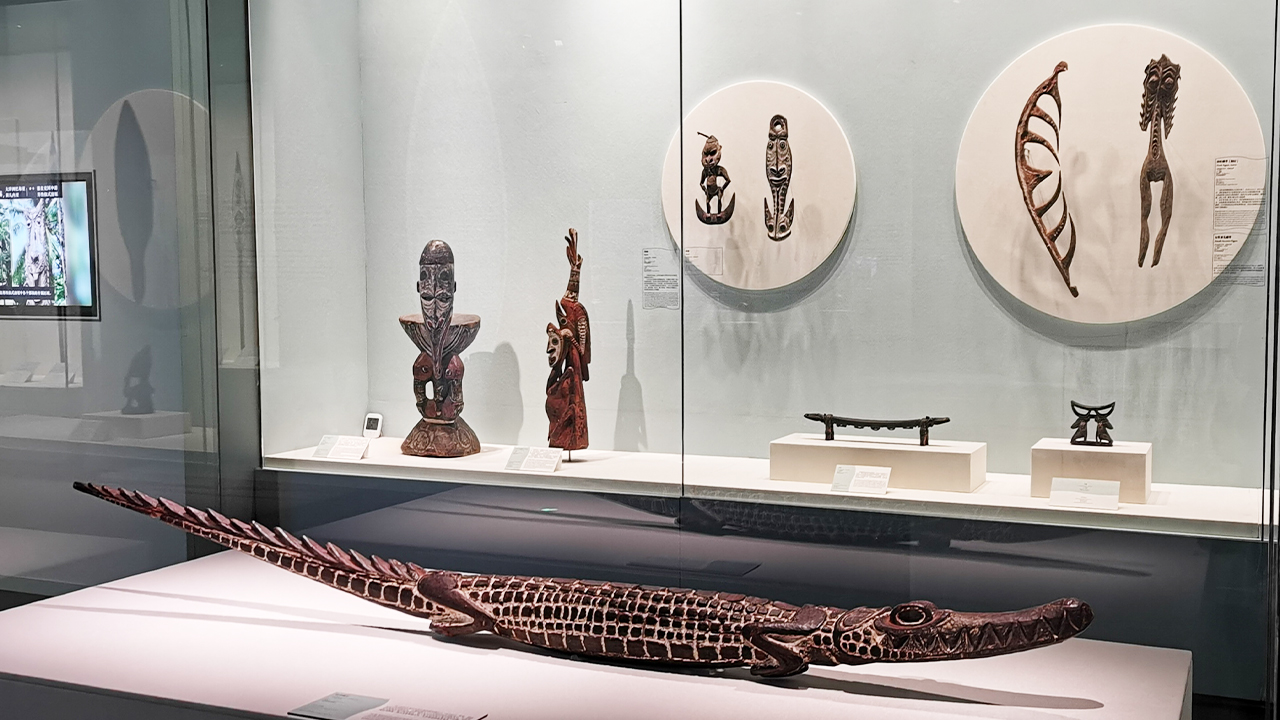
A glance at the exhibition. Photos by Cao Zhen unless otherwise stated
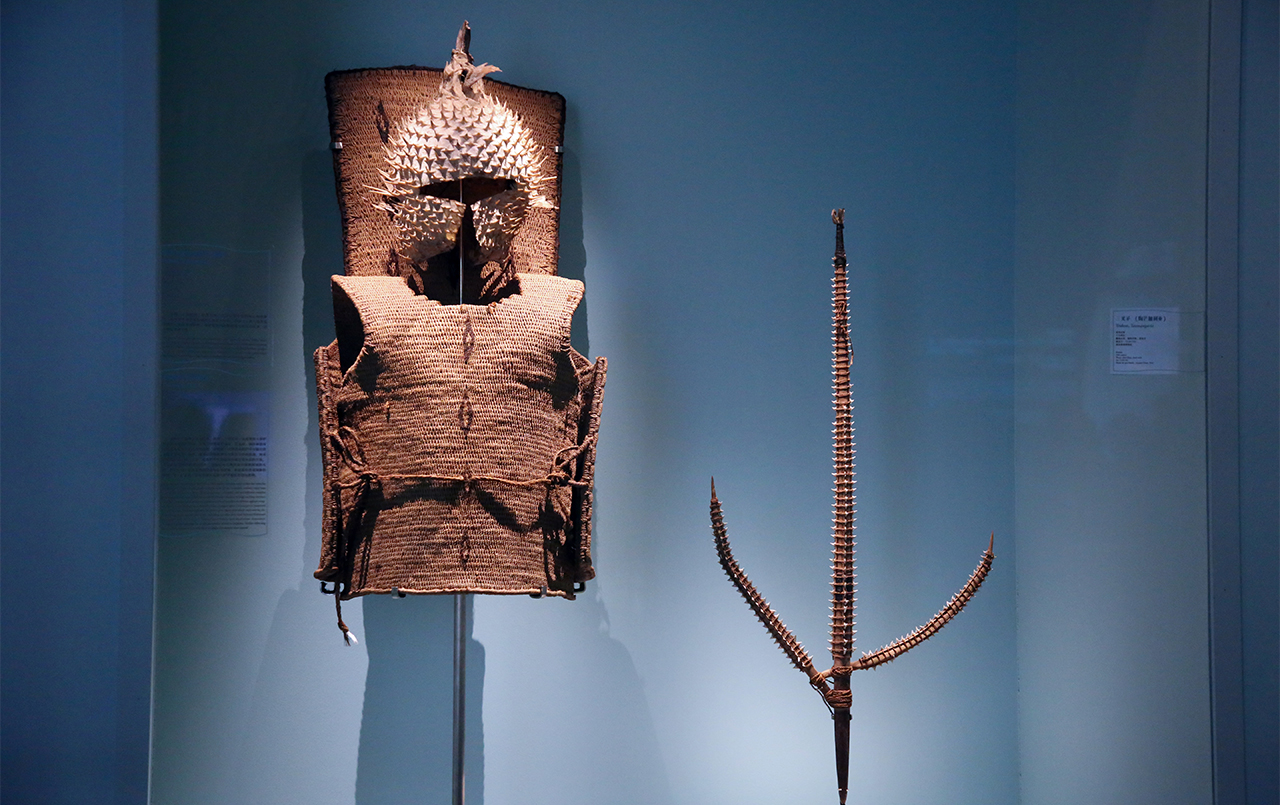
A helmet, a cuirass, and a three-pronged spear from the 19th century. Photo from Nanshan Museum
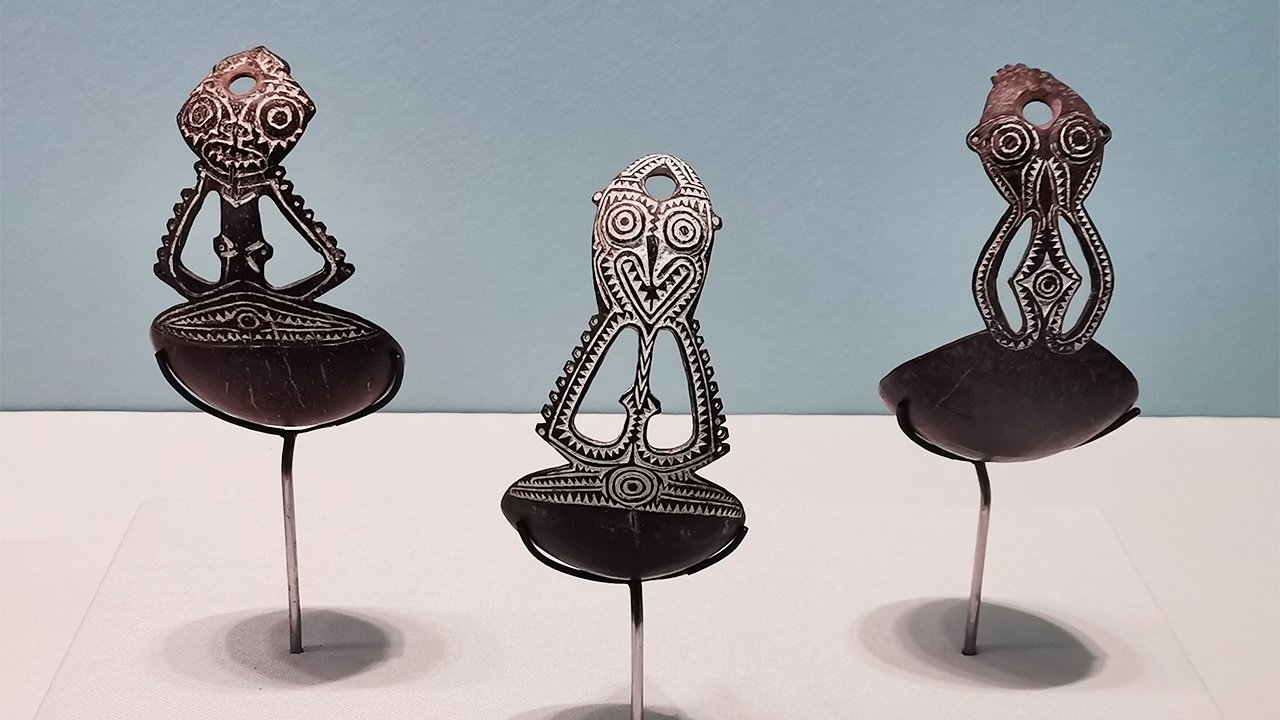
Spoons made from coconut shells and lime in the 20th century.
The exhibition unfolds across four sections: “Across the Sea,” “On the Islands,” “Through Time,” and “Adorned on the Body.” Tracing the routes of Oceania’s early peoples — from sea journeys by canoe to island settlements — the journey reveals the broader story of a civilization defined by the sea.
Many objects reflect the marine knowledge of Pacific islanders. A navigation chart and canoe prow sculptures, for example, showcase sophisticated seafaring and canoe-making expertise. These insights reveal how Oceanian communities lived in close relationship with an ever-changing natural world.
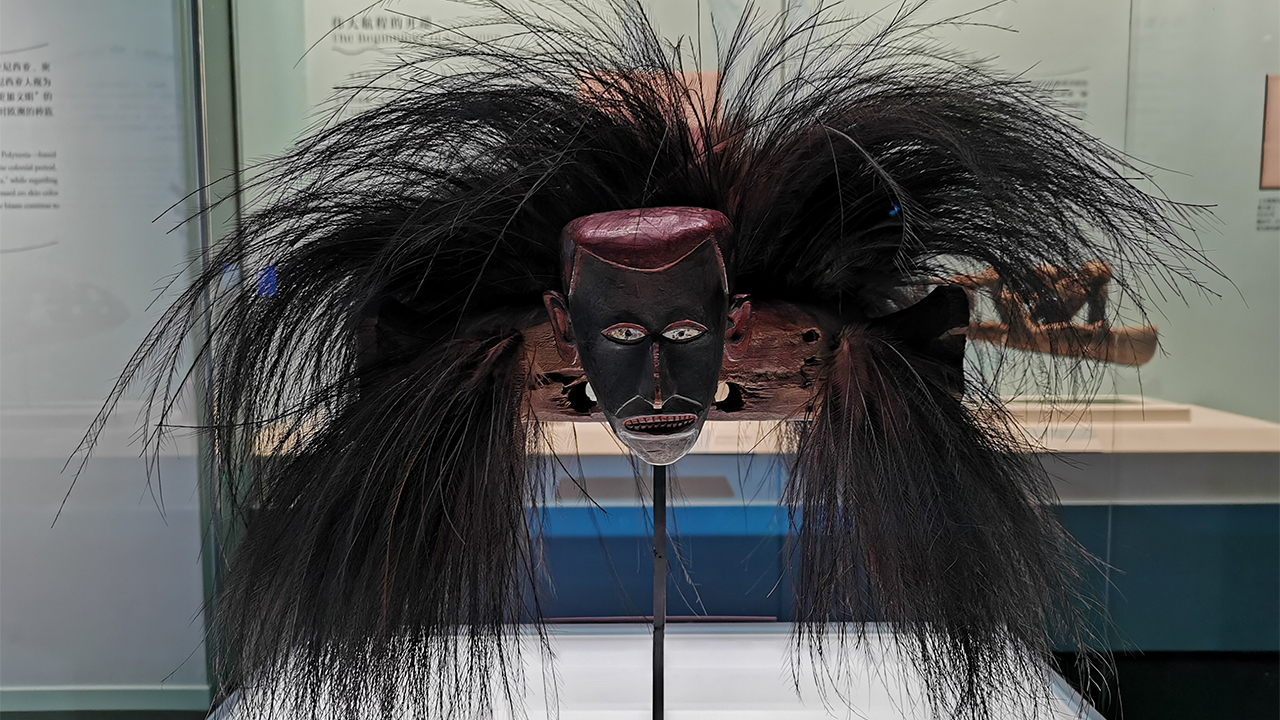
A 19th-century dugout canoe prow sculpture.
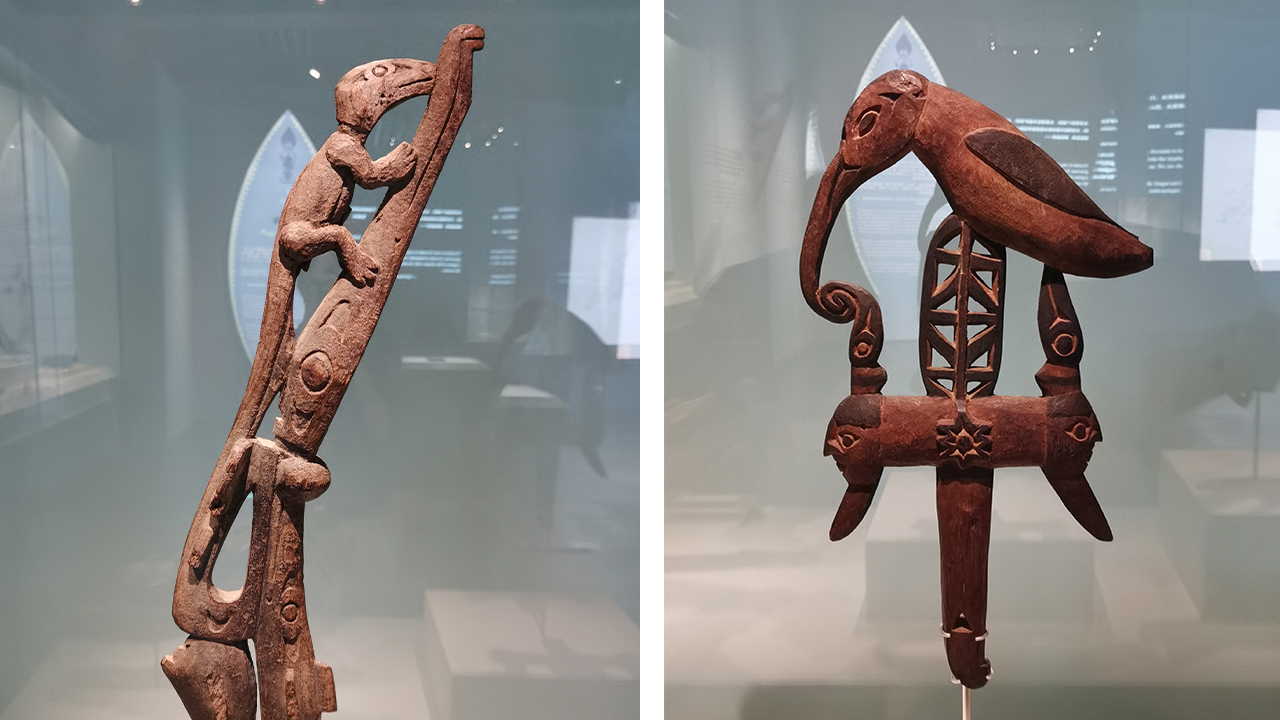
A canoe-prow carving from the early 20th century and a 19th-century canoe ornament.
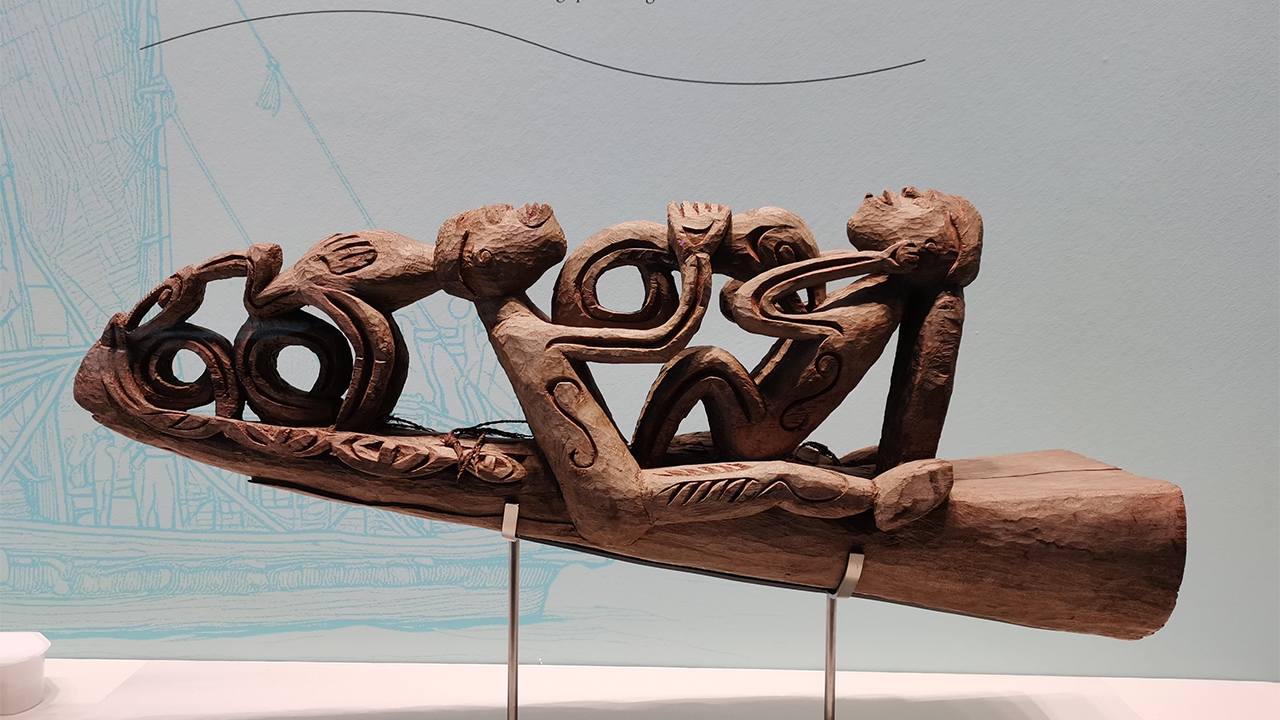
A canoe-prow carving from the early 20th century.
A number of the exhibits also capture Oceanian worldviews. Rather than viewing humans as masters of the world, Oceanian societies saw people as equal partners with animals, plants, the environment, and their ancestors and spirits.
In this vision, the real world and the spirit world were intertwined — living side by side. Each artifact or ceremony functioned as a bridge between the visible and the unseen. Canoes were not only for sailing; they also connected the sacred and the earthly.
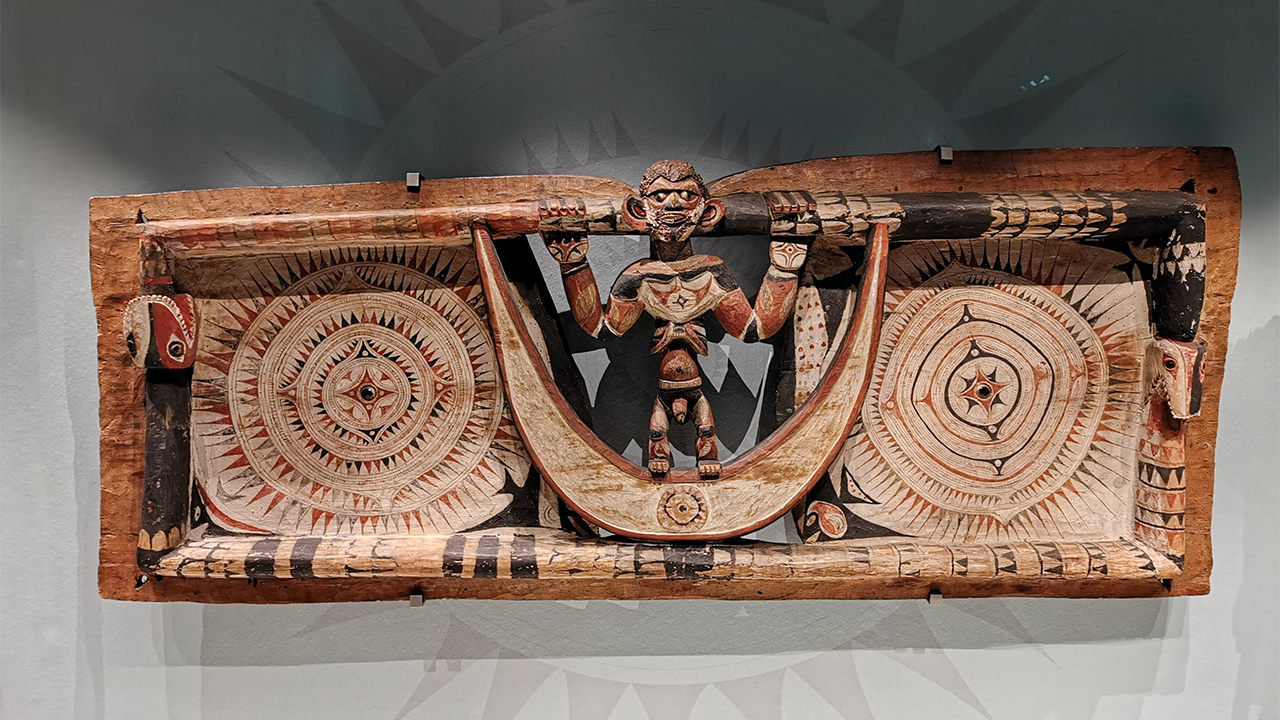
A Malangan ceremonial sculpture.
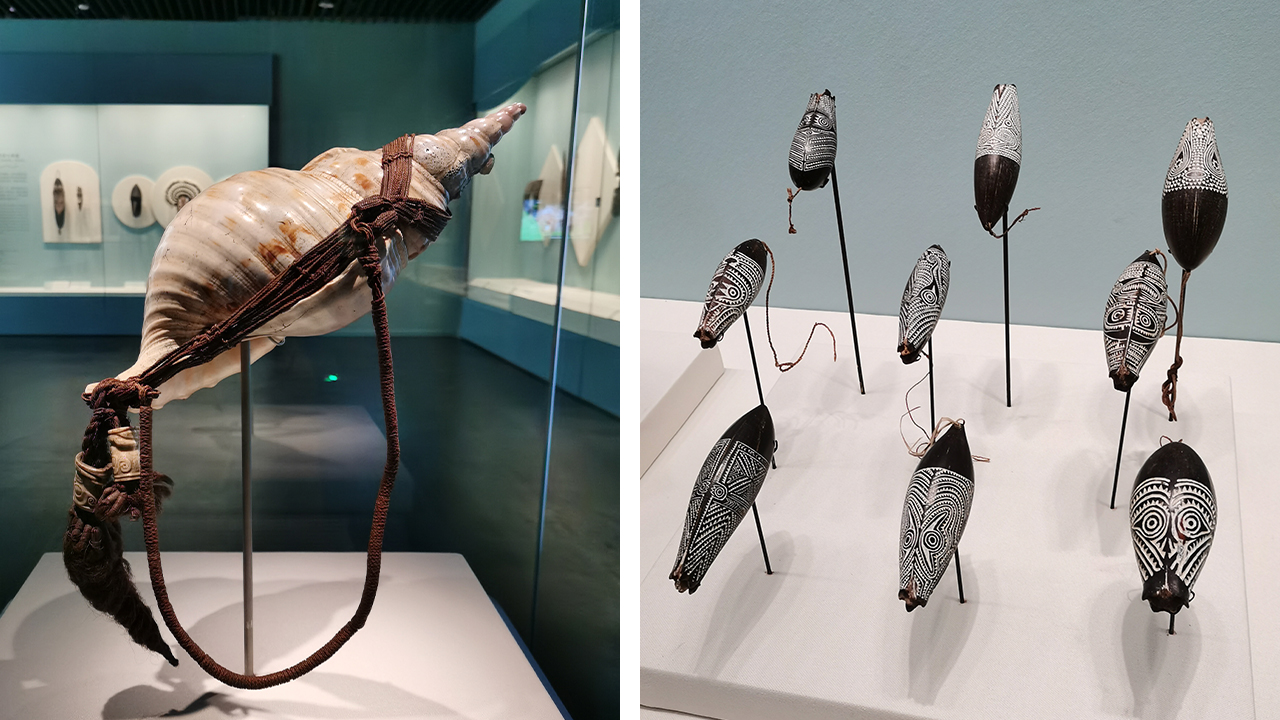
A conch shell from the early 19th century and hunting charms from the mid-20th century.
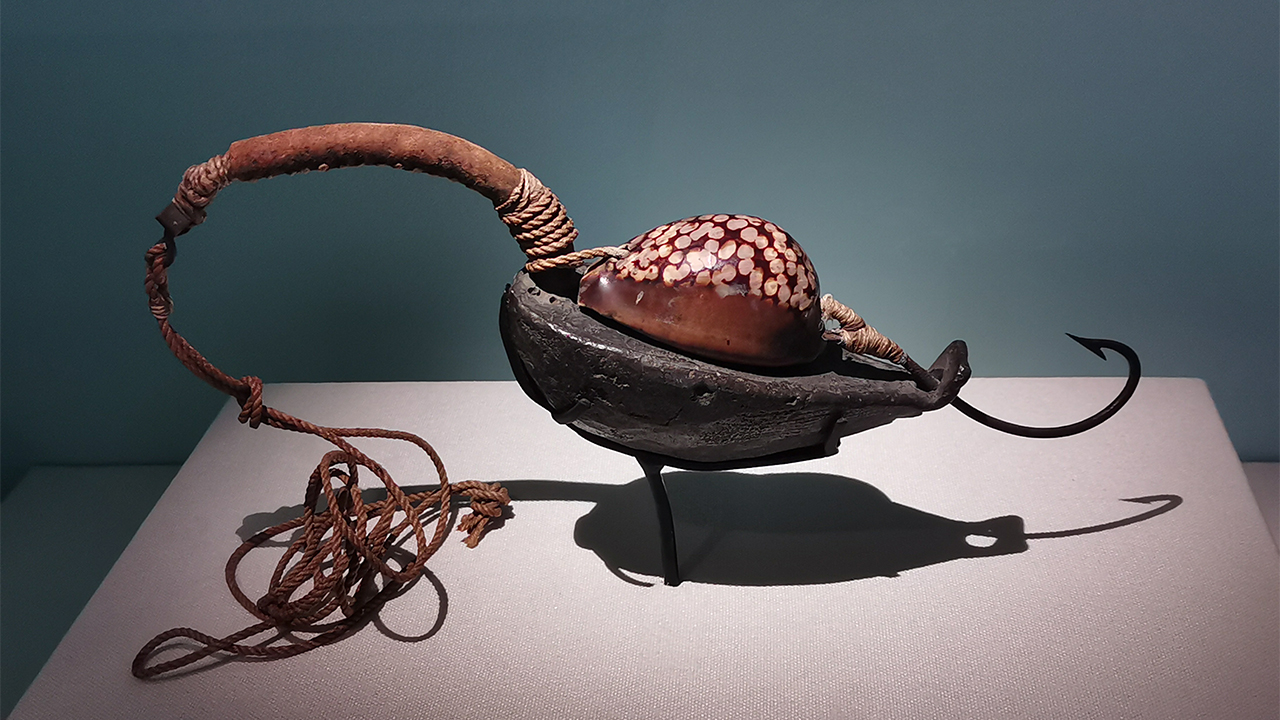
An octopus lure from the mid-19th century.
Visitors should not miss body-adorned accessories of Oceanian arts at this exhibition. Using natural materials such as tortoiseshell, mother-of-pearl, and dolphin teeth, these works create layered visual textures. Delicate fiber weaving, along with careful carving and polishing, highlights the refinement of local craftsmanship. The ornaments — crafted from symbolic plants, minerals, and animals — express communal values while also marking an individual’s identity and position.
As the exhibition notes emphasize, “The ocean is not the end of the land; it is the source of civilization.” Whether you’re a history enthusiast or simply seeking a way to cool off in the summer, this exhibition offers a window into a world where the sea brings people together rather than keeping them apart.
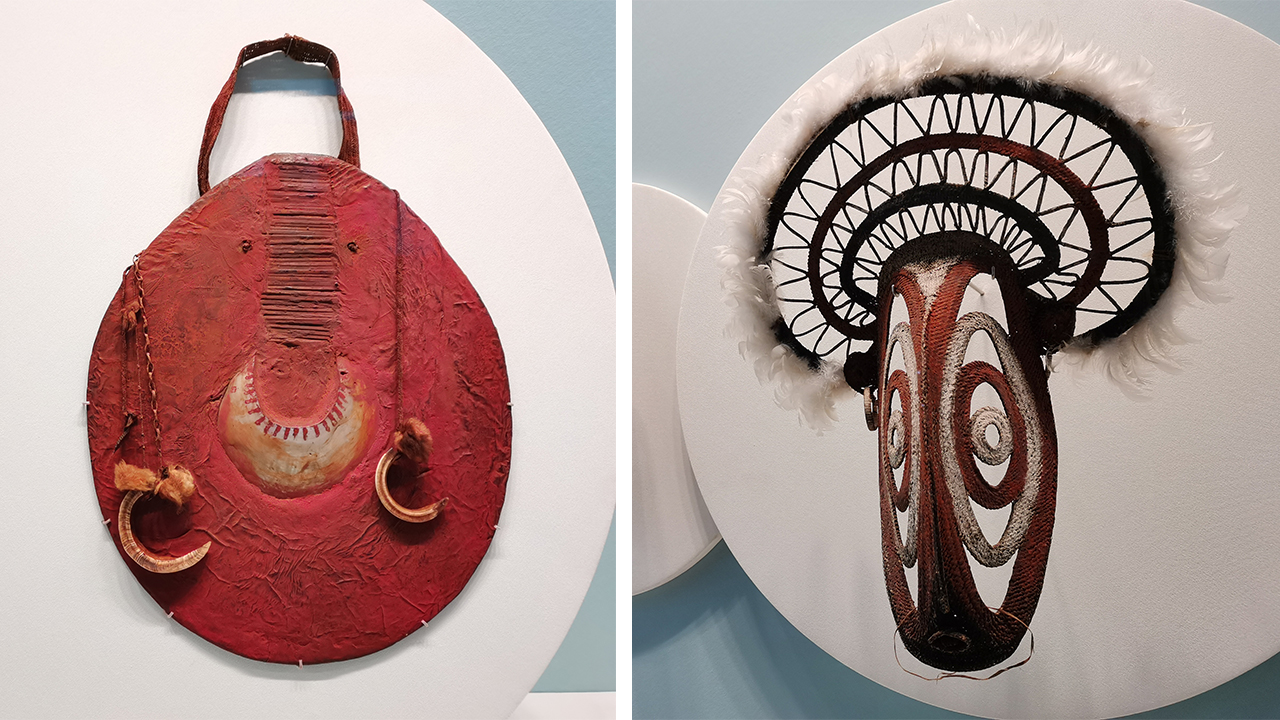
A shell-money pectoral and a mask.
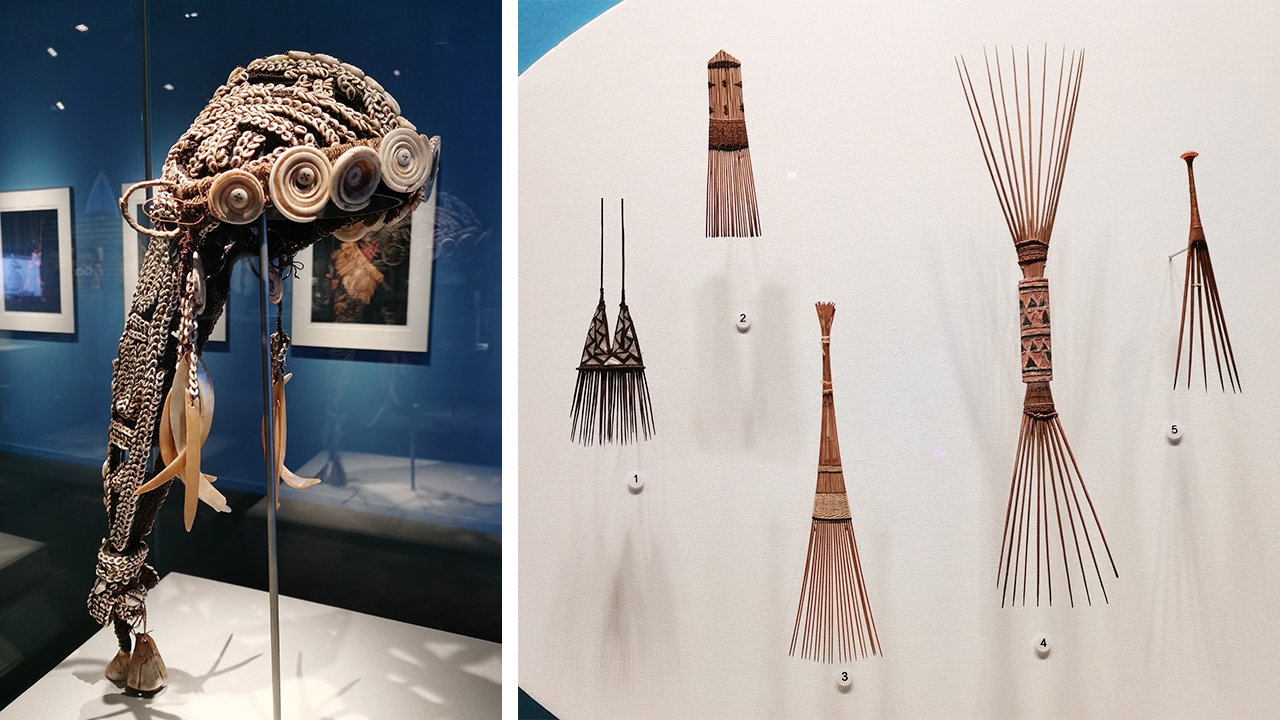
A 20th-century ceremonial headdress and 19th-century combs.
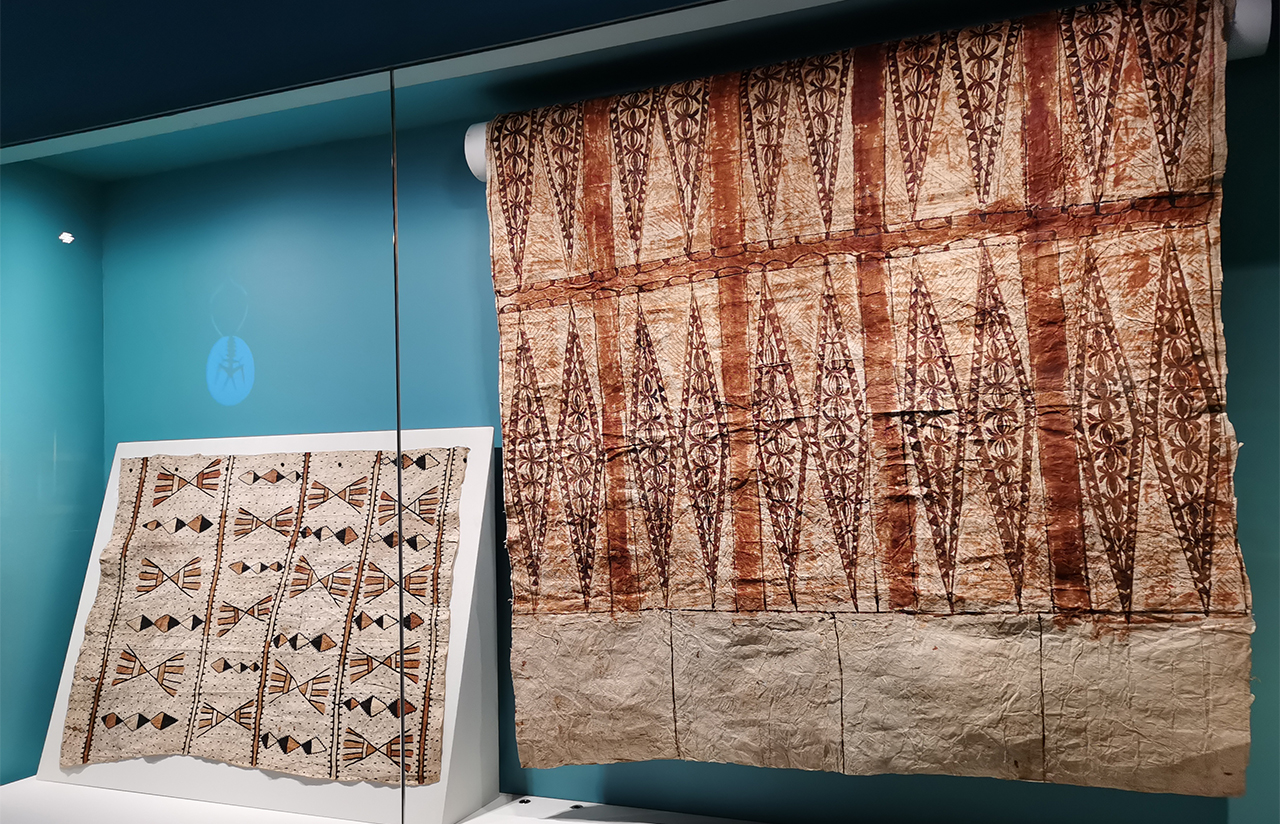
Barkcloth items from the 20th century.
Dates: Through Oct. 7
Venue: Nanshan Museum, Nanshan District (南山博物馆)
Metro: Line 12 to Nantou Ancient City Station (南头古城站), Exit E4