
 Share
Share


 Print
PrintShenzhen Natural History Museum traces 4.6 billion years of Earth's history
Writer: Song Yingwen | Editor: Lin Qiuying | From: Shenzhen Daily | Updated: 2026-06-11
Shenzhen will welcome a landmark cultural and scientific institution with the opening of the Shenzhen Natural History Museum in the city's northeastern district of Pingshan this summer.
Designed to showcase the evolution of the Earth, life and humanity, the museum will open July 28.
According to project information released by local authorities, the museum occupies a site of approximately 42,000 square meters and has a total floor area of about 105,300 square meters, including roughly 35,200 square meters of exhibition space.
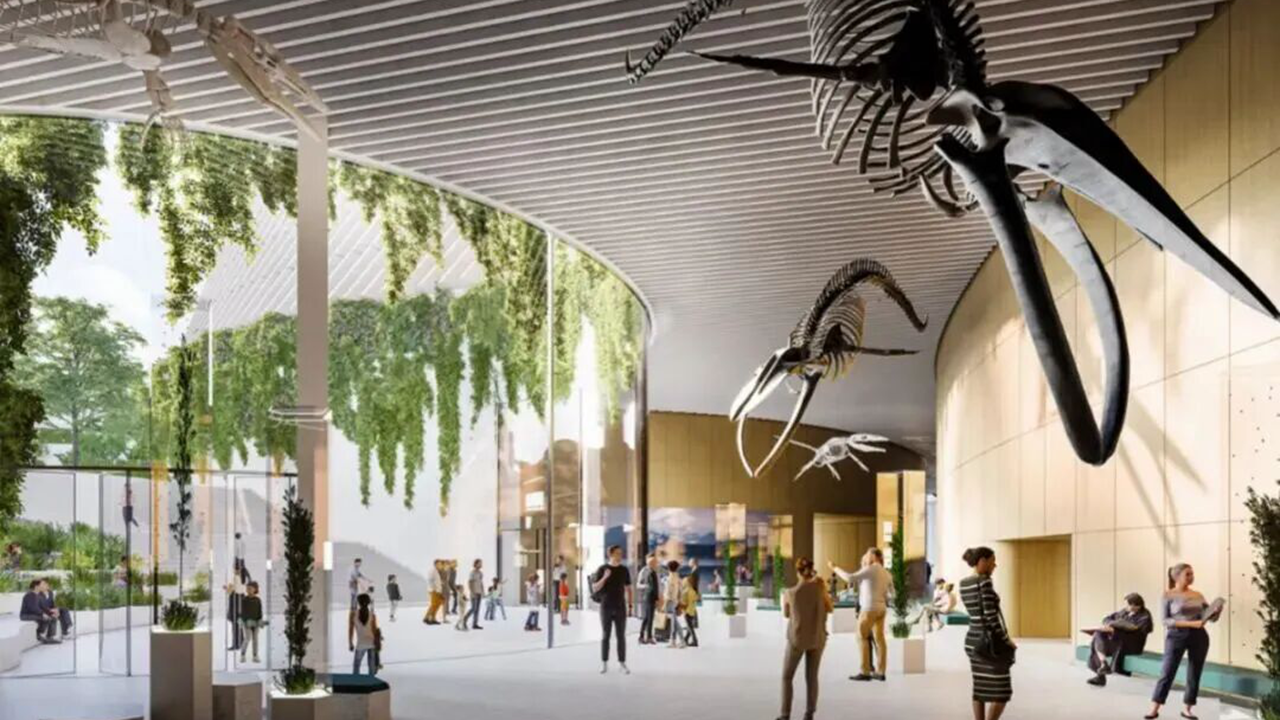
A rendering show a hall of the Shenzhen Natural History Museum, where suspended fossil displays hang above a soaring atrium. Photos courtesy of Shenzhen Natural History Museum
Designed as a comprehensive natural history museum, the facility combines science education, ecological exhibitions and public learning programs. Inspired by the sweeping curves of the Pingshan River, the museum’s architecture integrates seamlessly with the surrounding landscape of lakes, hills and green spaces.
The facility houses eight themed exhibition halls that guide visitors through the story of the universe, Earth and life over billions of years.
The journey begins with astronomy and humanity’s exploration of the cosmos, featuring ancient star maps, traditional astronomical instruments, telescopes, galaxy formation and the birth of the solar system. The museum will also display meteorite specimens that offer visitors a tangible connection to deep space.
Another gallery focuses on Earth’s 4.6-billion-year history, examining geological processes through rocks and mineral specimens and explaining how plate tectonics and geological activity shaped China’s diverse landscapes.
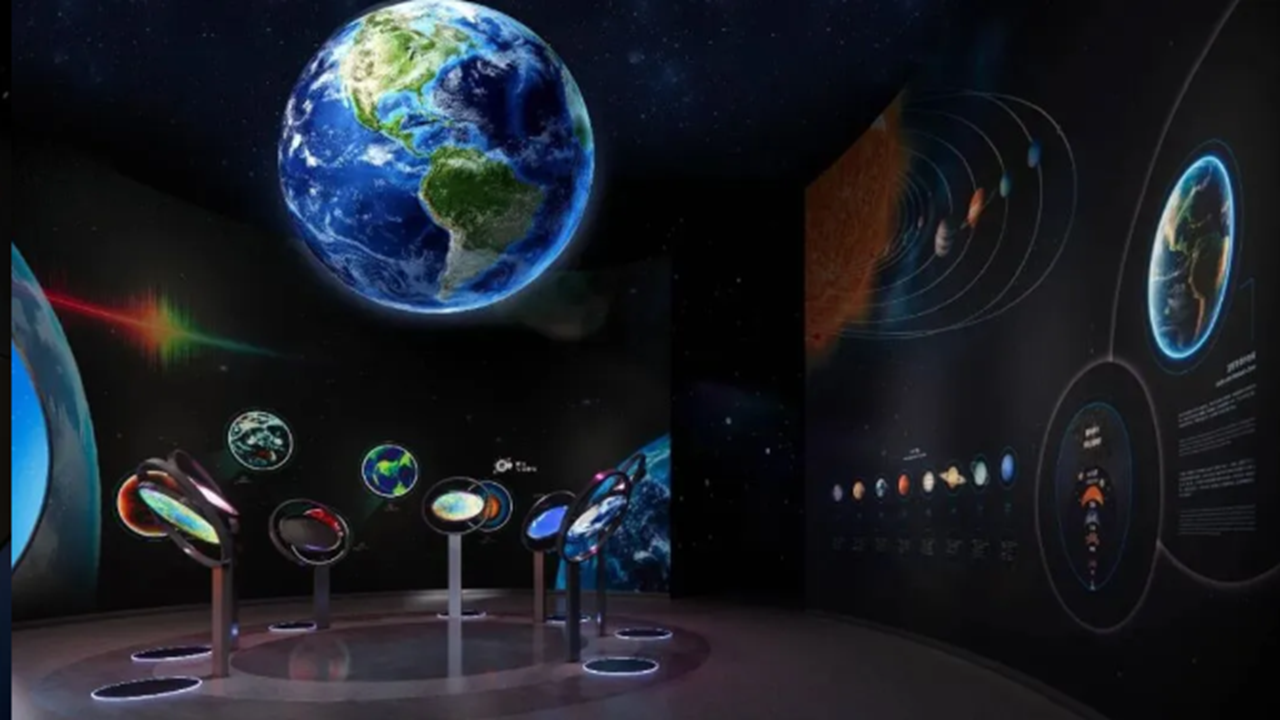
A rendering of the Earth Hall shows interactive displays exploring the formation of Earth, the solar system and the wider universe.
A life sciences hall traces the evolution of life over approximately 3.8 billion years, from the emergence of single-celled organisms to multicellular life, plants, animals and eventually humans. Exhibits explore key evolutionary concepts including natural selection, adaptation and genetic variation.
Dinosaurs take center stage in another exhibition hall, where large fossil skeletons and reconstructed prehistoric environments will illustrate the anatomy, behavior and extinction of the animals that dominated the Mesozoic Era. The gallery will also highlight paleontological discoveries from Guangdong and neighboring province of Jiangxi, offering a South China perspective on dinosaur research.
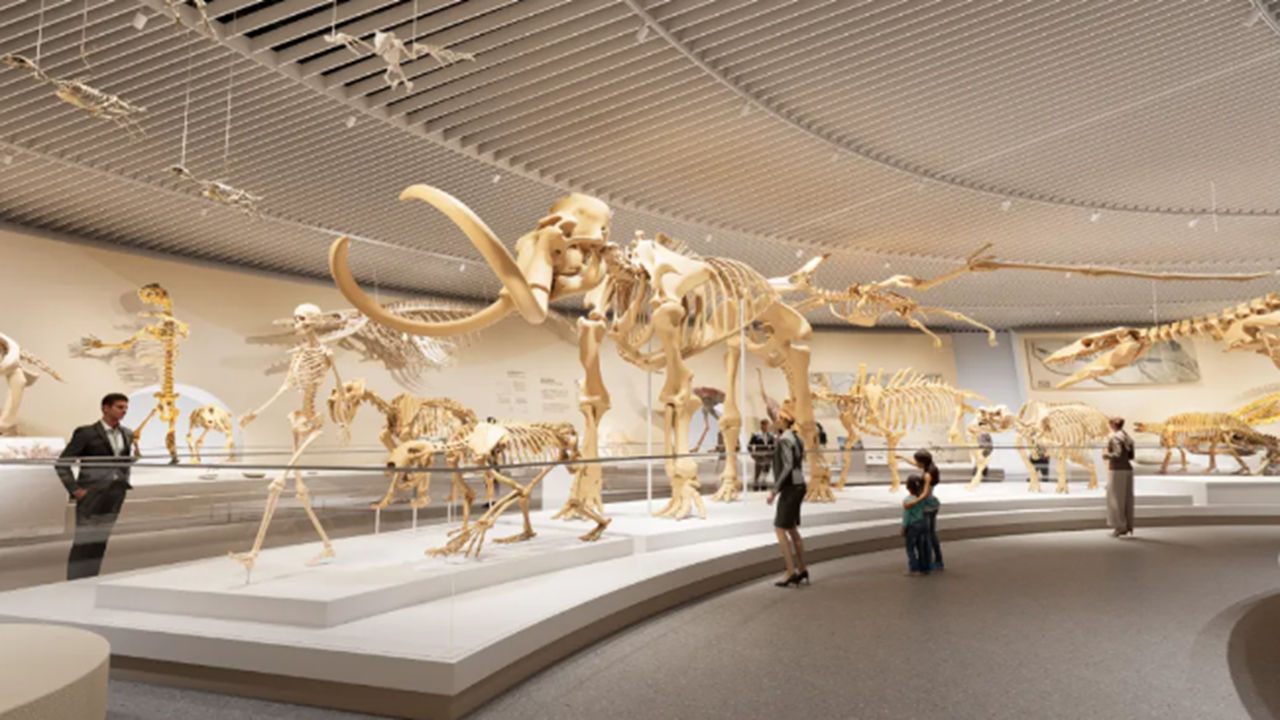
A rendering depicts the Evolution Hall, where fossil skeletons and scientific displays will trace the development of life on Earth, from early organisms to mammals and humans.
The museum’s human origins exhibition examines the evolution of primates and early humans, drawing on archaeological discoveries from Africa, Eurasia and China. It will feature research findings and fossil materials associated with ancient human populations in southern China, including the Guangxi and Guangdong regions.
The final section shifts attention from global natural history to Shenzhen itself. Through displays of native species, migratory birds and protected wildlife, the exhibition explores the biodiversity of the city’s subtropical ecology, native species, and the balance between urbanization and ecological conservation.
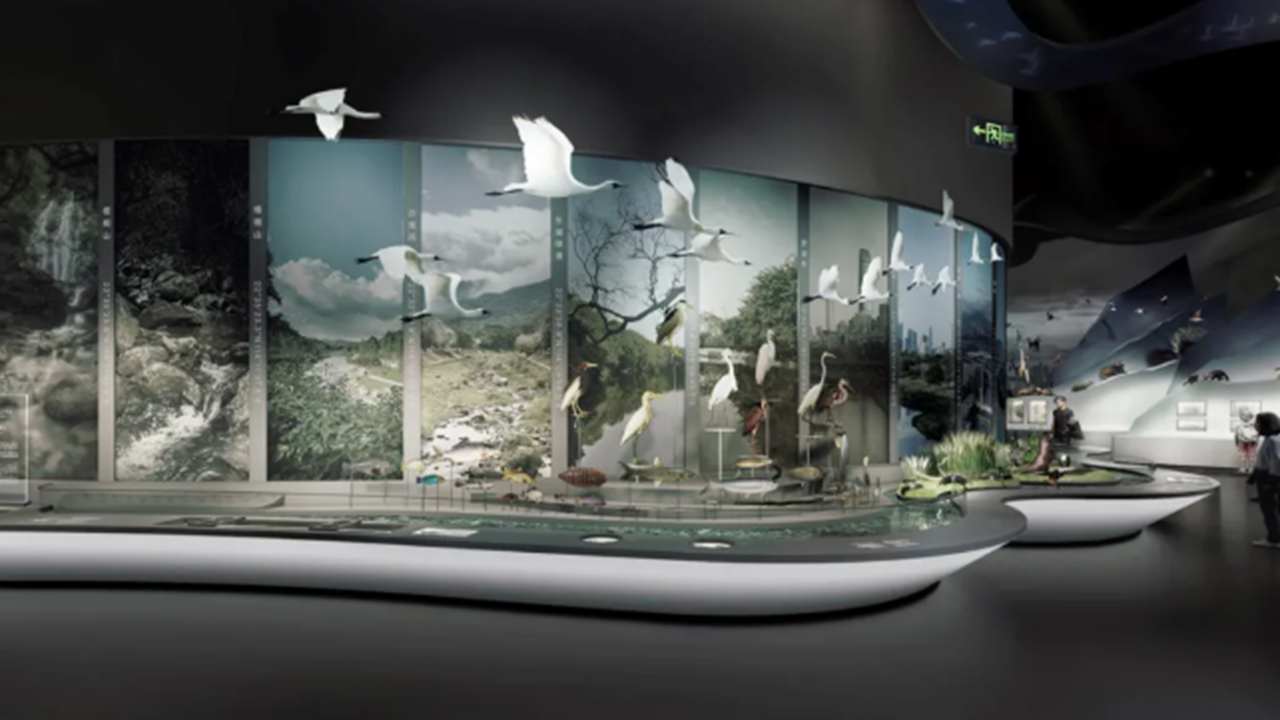
A rendering of the Homeland Hall highlights native wildlife and ecosystems found in Shenzhen and the surrounding region.
The museum will also become the permanent home of the Behring Collection, a world-renowned assemblage of global wildlife specimens donated by American philanthropist Kenneth Behring. Featuring animals from around the world, the collection has been a popular attraction among Shenzhen families and schools for years and is now being relocated to the new museum.
By combining immersive exhibitions with science education, the museum aims to become a premier destination for families and students across the region.
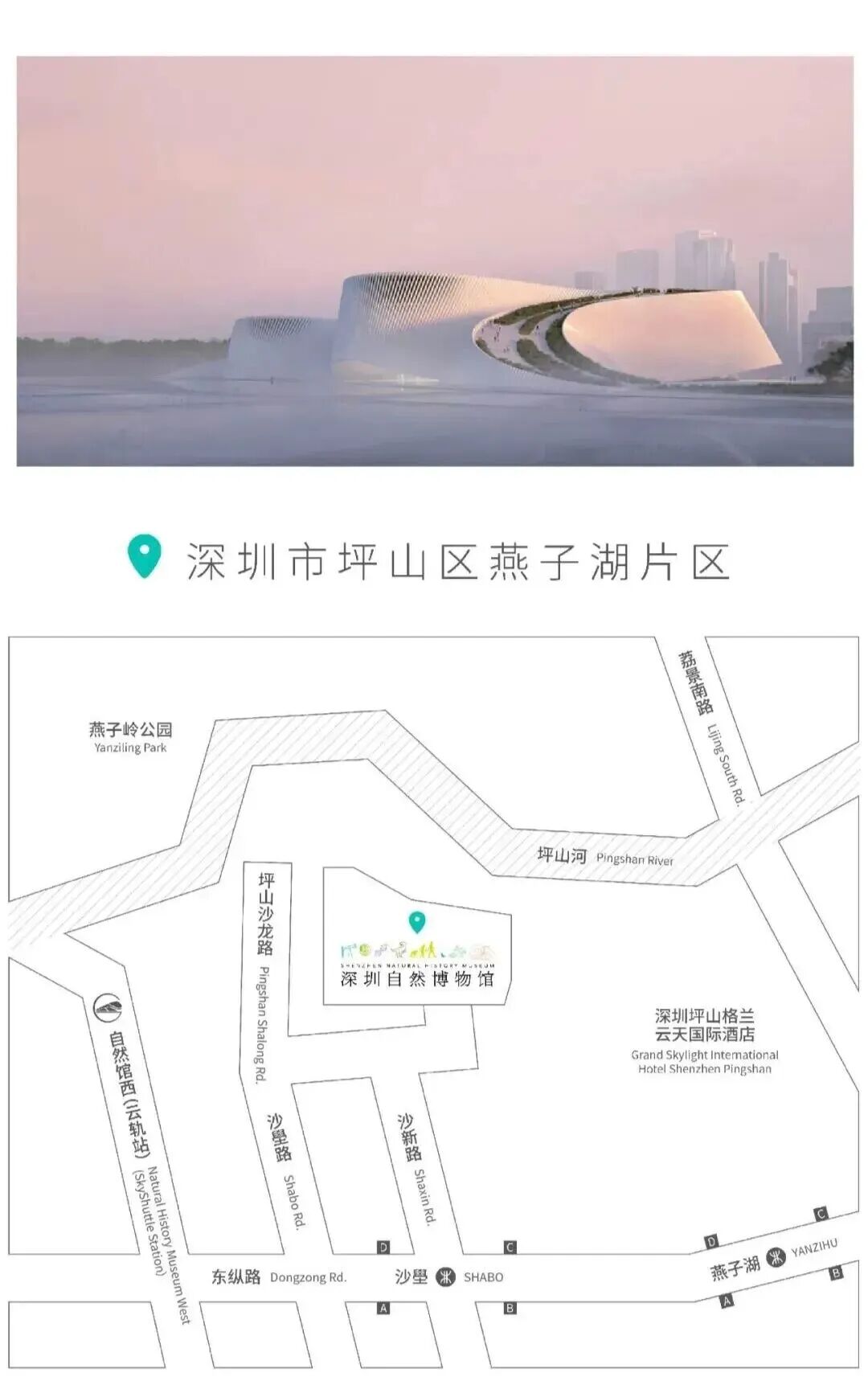
Venue: Shenzhen Natural History Museum, Pingshan District (深圳自然博物馆)
Metro: Line 16 to Shabo Station (沙壆站), Exit C
SkyShuttle: Line 1 to Natural History Museum West Station (自然博物馆西站), Exit B