
 Share
Share


 Print
PrintShenzhen: Where APEC's three pillars of connectivity converge
Writer: Li Jing | Editor: Lin Qiuying | From: Original | Updated: 2026-05-28
With less than 200 days to go until the 33rd APEC Economic Leaders’ Meeting in Shenzhen, Eduardo Pedrosa, executive director of the APEC Secretariat, visited the city for a series of youth and innovation events.
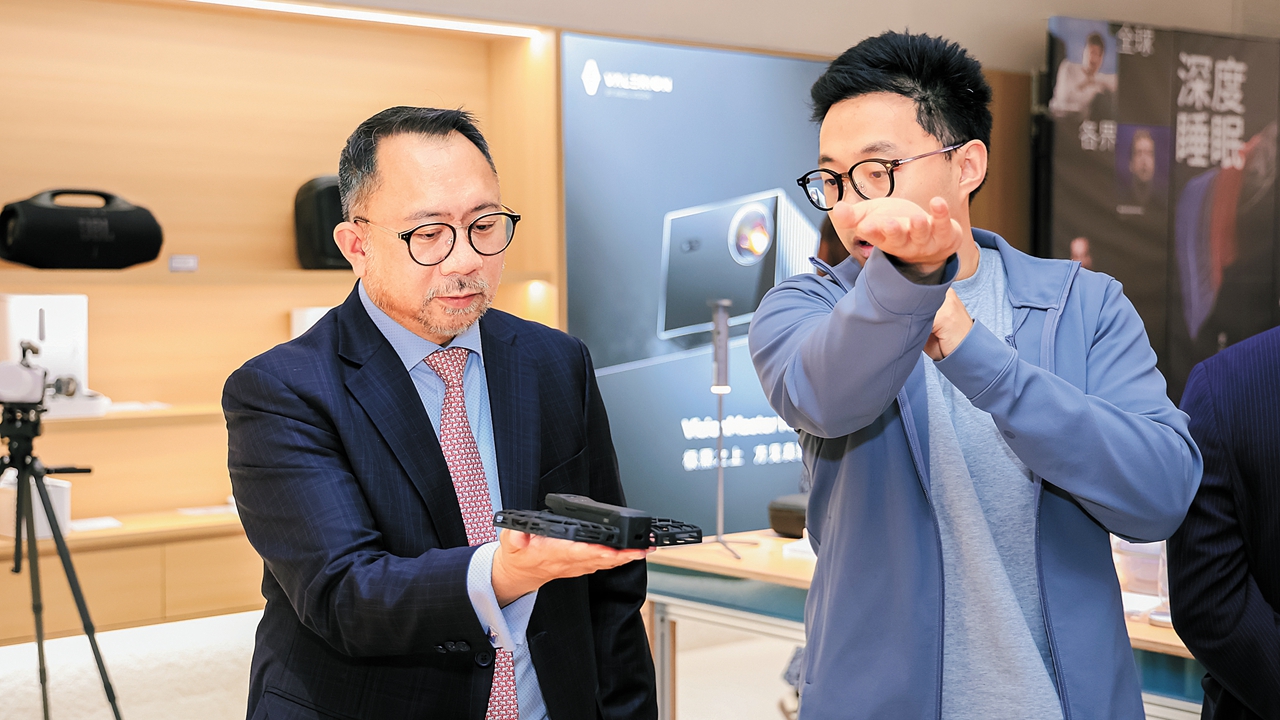
Eduardo Pedrosa, executive director of the APEC Secretariat, holds a drone camera during a visit to INNO100, a global innovation hub at Shenzhen Bay Cultural Plaza in Nanshan District, on May 6. Qiu Weibin
In an exclusive interview with Shenzhen News Group, Pedrosa highlighted Shenzhen as a prime example of APEC’s three pillars of connectivity: physical, institutional, and people-to-people. “Shenzhen represents the convergence of all three,” he remarked. He expressed his vision for how Shenzhen’s tech-driven growth can serve as a blueprint for mutual development across the APEC economies.
During his tour of local universities, tech hubs, and firms, Pedrosa was struck by the city’s human element. “What impressed me most is the human connection,” he said. “Engineers, designers, and entrepreneurs are in constant dialogue. Ideas become products overnight. That efficiency is why Shenzhen is rightly called China’s Silicon Valley.”

A view of Shenzhen’s cityscape. File photo
Throughout the conversation, Pedrosa emphasized one word: interoperability.
“Every economy has its own culture and legal system; we aren’t trying to force uniformity,” he explained. “Instead, we are ensuring systems can work together.” He envisions a future where a digital service used in Shenzhen functions seamlessly in Singapore, Japan, or the Philippines. This, he noted, is APEC’s irreplaceable role in a rapidly shifting technological landscape.
Addressing the challenges of the digital age, Pedrosa admitted that “change is happening too fast.” He warned that while many tech initiatives are global, they often lack dialogue, resulting in incompatible systems. APEC’s mission is to bring stakeholders to the table to “make these systems understand each other.”
Amid rising global protectionism, Pedrosa advocated for practical cooperation over rhetoric. APEC is currently advancing concrete projects in AI and paperless trade. “We don’t just issue high-level declarations; we implement thousands of practical projects,” he noted, emphasizing that constant dialogue with the private sector ensures policy keeps pace with innovation.
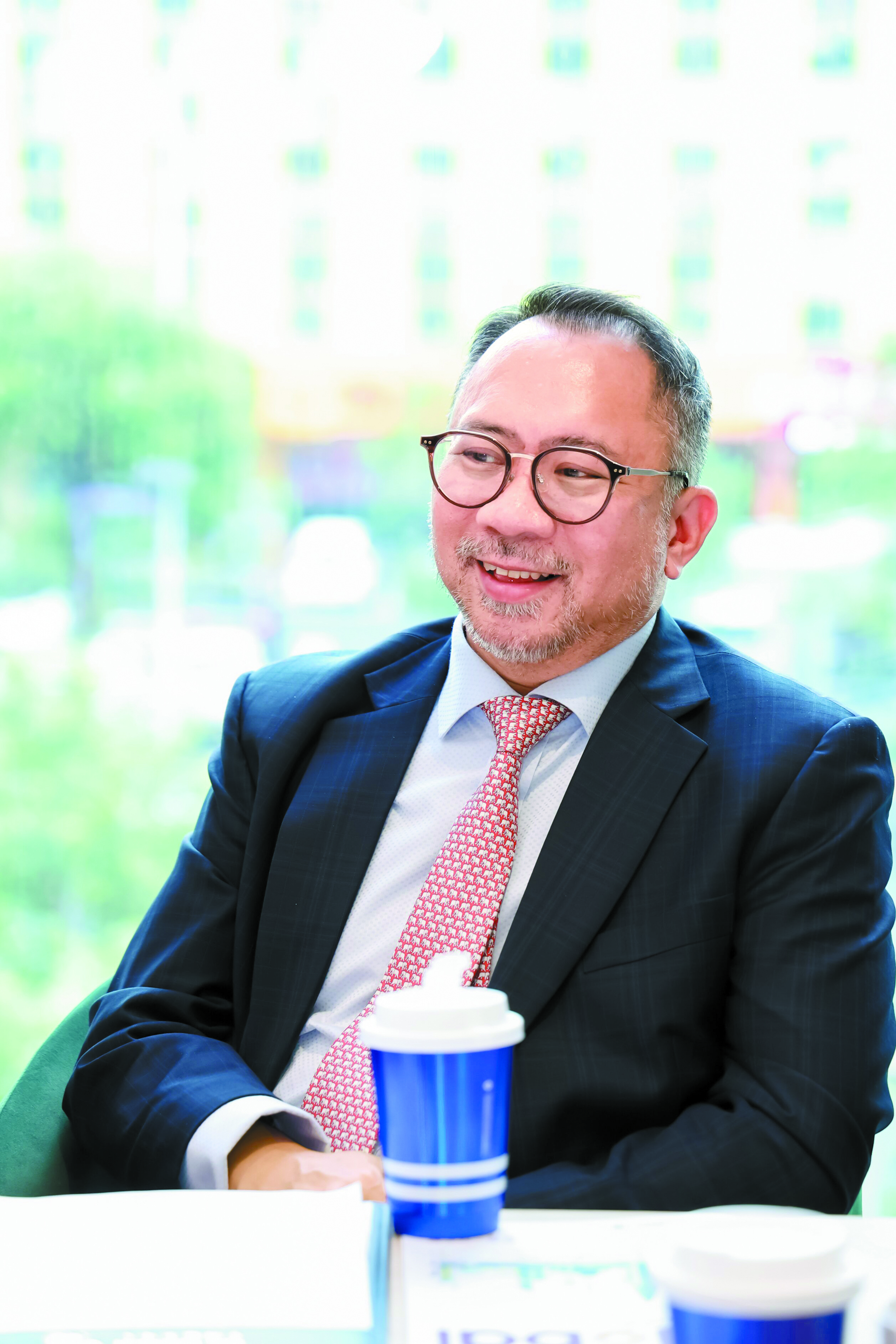
Eduardo Pedrosa
This visit marked Pedrosa’s third trip to Shenzhen in two decades, and the transformation left him astonished. “The city is unrecognizable,” he said.
From cross-border ferries to the dense high-speed rail network of the Guangdong-Hong Kong-Macao Greater Bay Area, he described the city’s development as a form of “futurism.”
Reflecting on APEC’s evolution in China — from the trade-focused 2001 summit in Beijing to the connectivity-themed 2014 meeting in Shanghai — Pedrosa believes the 2026 Shenzhen summit will be defined by innovation and the future.
This shift aligns with China’s high-quality development goals and the APEC Putrajaya Vision 2040. “But all this is not for the sake of the vision itself,” he added. “It is for the shared prosperity of the Asia-Pacific peoples.”
As the city readies itself for the November summit, Pedrosa offered a message to local volunteers: “Every volunteer is an ambassador. You represent the spirit of this city — its openness and its vitality.”
“In November, the world will see more than just the speed of a city,” he concluded. “They will see a new relationship where technology belongs to the people, serves them, and is embraced by them.”