
 Share
Share


 Print
PrintCultural heritage shines at Tibetan pavilion
Writer: Li Dan | Editor: Lin Qiuying | From: Shenzhen Daily | Updated: 2026-05-25
The Tibetan booth has attracted a lot of attention during the five-day China (Shenzhen) International Cultural Industries Fair (ICIF), held from May 21 to 25 at the Shenzhen World Exhibition & Convention Center.
From 600-year-old Thangka appliqué traditions to "treasure tea" brought from afar to offer blessings, the booth provides visitors with a vivid and immersive glimpse into this mystical land.
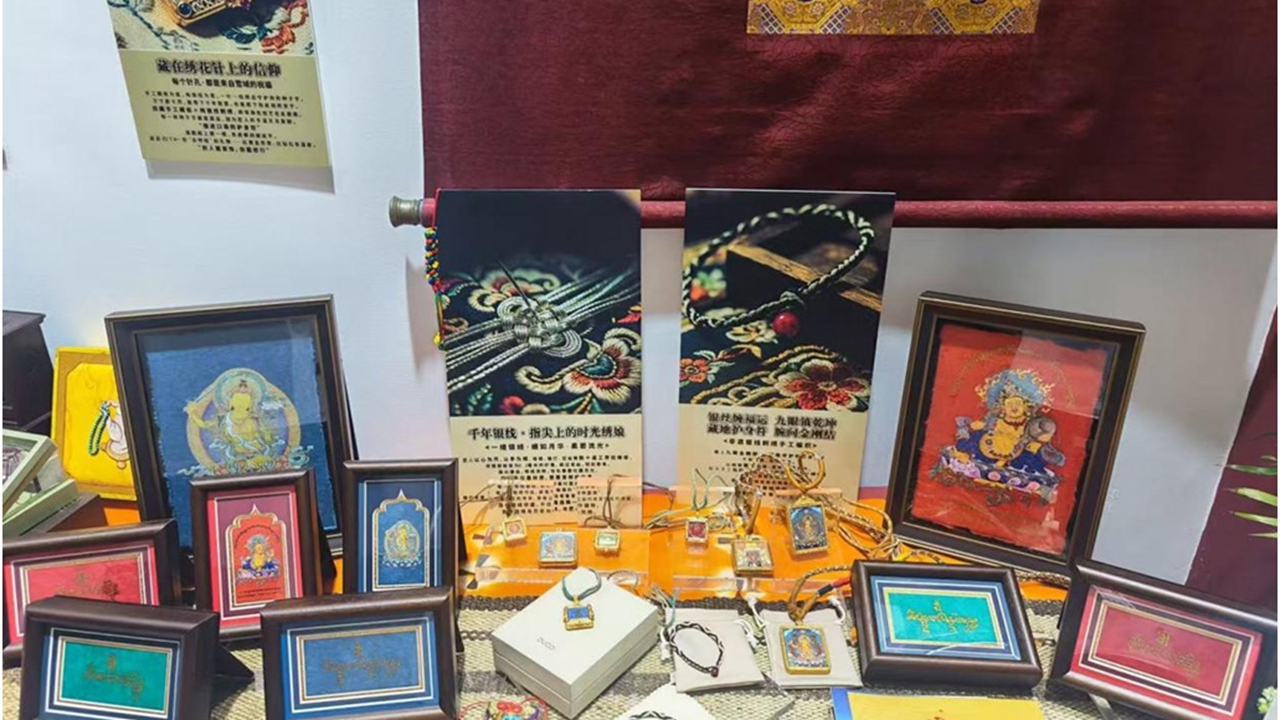 Handicrafts on display at the Tibetan pavilion at the ICIF. Photos courtesy of event organizer
The most eye-catching display are large Thangka appliqués hung on the walls. The technique of making a Thangka appliqué (also known as Barbola or silk appliqué) is a highly skilled textile art form considered more precious than painted thangkas in the Tibetan culture. The process involves creating a "silk collage" that strictly adheres to traditional religious iconography.
The creation begins with a strict design phase, where a master artist creates a detailed drawing of the deity. This drawing is used to cut precise shapes from colored silk fabrics. Each part of the figure, such as a hand, robe, or lotus petal, is cut out separately. Fine details and outlines are created using a couching technique, where thick threads are laid along the edges of the fabric pieces and sewn down with tiny stitches. This defines the shapes and gives the image a slightly raised, embossed appearance.
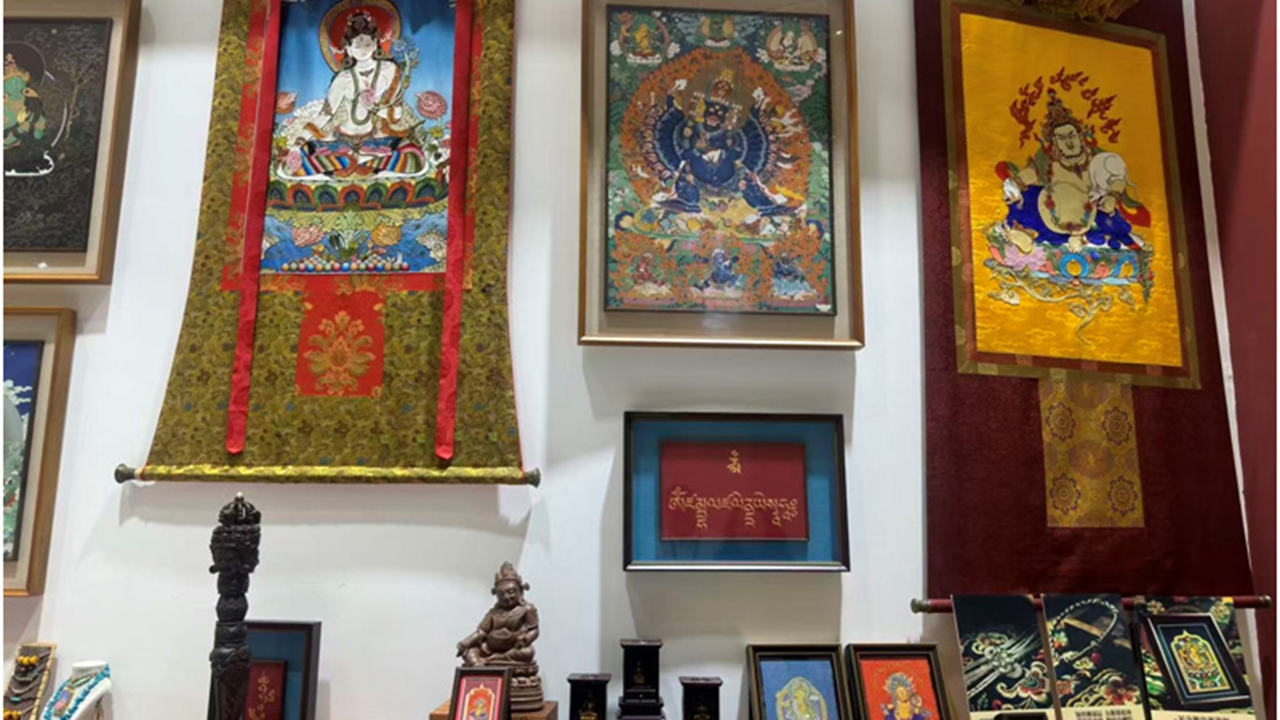
Thangka appliqués and Buddhist figurines on display at the Tibetan pavilion.
The pieces are then assembled from the background forward, with smaller and more detailed elements sewn on last. Some parts may be padded with cotton to create a three-dimensional relief effect.
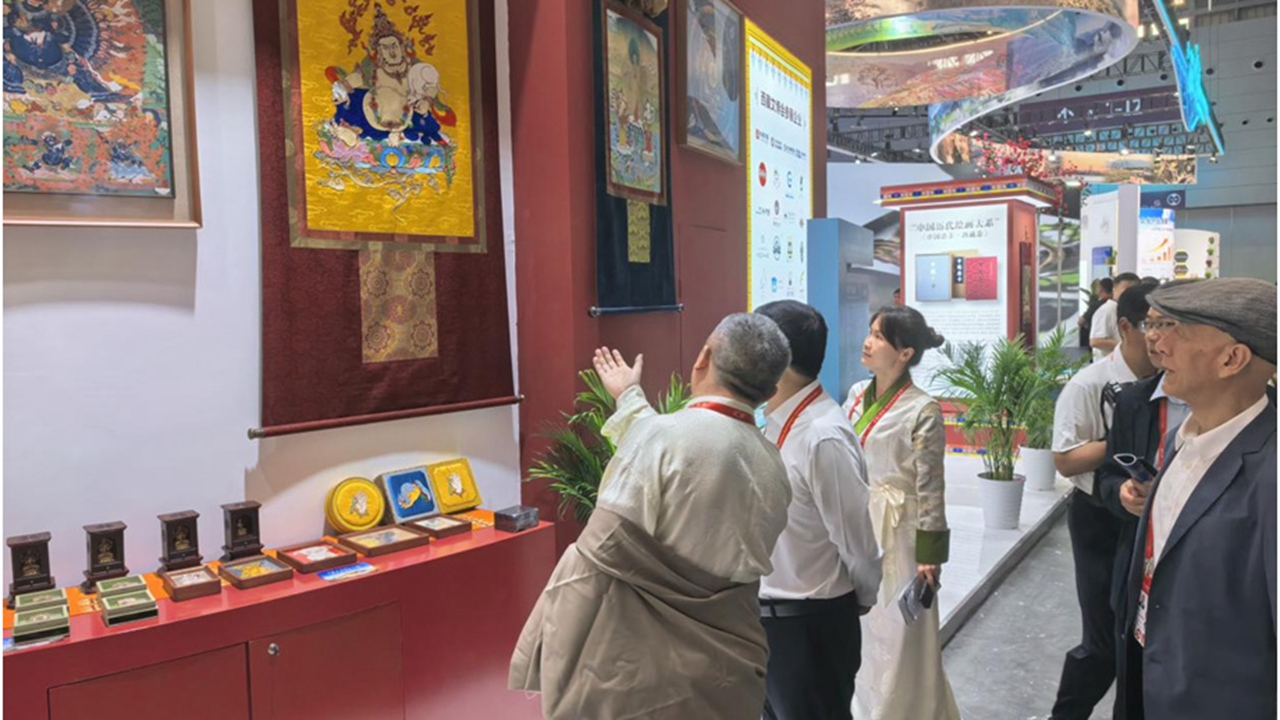
Visitors are impressed by the Thangka appliqués hanging on the wall.
Once the silk collage is complete, it is mounted onto a larger brocade frame, fitted with a wooden dowel and hanging cord, and covered with a protective silk curtain. Finally, a consecration ceremony is performed, which transforms the textile from a handicraft into a sacred Buddhist item.
The other handicrafts on display, such as Buddhist figurines, Tibetan calligraphy works and embroidered charms, have also attracted many admiring visitors.
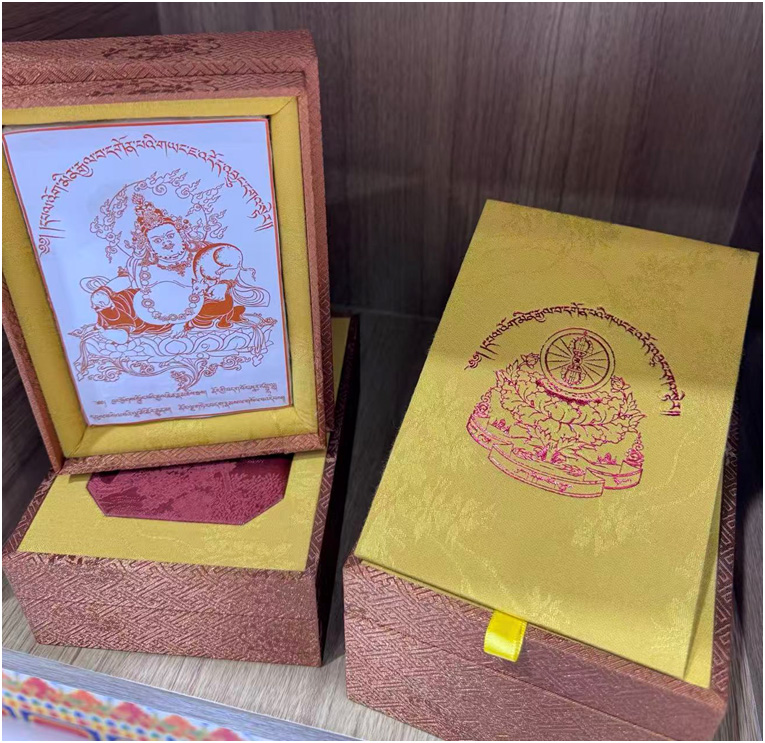
The "treasure tea" carries blessings for the drinker.
Another highlight of the booth is a “treasure tea” produced in Yunnan Province and blessed with good wills in Tibetan temples and packaged with the image of god of fortune.
Traditionally, the “treasure tea” is made of black tea locally produced in Xizang. This product, however, uses the pu’er tea from ancient tea trees in Yunnan as raw material.
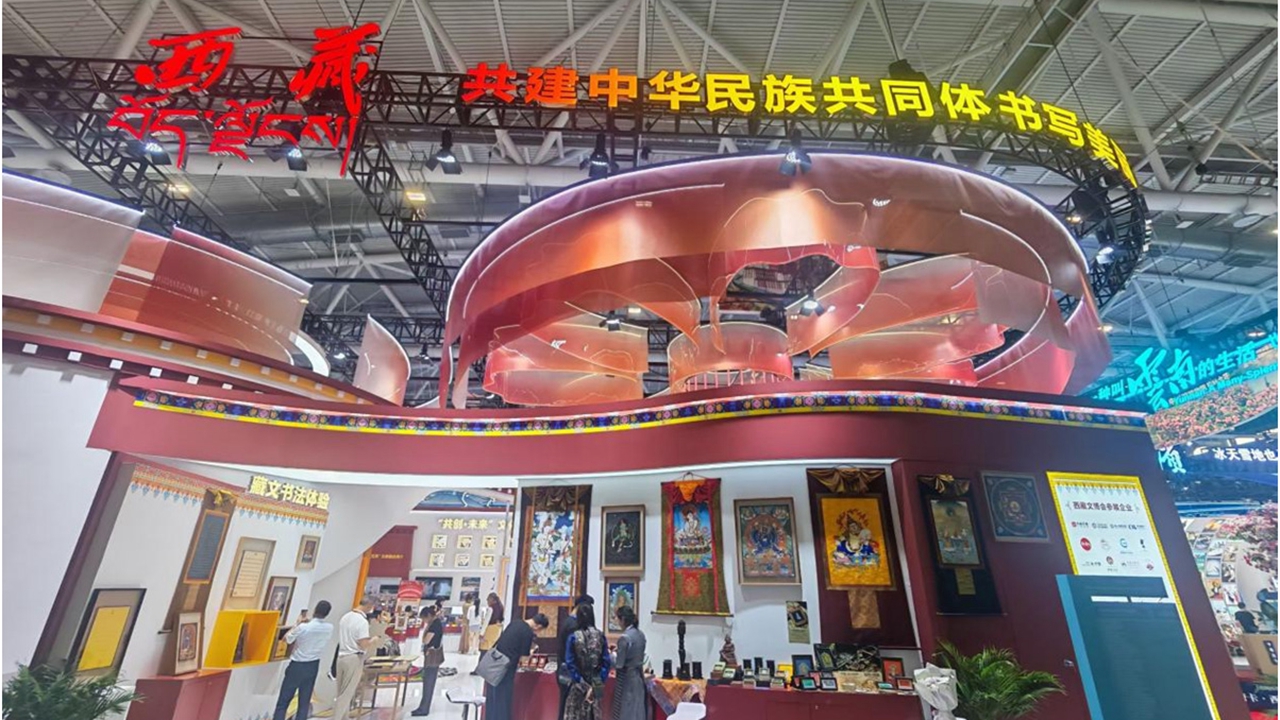
The facade of the Tibetan pavilion at the ICIF.
The Tibetan pavilion also showcases traditional Tibetan herbs, locally produced coffee, and publications by Xizang People’s Publishing House.