
 Share
Share


 Print
PrintFrom Indonesia to PKU Shenzhen — A legal professional's life and study story
Writer: Khairunnisa Bella Dina | Editor: Cao Zhen | From: Original | Updated: 2026-05-22
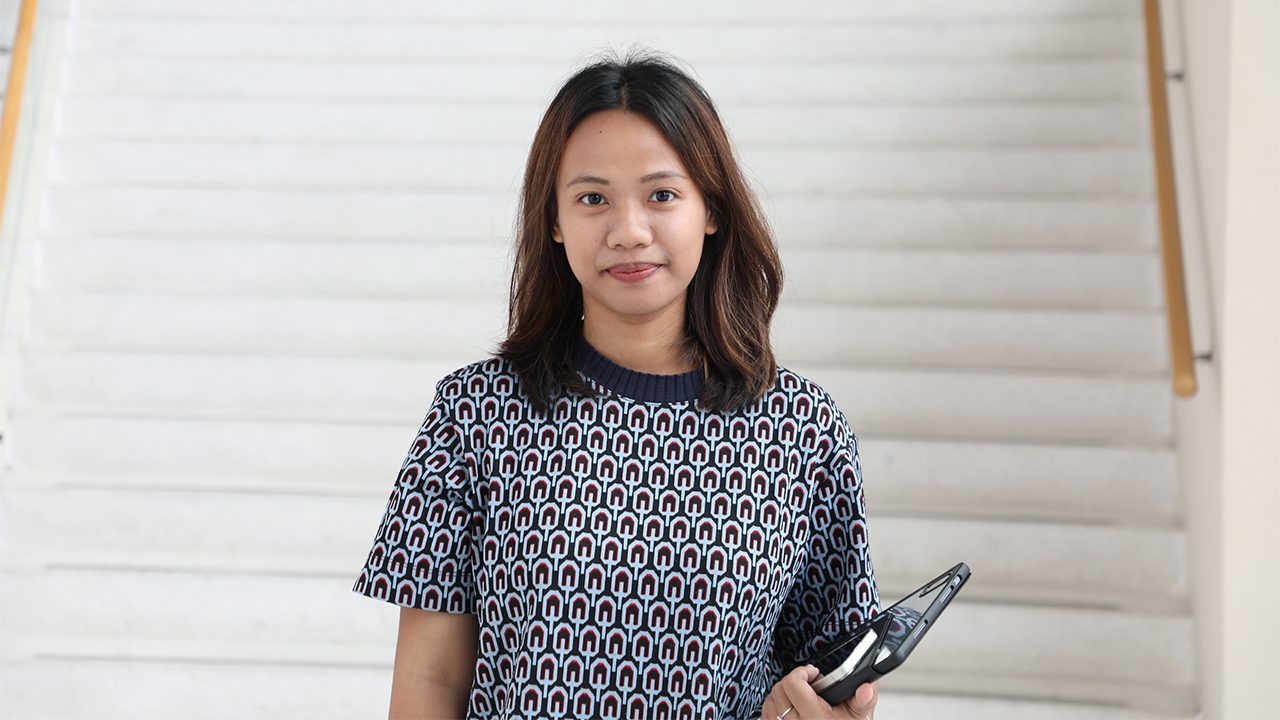
Khairunnisa Bella Dina
Part I: Life in Shenzhen: Finding my rhythm in a new city
A city defined connections
Learning to live between the lines: My first semester in Shenzhen
I arrived in Shenzhen at the beginning of my first semester with the alertness of someone starting again in a new country. Although it was my first time in China, and I had read extensively about the city’s rapid pace and modernity, I was surprised by how quickly daily life became manageable.
What struck me most wasn't a specific landmark or the skyline: it was the seamless integration of the city’s various elements.
In my experience, Shenzhen works through connections. The Metro became the first sign of this. To reach a park, a shopping mall, a restaurant, or a tourist attraction, I usually need only one line and perhaps a single transfer. The route is direct. The stations are clear. I rarely have to calculate too many steps before leaving campus.
In other cities I have visited, reaching a destination often means combining different types of transportation. Buses and trains exist, but they do not always operate as a single system. In Shenzhen, I found myself relying almost entirely on the Metro. That consistency has changed my rhythm. I arrive at destinations with my energy still intact.
The same sense of integration appeared on my phone. One application handled payment, food delivery, and restaurant searches. I could order dinner, pay for it, and locate a place to meet friends within the same digital framework.
For a new international student, this was more than convenience. It reduced hesitation. It meant fewer moments of uncertainty standing in front of a counter or at the entrance of a store.
Gradually, that ease made the city less foreign.
A small act of kindness in a shopping mall
Not every moment, however, passed without friction.
One afternoon at a shopping mall, I found myself unable to locate the restaurant I was looking for. My phone’s indoor map was proving unreliable, and after pacing back and forth for some time, I realized I was simply lost.
I turned to a security guard for help. It was immediately clear that he didn't speak English, yet he didn't hesitate to assist.
He began with gestures, pointing down a corridor to indicate the way. Sensing that his directions weren't quite landing, he did something simple: he walked with me.
We moved through the mall together until we reached the restaurant. He pointed to the entrance, ensured I had found my way, and only then stepped away.
The interaction lasted only a few minutes, yet it left a lasting impression.
In a foreign country, language can easily become a barrier that isolates you. That day, someone chose to bridge that gap with action rather than words. It wasn’t a dramatic gesture, but it made the city feel welcoming and attentive.
Moments like this unfold in small ways, more often than one might expect.
If infrastructure makes a city functional, these gestures make it humane.
Parks, sea breeze, and slower side of Shenzhen
Shenzhen’s human dimension also appeared in its landscapes.
I spend weekends at the Shenzhen Bay Park, where families spread out on the grass and joggers move along the waterfront paths. I also visit the Central Park and OCT Loft. The latter stands out because it complicates the city’s reputation.
Shenzhen is often well known for its technology, innovation, and industry. OCT Loft, with its art spaces and design studios, shows another side of the city.
Creativity here is not limited to hardware and code. It occupies walls, open courtyards, and converted buildings. The presence of art alongside technology reshaped my understanding of the city.
The parks offered something quieter.
Standing beneath the open sky and noticing green trees restored my mood in ways that no application could. In a city known for speed, accessible nature becomes an everyday counterbalance. For a student adjusting to a new academic environment, that balance matters.
Learning Chinese, one character at a time
Life at Peking University School of Transnational Law added further structure to my adjustment.
I joined a Chinese language course offered to international students. At the beginning, my classmates and I started with little foundation. The teacher’s patience defined those early weeks. Progress came slowly, through repetition and correction.
Outside the classroom, learning continued informally. International students gathered over notebooks, comparing characters and testing pronunciation.
The questions were practical and immediate. How should this character be written? Where does the tone rise or fall?
The act of asking built familiarity. Language practice became a shared task rather than an individual struggle. Through this process, I also began noticing differences in communication style.
In Chinese, refusals are often expressed indirectly. Instead of hearing a blunt “no,” I might hear an explanation or a softer alternative. In Indonesia, I had been more accustomed to clearer yes-or-no responses. In Shenzhen, I learned to listen for meaning beneath phrasing.
This insight did not remain abstract.
As a law student, I began to see how easily misunderstandings can grow when tone and intention are misread. Business, negotiation and cooperation depend not only on formal language but also on cultural cues.
Living in China has allowed me to encounter these cues in ordinary interactions, not just theoretical discussions.
Discovering traditions through small moments
My engagement with culture also extended beyond communication patterns. Near campus, I joined a class where we learned how to make a traditional Chinese bag. The activity required patience and attention to detail. Working with materials by hand transformed cultural knowledge into a tactile experience.
During Mid-Autumn Festival celebrations, I participated in a guessing game based on written clues. The format resembled traditional riddles often associated with major festivals.
At the end, I exchanged my result for a mooncake printed with the initials of my university. The flavor was acceptable, but the meaning stayed with me. I learned that the round shape symbolizes reunion, reflecting the idea of a family gathering beneath a full moon.
The explanation emerged naturally in conversation. Cultural meaning was not imposed. It was shared among peers who assumed I would want to understand the story behind what I held.
Stepping outside my comfort zone
As the semester progressed, I began noticing a quieter shift within myself.
I consider myself shy by temperament. At home, I usually stayed within a familiar circle. In Shenzhen, however, the limited length of my program sharpened my sense of time. Two years suddenly felt brief.
That awareness encouraged me to step beyond my comfort zone. I joined activities earlier than I might have at home. I initiated conversations with classmates from different countries. I attempted communication with residents even when English was not available — sometimes relying on translation tools, sometimes simply relying on persistence.
Confidence did not arrive suddenly. It accumulated. Each small success reduced hesitation the next time.
When people ask whether I would recommend studying in Shenzhen to students from Southeast Asia, my answer comes from experience.
The city’s infrastructure lowers practical barriers. The campus provides structured support, from language classes to cultural activities. The social environment rewards initiative.
Most importantly, making local friends changes the texture of daily life.
Friendship smooths the adjustment. And sometimes those connections extend far beyond the campus timeline.
A classmate from one country may one day become a professional contact in another.
Looking back at my first semester
When I look back at my first semester in Shenzhen, I do not remember one dramatic turning point.
Instead, I remember a sequence of ordinary images:
a Metro ride that requires only one transfer,
a phone screen that simplifies payment,
a security guard walking beside me through a maze of corridors,
classmates leaning over Chinese characters,
a mooncake exchanged during a festival evening,
and a stretch of park where the sky feels unexpectedly wide.
None of these scenes is dramatic on its own. Together, they form a pattern.
Shenzhen did not demand that I transform overnight. Instead, it offered systems that worked, people who helped, spaces that restored balance, and a campus that encouraged participation.
Within that structure, adjustment became gradual. And in a new country, that is often what makes the difference.
Part II: Study at PKU STL: Rethinking my path as a lawyer
The experiences of my first months in Shenzhen also pushed me to think more deeply about my career and why I decided to return to school.
Before I came to China, people asked me: “Bella, you've been a lawyer for seven years. You have a stable career. Why would you give that up to go back to school?” My answer is simple: I don’t want to be the same person next year that I am today.
I want to be Bella in 2025 with a deeper knowledge of international law. I want to be Bella in 2026 with something new. That’s why I’m here, at Peking University’s School of Transnational Law in Shenzhen, pursuing my LL.M. degree.
The lesson that stayed with me
Just before I graduated from university in Indonesia, a professor told our class something I’ve never forgotten: “When you enter the real world, don't just be a craftsman. Don’t just follow instructions from your boss or your clients. Ask yourself: What impact can you bring to your family, to your society, to your country?”
For years, those words lived in the back of my mind. Then, after working for some time, I started to notice something. Around me, I saw many professionals who had become trapped in their daily routines. They were busy — always busy — with documents, meetings, and deadlines. But they had stopped growing. Their knowledge wasn't expanding. Their minds weren't being challenged. I looked at myself and asked: Am I becoming like them?
That’s when I remembered my professor's words. I realized I couldn’t wait for my environment to change. I had to change myself.
The road that started with a rejection
Getting here wasn't easy. I applied for a scholarship from the Indonesian government — a highly competitive program with thousands of applicants. The first time, I got rejected. I won't lie. It hurt. I was upset. But I couldn't stop there. So I tried again.
Between the first and second attempts, I trained myself. I recorded videos of myself practicing for the interview — more than 20 videos saved on my laptop. I watched myself, corrected myself, improved myself. Six months later, I applied again. This time, I succeeded.
That experience taught me something important: Rejection is not the end. It’s just part of the process.
When I started researching master’s programs, I looked at many universities. But STL stood out for one reason: the breadth of courses. International transactions, data privacy, environmental law, climate change. I couldn't believe how many subjects I was interested in — all in one place. Before coming to Shenzhen, I was worried that STL might only offer basic, overview courses. But when I arrived and saw the curriculum, I was genuinely excited.
The teaching method was another surprise. In Indonesia, we’re used to professors lecturing and students listening. Here, professors encourage us to give our opinions —even to challenge theirs. At first, it was difficult. But I've come to appreciate it. You can't just show up to class. You have to prepare, to think, to be ready to speak.
I remember one class with Professor Winston. He called me to share my opinion. I was nervous, but I spoke. After I finished, no one said my opinion was wrong. Everyone had different perspectives, and that was okay. The professor never judged. That environment — where you can speak freely without fear — has helped me grow more than I expected.
Becoming a bridge
Indonesia today has many Chinese investors. As a lawyer, I saw this growing connection between our countries. But I also saw something else: misunderstandings. Cultural gaps, disputes that could have been avoided. Foreign investors don’t always understand local regulations. Local communities sometimes worry about environmental impacts. And when problems arise, everyone asks: Which law applies? Which court should resolve this?
I want to be the person who can answer those questions. I want to be a bridge between Chinese investors and Indonesian companies. That means understanding both sides. It means knowing Chinese business culture — how they negotiate, how they draft contracts, what they value. It means being able to explain Indonesian law in a way that foreign investors can understand. And it means helping to create fair agreements — where investors can succeed, but local communities and environments are also protected.
This is why I’m learning Chinese while I’m here. It's hard — really hard. But I know that when I go back to Indonesia, being able to speak the language will make a difference. It will help me build trust. It will help me negotiate better. It will help me be that bridge.