
 Share
Share


 Print
PrintShenzhen plans airport terminal with 5-minute air-rail transfers
Writer: Song Yingwen | Editor: Lin Qiuying | From: Shenzhen Daily | Updated: 2026-05-15
Shenzhen is accelerating a major expansion of its airport by planning a new terminal that allows passengers to transfer between flights and high-speed rail in as little as five minutes.
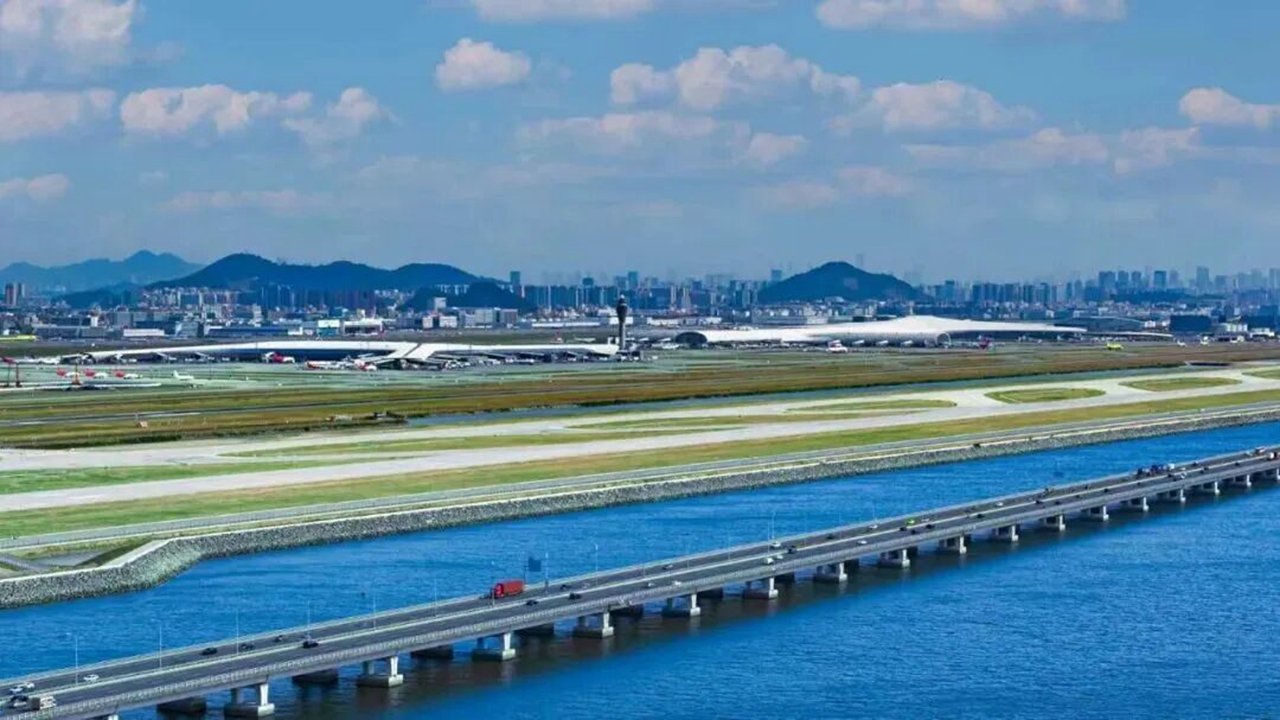
An aerial view shows Terminal 3, the satellite concourse and the third runway at Shenzhen Bao’an International Airport in Shenzhen. Shenzhen is expanding the airport’s passenger and cargo infrastructure as part of a broader plan to strengthen connectivity across the Guangdong-Hong Kong-Macao Greater Bay Area. Photos from WeChat account “深圳发布”
According to sources at Shenzhen Bao'an International Airport, the planned T1 terminal will adopt a same-level transfer design by integrating aviation and rail systems through unified transfer halls and automated baggage handling. It will enable a seamless transition for both travelers and their luggage within a single complex.
The project is expected to become China’s first airport facility to offer same-floor air-rail connectivity for both passenger and cargo services.
The expansion is driven by rising demand for passenger and cargo traffic at the Shenzhen airport. During China’s current “14th Five-Year Plan” period, the airport’s annual passenger throughput surpassed 66 million, while cargo and mail volumes have topped 2 million metric tons, according to the airport.
With existing passenger and cargo facilities in the airport's southern zone nearing saturation, development is now planned to extend to the eastern and northern areas.
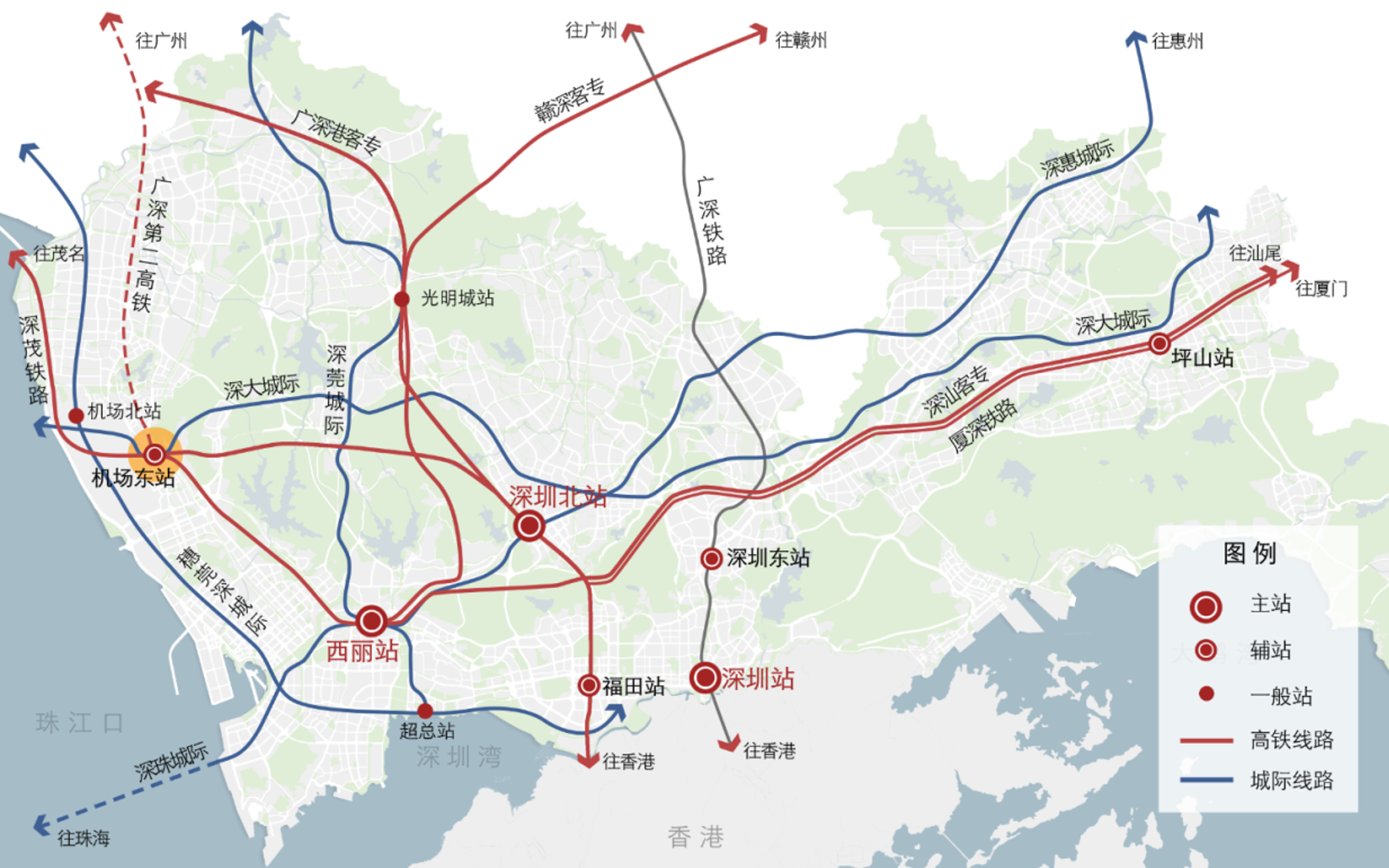
A planning map shows proposed rail connections linked to the Shenzhen airport’s future Airport East Integrated Transport Hub, which is designed to connect air travel with high-speed rail and metro networks across the GBA.
The T1 terminal will be the centerpiece of the Airport East Integrated Transport Hub, a large-scale project combining air travel, high-speed rail and urban transit into a single connected complex. It will link several major rail and metro lines in the Guangdong-Hong Kong-Macao Greater Bay Area (GBA), including the Shenzhen-Jiangmen Railway and the planned second Guangzhou-Shenzhen high-speed railway.
Preparations have entered a new phase with the launch of demolition tenders for a land consolidation project that covers approximately 480,000 square meters, including the airport’s former A and B terminals, remote boarding facilities and apron areas.
Officials said that these older facilities no longer meet modern operational or safety requirements and are unable to support the future needs of the airport east hub, particularly as nearby railway construction advances.
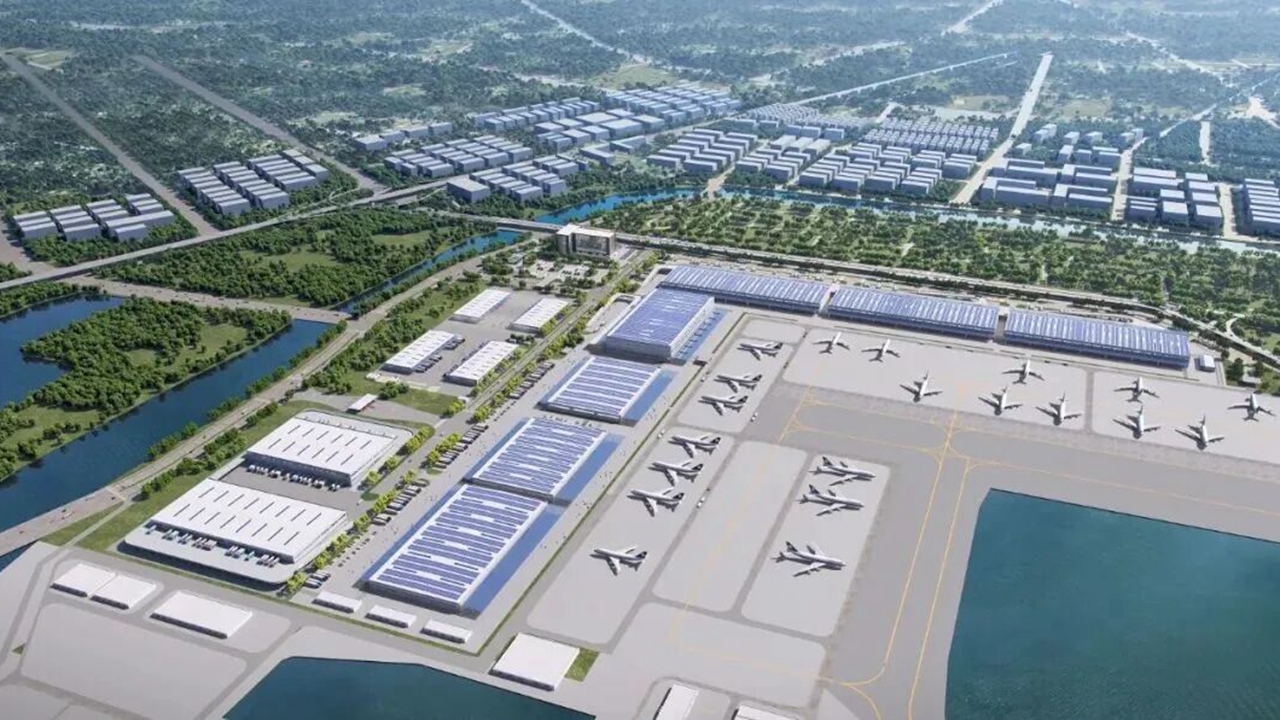 A rendering shows the planned northern cargo zone at Shenzhen Bao’an International Airport. The new cargo district is expected to add more than 1.8 million metric tons of annual cargo handling capacity.
The T1 project is part of a broader, long-term expansion of the Shenzhen airport, which also includes the construction of the T2 terminal zone and a new northern cargo district.
The planned T2 terminal is designed to handle 31 million passengers annually, while the northern cargo zone is expected to add more than 1.8 million metric tons of annual cargo handling capacity to support high-growth sectors such as cross-border e-commerce and cold-chain logistics in the GBA.
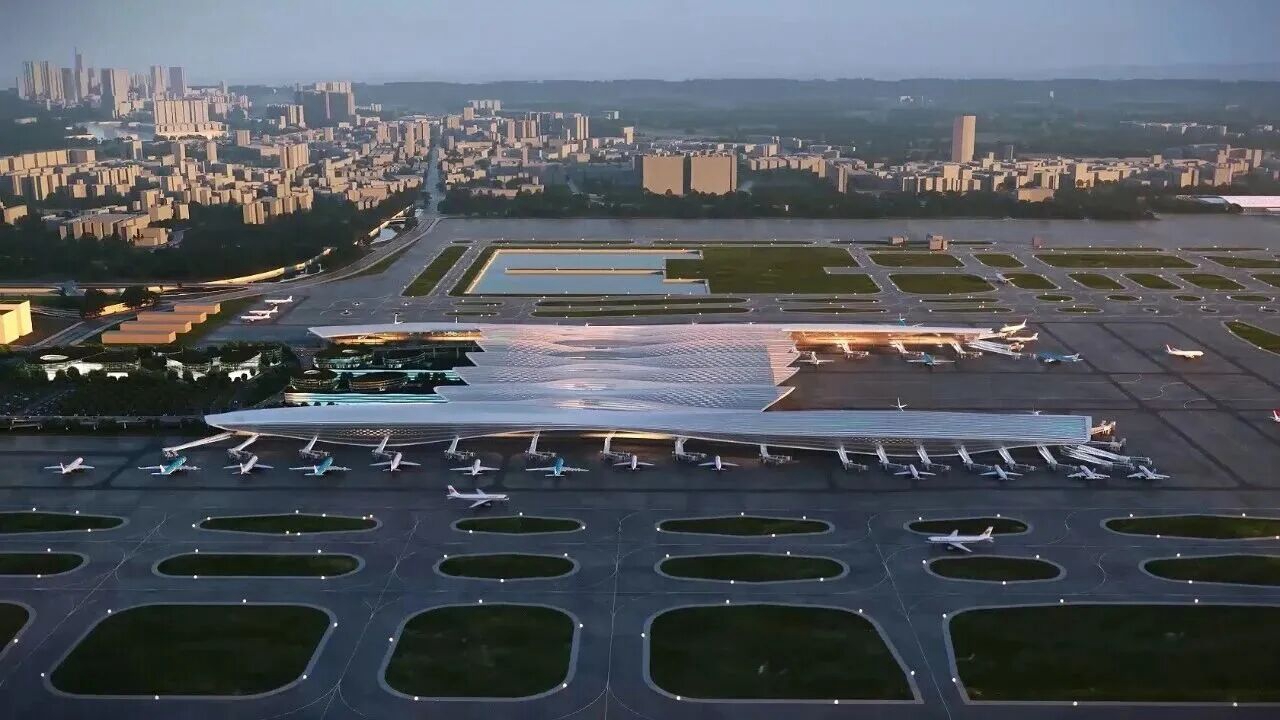
A computer-generated rendering shows the planned T2 terminal at Shenzhen Bao’an International Airport. The terminal is designed to handle 31 million passengers annually as part of the airport’s long-term expansion strategy.
The Shenzhen airport aims to eventually operate with three terminal zones, three cargo zones, three runways and one satellite concourse, supporting long-term passenger traffic of 100 million travelers annually and strengthening connectivity across the GBA.
Airport officials said some iconic design elements from the original terminal buildings may be incorporated into the new T1 terminal, preserving part of the airport’s early history as the site undergoes redevelopment.