Share
Share


 Print
PrintFrench tapestry masterpieces make Asian debut at Shenzhen Bay Culture Square
Writer: Yang Mei | Editor: Lin Qiuying | From: Original | Updated: 2026-05-01
Video by Zhao Xiaochen
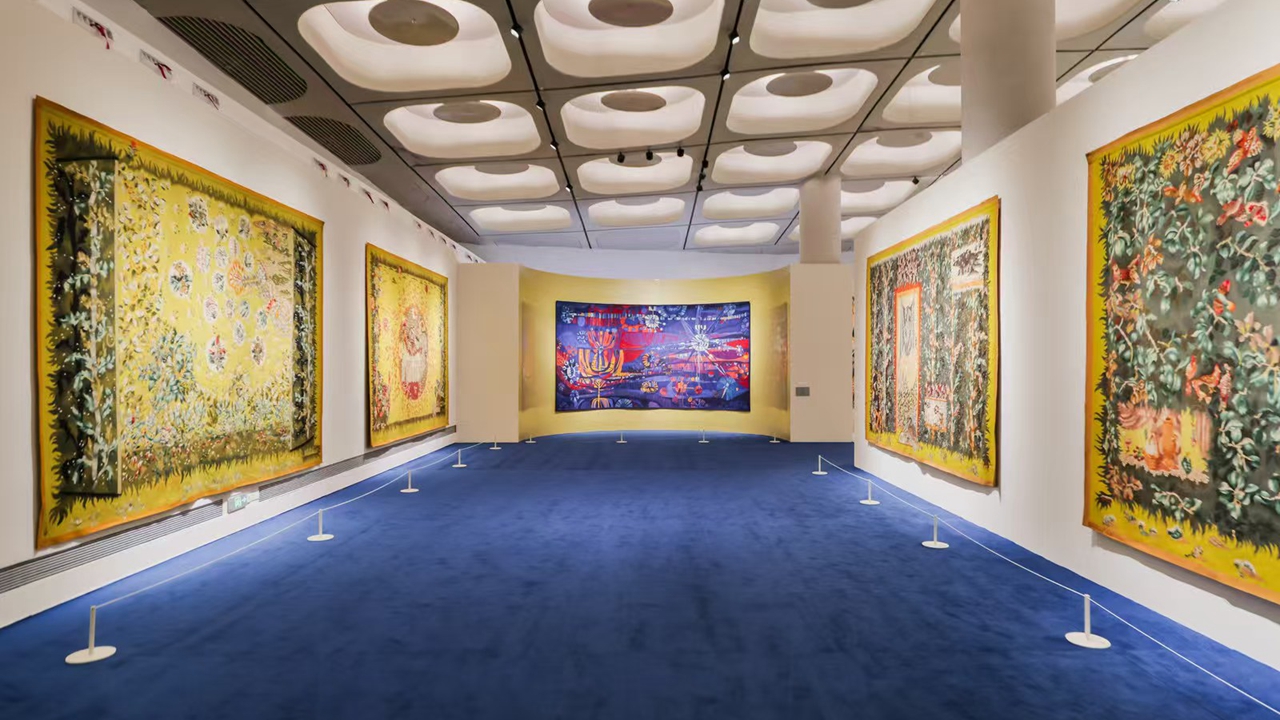
A landmark exhibition bringing together more than 40 French national tapestry treasures made its Asian debut yesterday at Shenzhen Bay Culture Square in Nanshan District, marking the first large-scale, systematic presentation of French tapestry art in Asia.
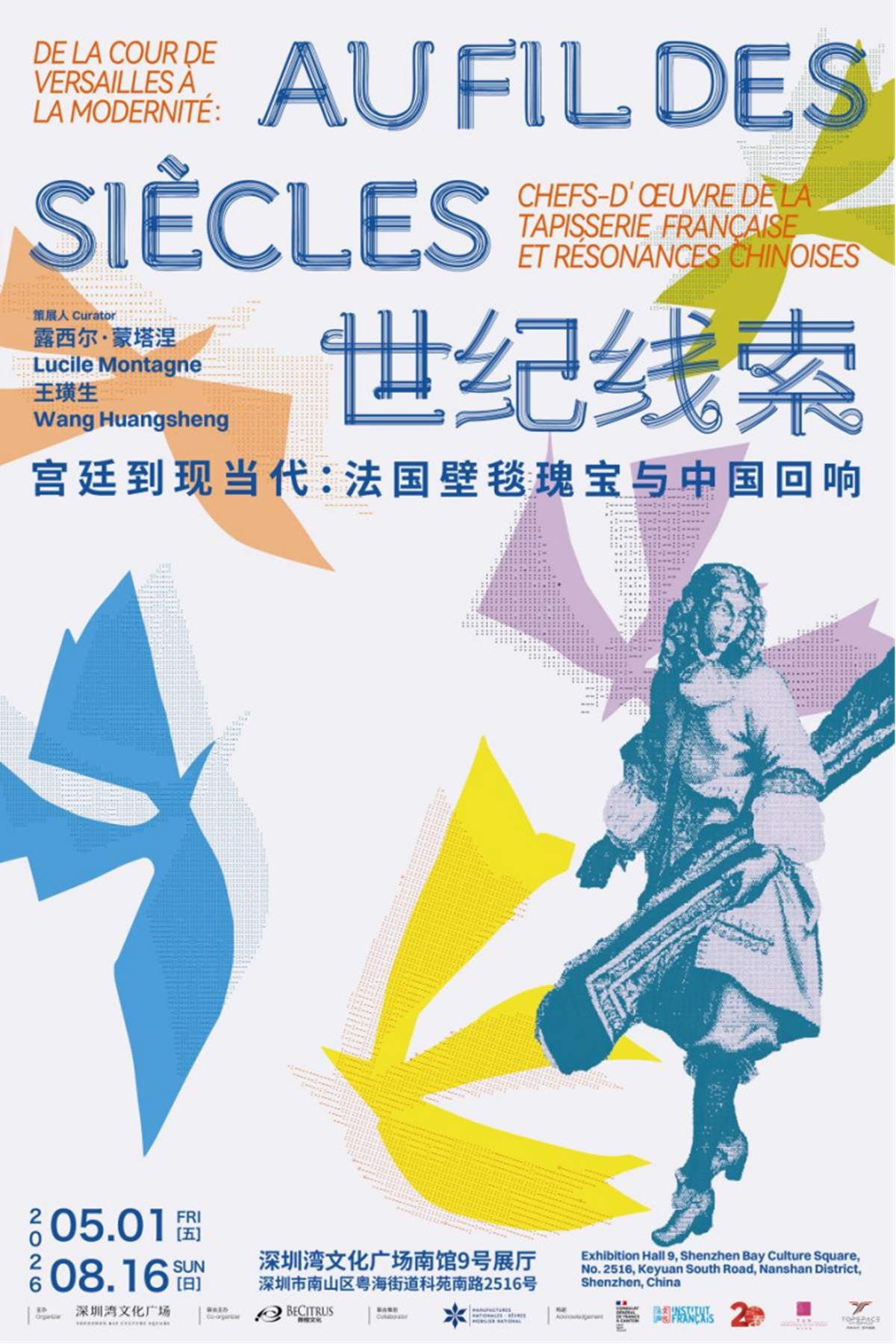
“Au Fil Des Siècles: Chefs-d'œuvre de la Tapisserie Française et Résonances Chinoises (Century Threads: From Royal Courts to Contemporary Art — French Tapestry Treasures and Chinese Echoes)” opens to the public today at the square’s newly inaugurated Gallery 9, running through Aug. 16.
The exhibition spans seven thematic sections and features more than 70 works in total, including over 10 pieces from the venue’s own collection and approximately 20 works by leading Chinese artists presented in a dedicated “Chinese Echoes” section.
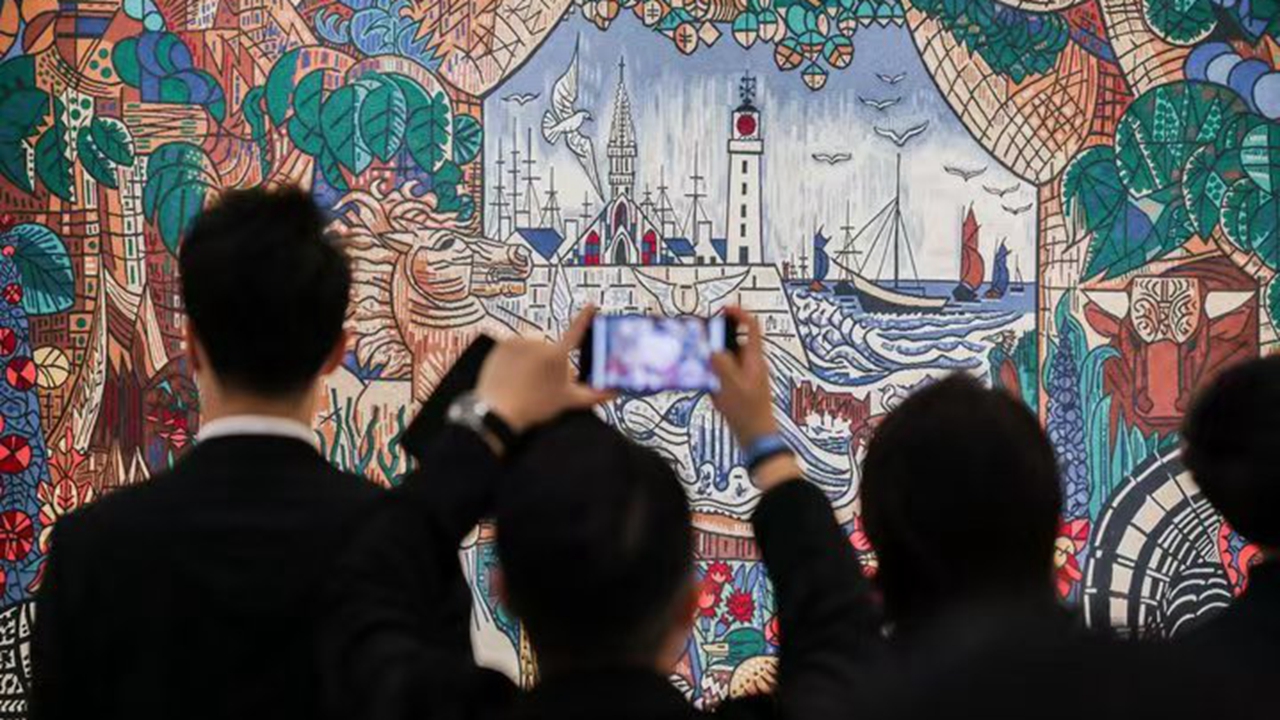
Visitors admire a tapestry piece during a guided tour yesterday. Photos courtesy of Shenzhen Bay Culture Square unless otherwise stated
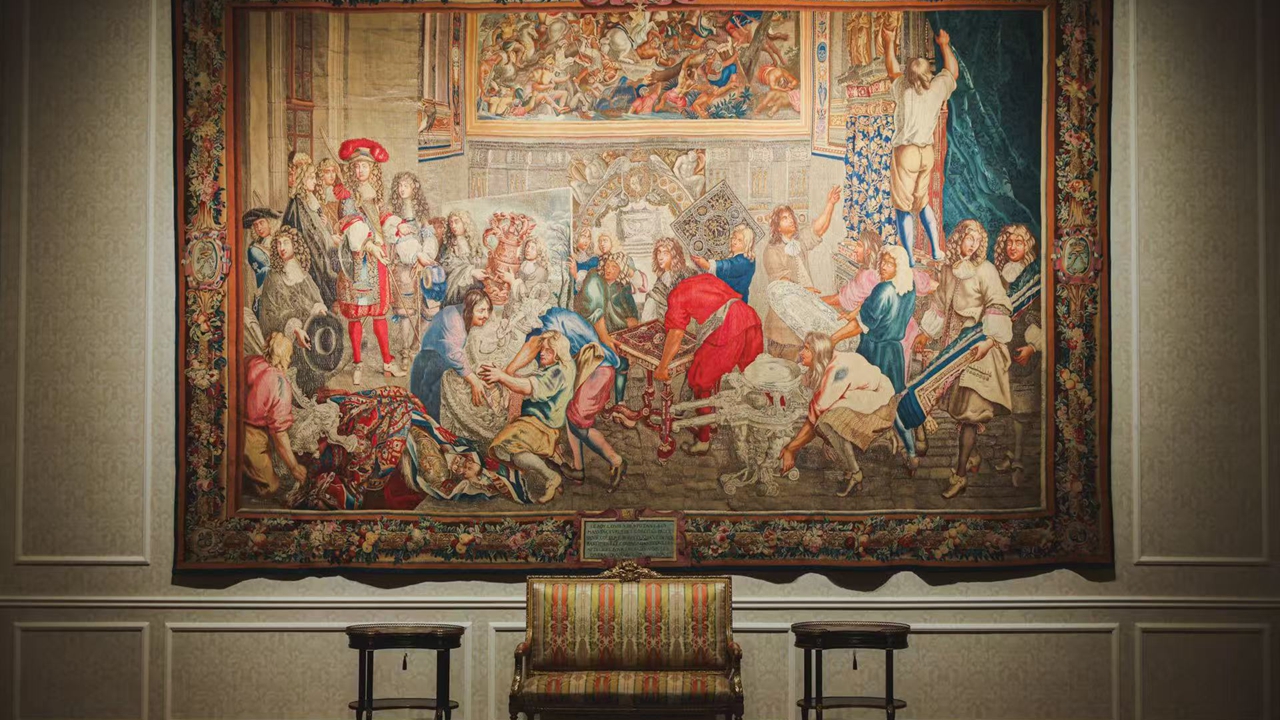
The King Visiting the Gobelins Manufactory by Charles Le Brun
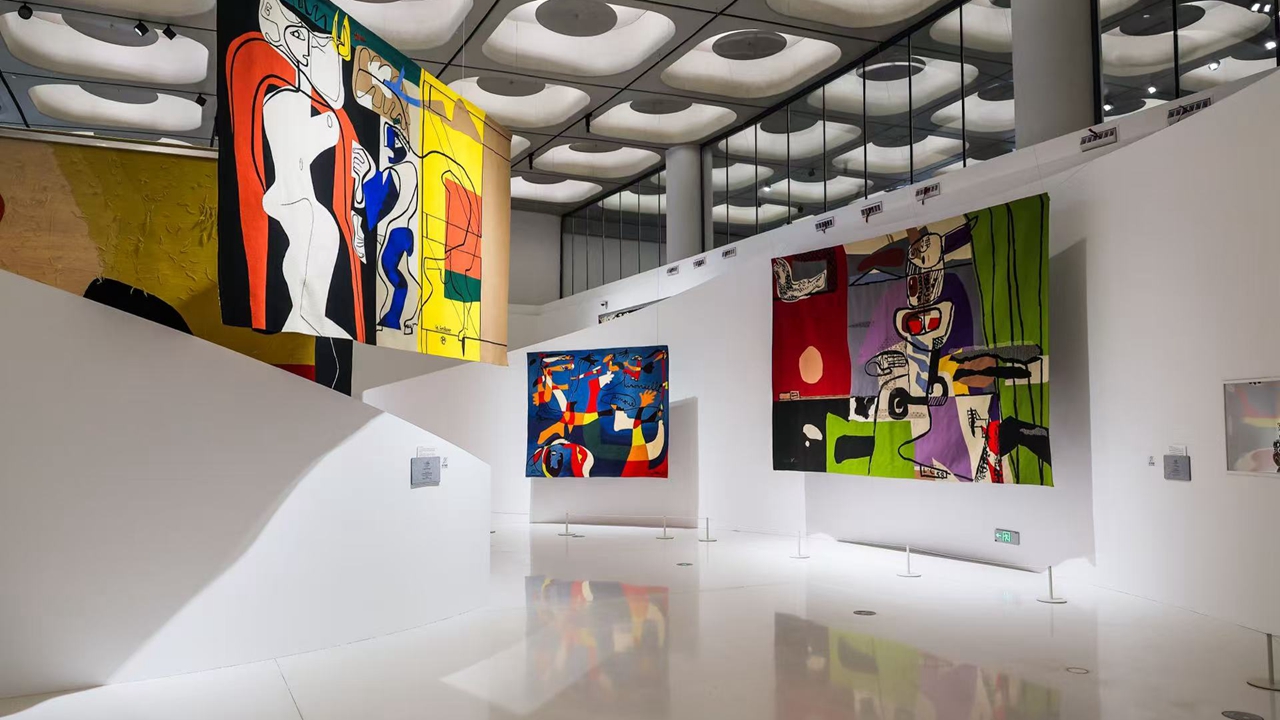
The show traces the full arc of tapestry art from the 18th century to the present, featuring works from the circle of Louis XV — including a rare piece from the same series gifted to Emperor Qianlong — alongside masterpieces by French court artists Charles Le Brun and François Boucher. The exhibition then follows the medium’s transformation under modernism, with tapestry works produced in collaboration with the French national manufactures by Jean Lurçat, Henri Matisse, Pablo Picasso, Le Corbusier, Joan Miró and Zao Wou-Ki.
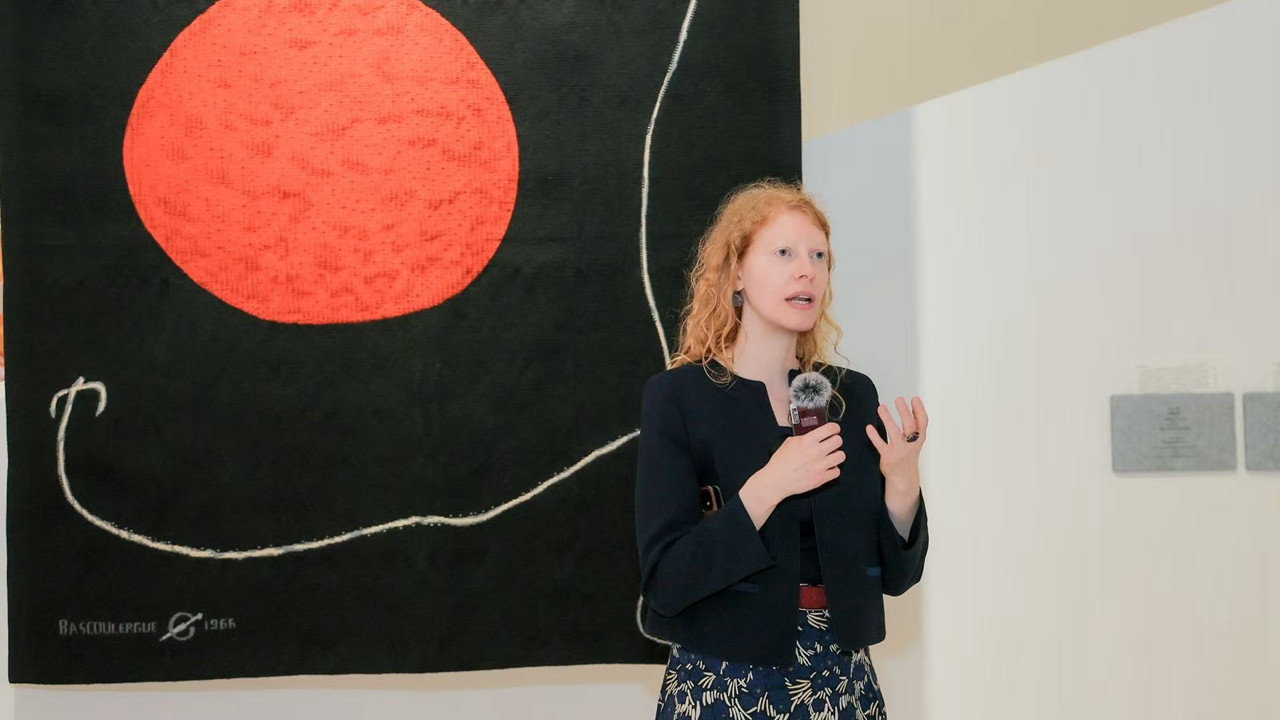
French curator Lucile Montagne leads a guided tour to media yesterday.
French curator Lucile Montagne, head of the Inspection Department at Mobilier national and chief curator of Cultural Heritage, gave a guided tour of the works at the opening ceremony alongside Chinese co-curator Wang Huangsheng, former Director of the Central Academy of Fine Arts Museum. Montagne told Shenzhen Daily in an exclusive interview during the April 21 unboxing event that the tapestry tradition runs deep in European culture.
“The art of tapestry is really ancient. In France and in Europe, the tapestries were used to put inside castles or big homes to decorate or for heating,” Montagne said.
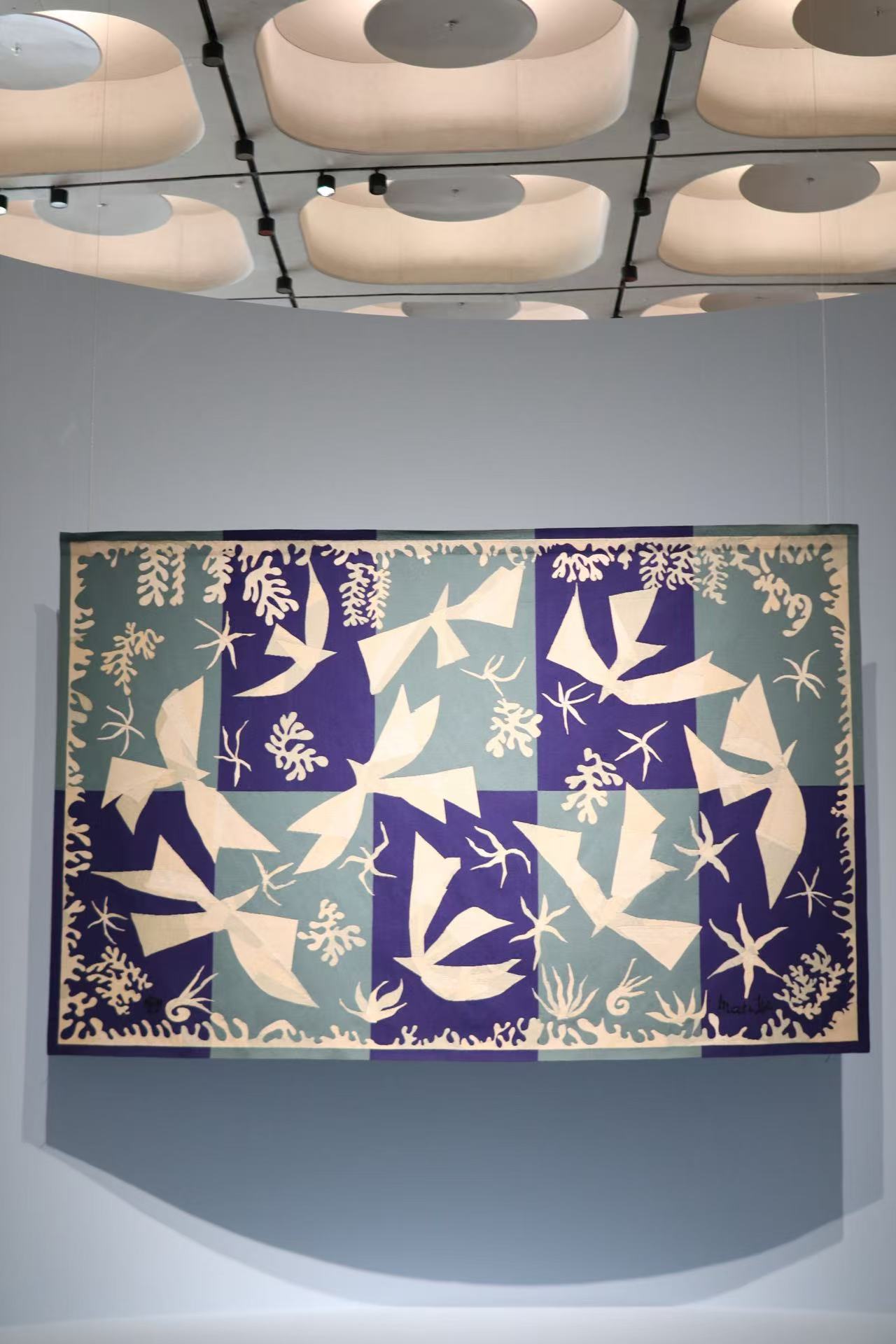
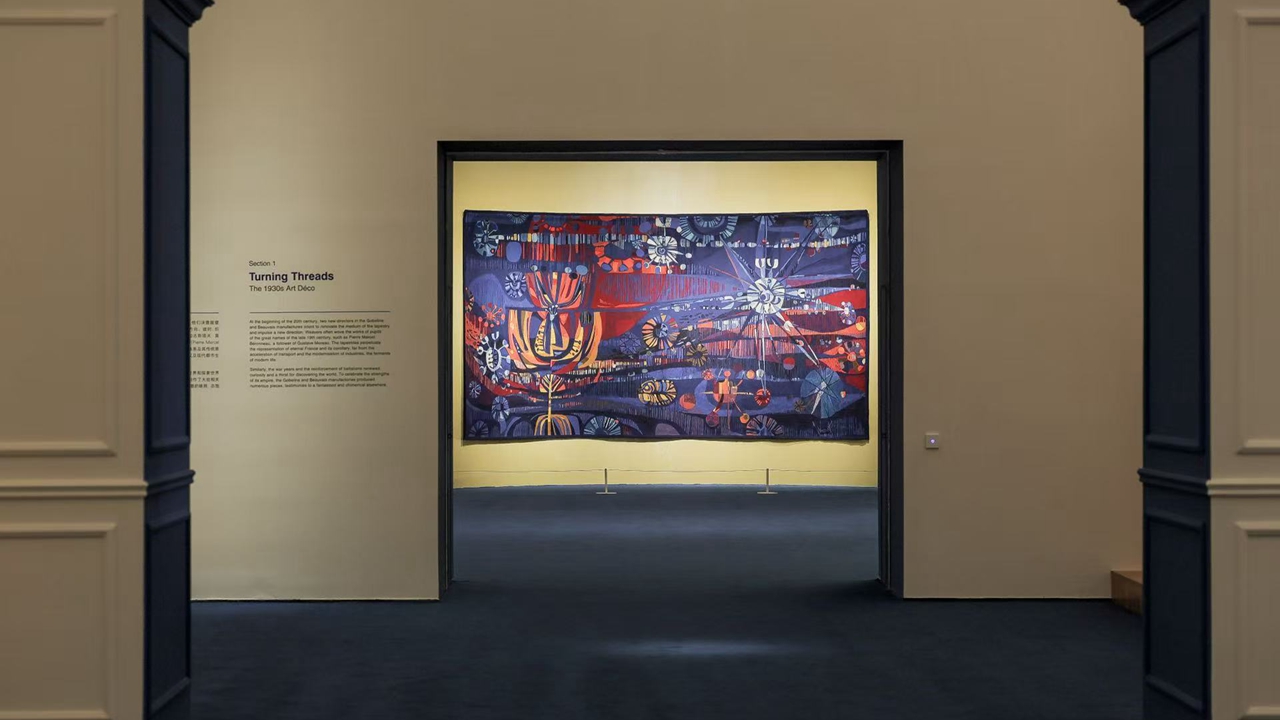
The Sky by Henri Matisse. Yang Mei
Among the highlights, she singled out works by two 20th-century icons. “Matisse and Picasso are kind of the must-see tapestries in the exhibition,” she said, pointing visitors toward Matisse’s "The Sky" in particular. “I think The Sky by Matisse is kind of a must-see. It was made after a collage by Matisse. He actually cut the small patterns himself. It was really a work of art made to be translated as a tapestry in the 1960s,” she said.
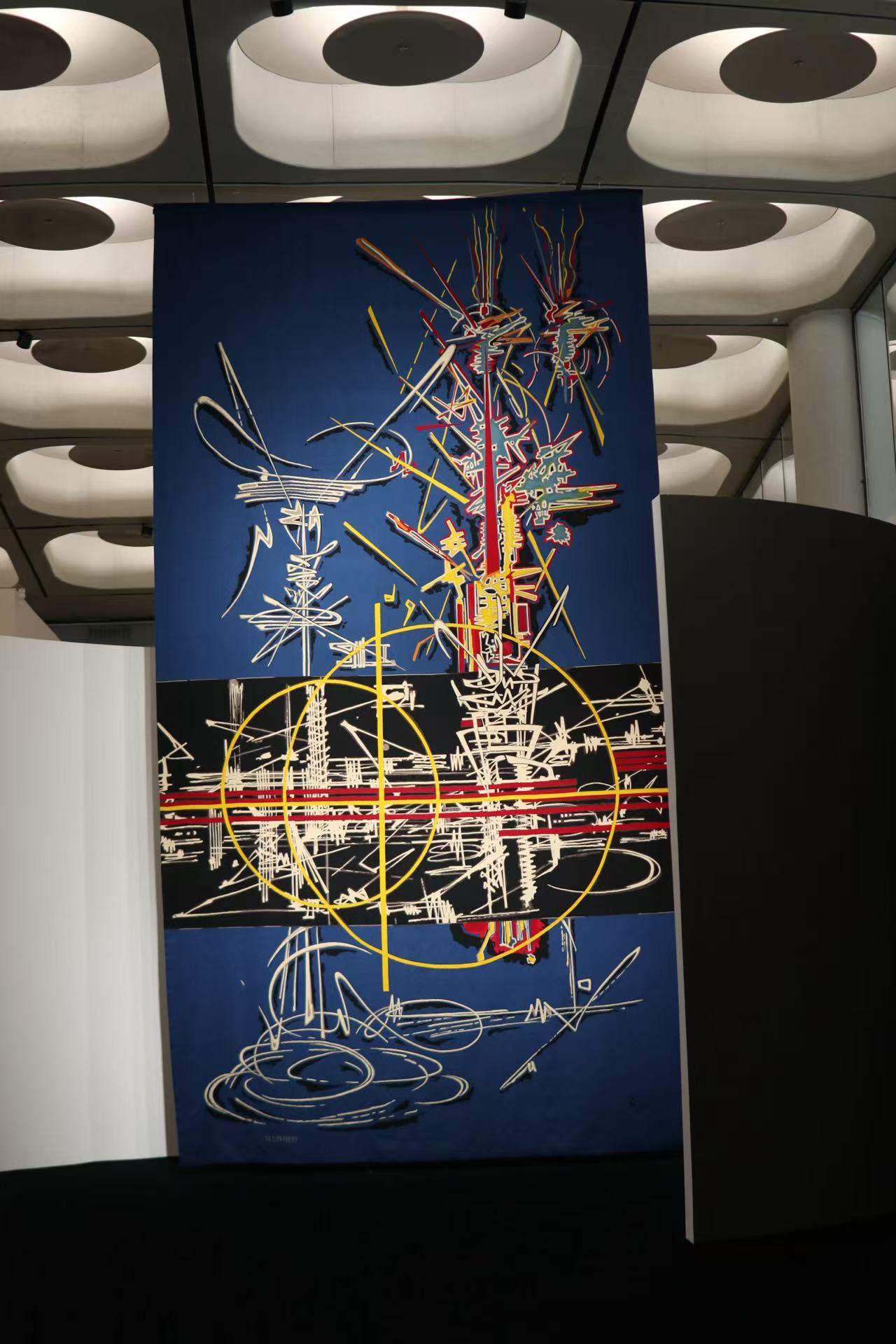
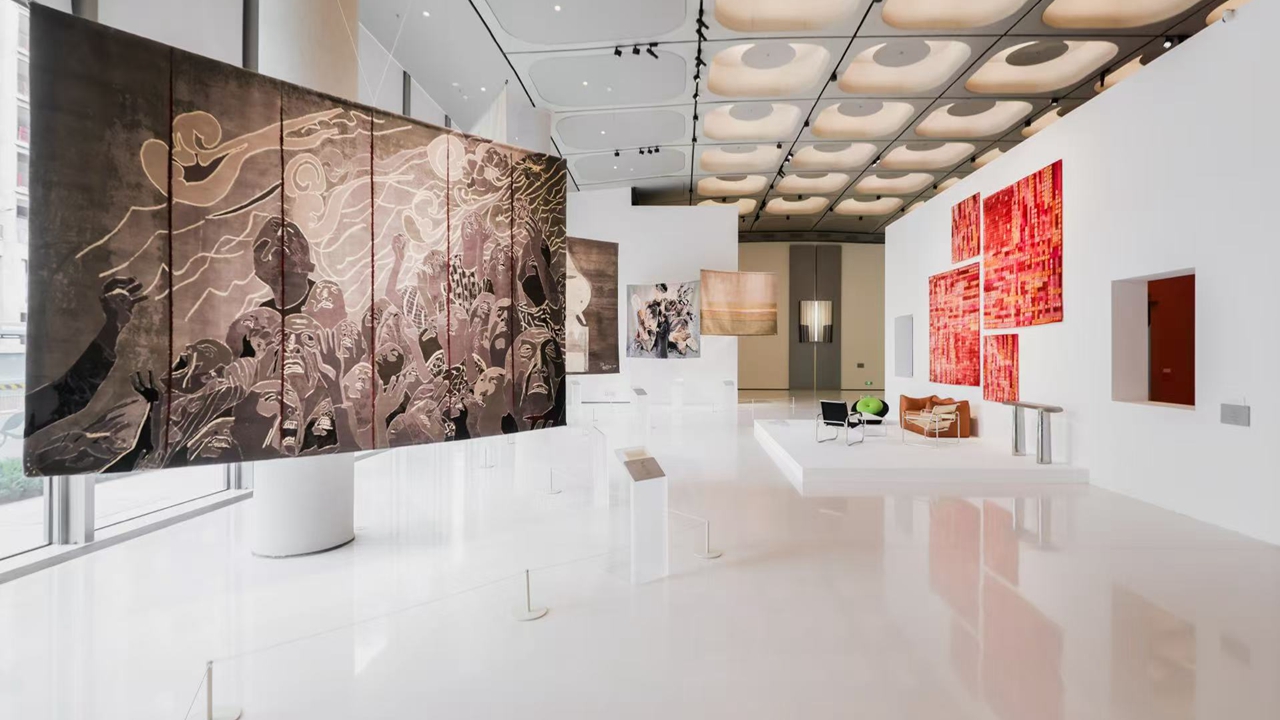
A 7-meter high tapestry work by Georges Mathieu. Yang Mei
Montagne also highlighted the scale of the venue. “We are going to show a 7-meter high tapestry by Georges Mathieu and I’m really pleased that it can be done inside such a huge and really fantastic place,” she said.
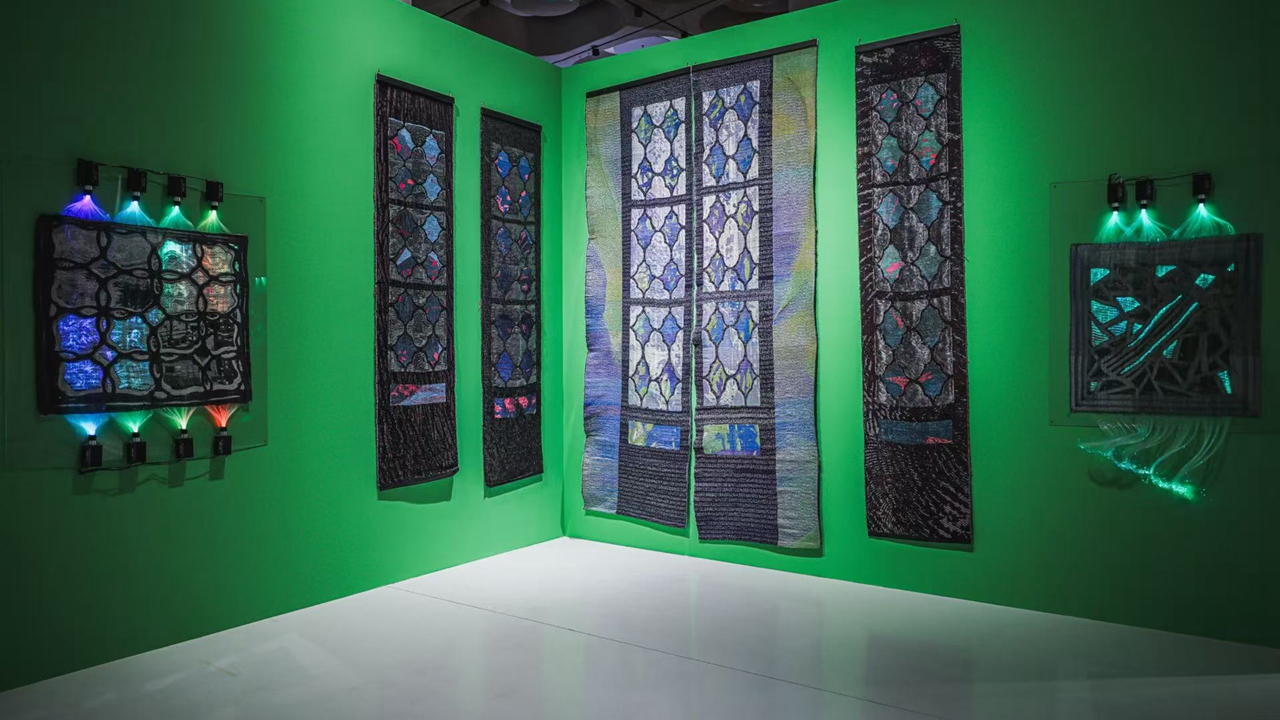
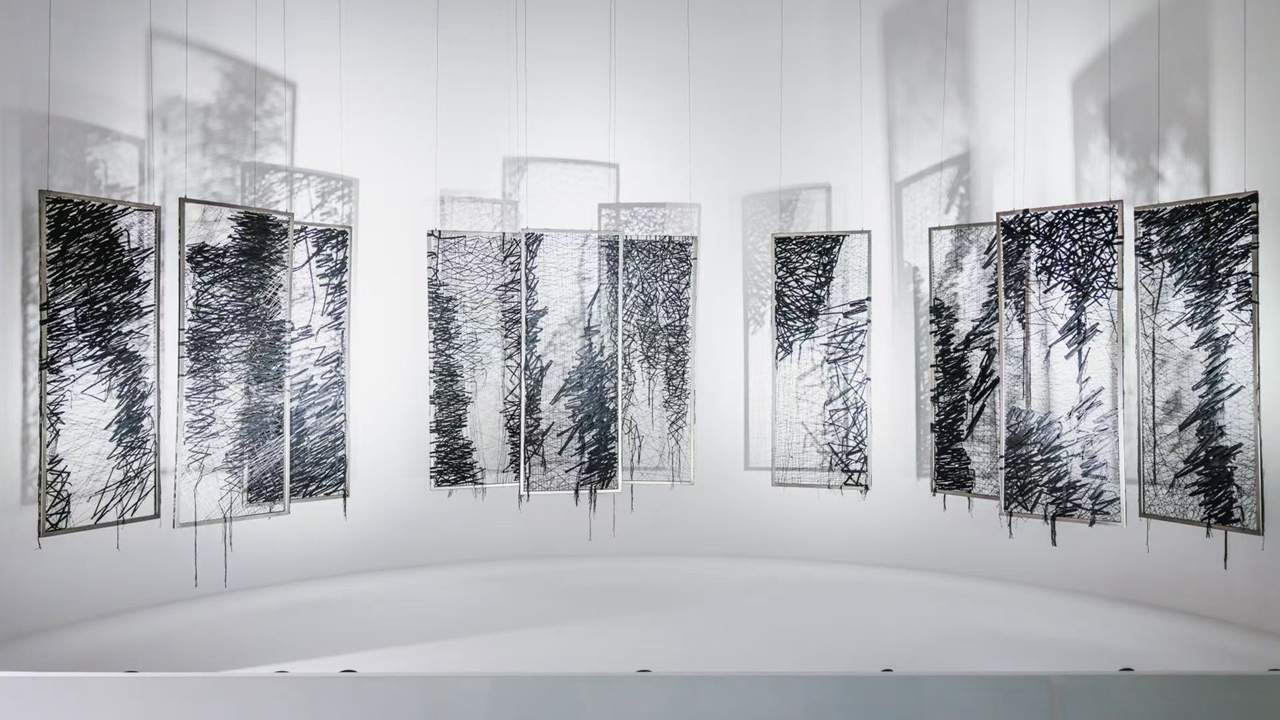
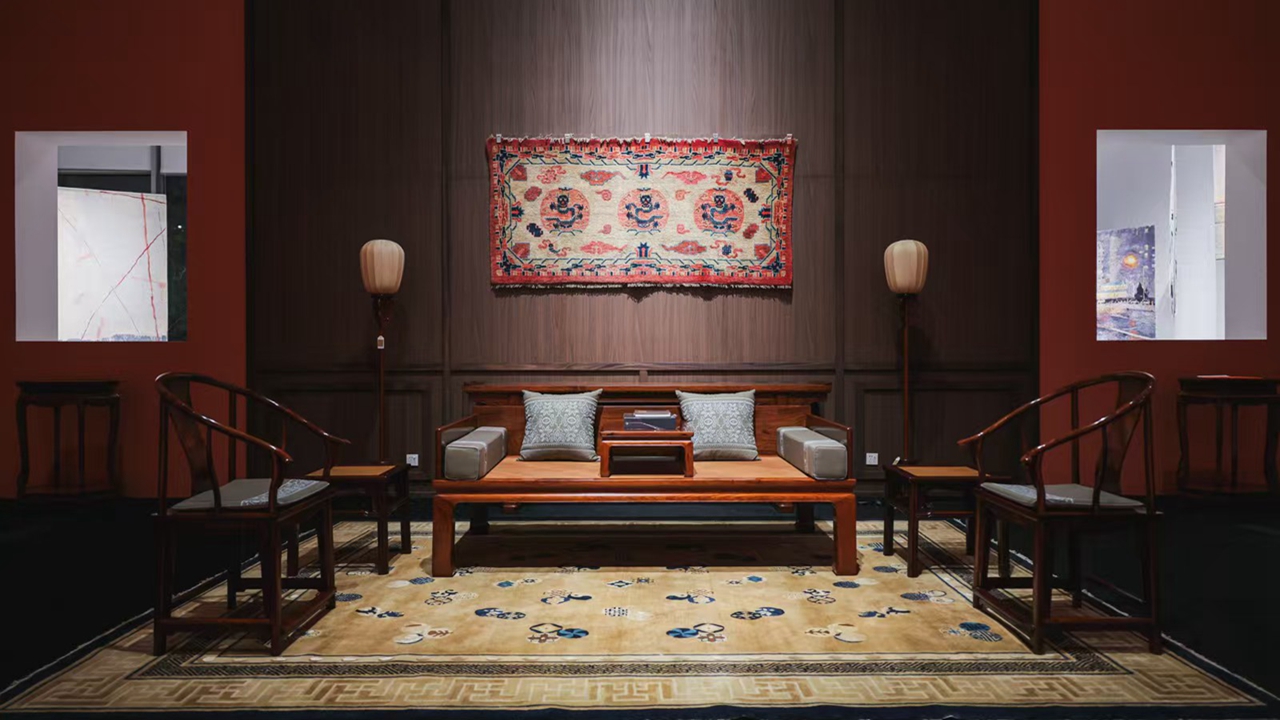 A scene in the “Chinese Echoes” section.
The “Chinese Echoes” section is organized around three strands — early imperial court tapestries, works by modern and contemporary Chinese artists, and contemporary fiber art — tracing the development of Chinese tapestry alongside its French counterpart. It includes representative works by Wu Guanzhong, Pan Gongkai, Fang Lijun, Zhou Chunya, Ding Yi, Liu Ye and Shi Hui.
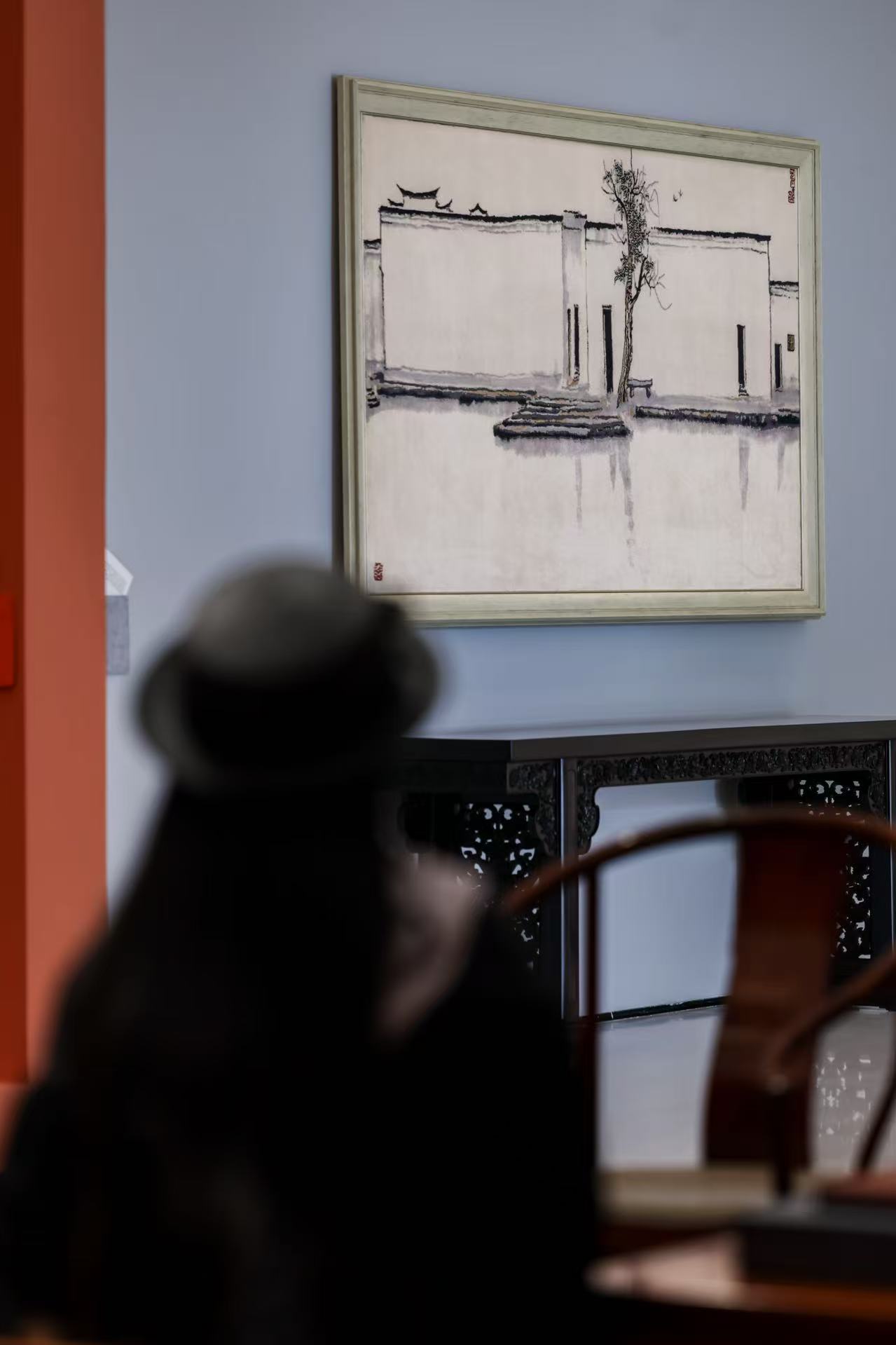
Twin Swallows Art tapestry by Wu Guanzhong
The exhibition is a flagship project of the 20th anniversary of the “France-China Cultural Spring” program. It is organized by Shenzhen Bay Culture Square and co-organized by Bicheng Culture, with joint curatorial support from France’s Mobilier national and the Manufactures nationales (Sèvres & Mobilier national). China Resources Land serves as supporting sponsor.
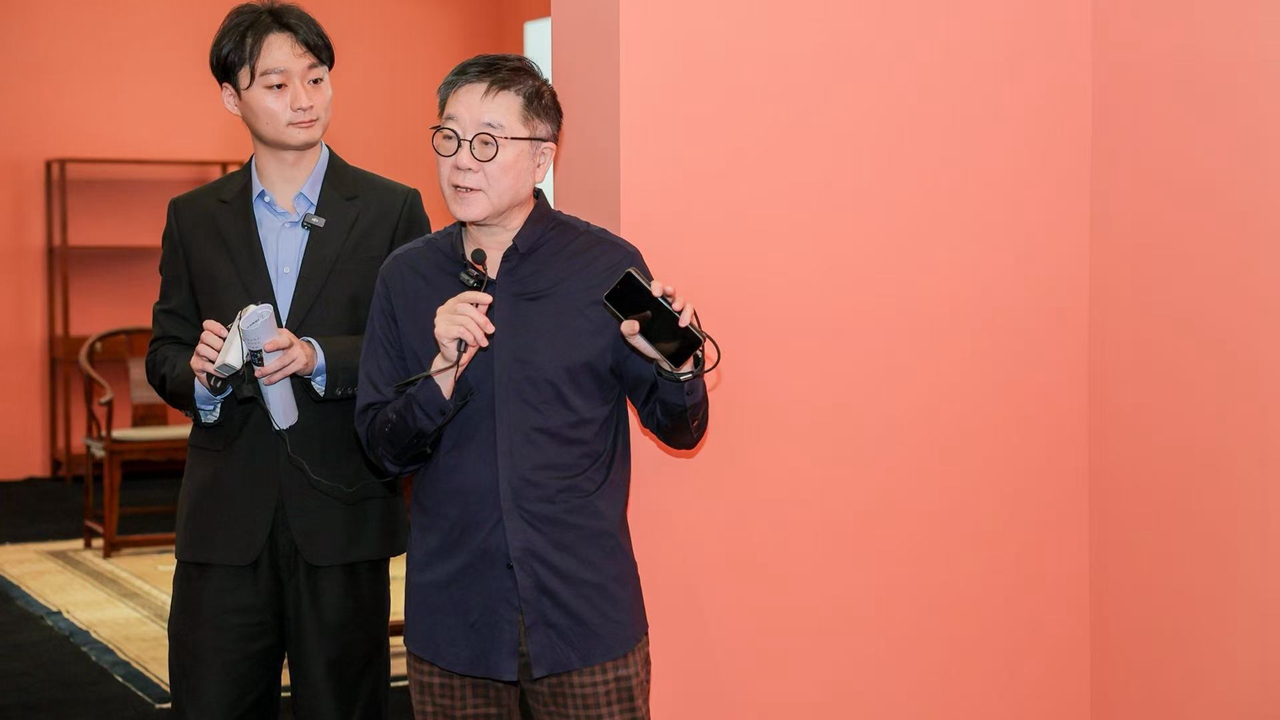
Chinese curator Wang Huangsheng introduces the “Chinese Echoes” section during a tour.
The show also marks the first tangible cultural outcome of a strategic cooperation agreement signed between Shenzhen Bay Culture Square and the French national institutions in March 2025.
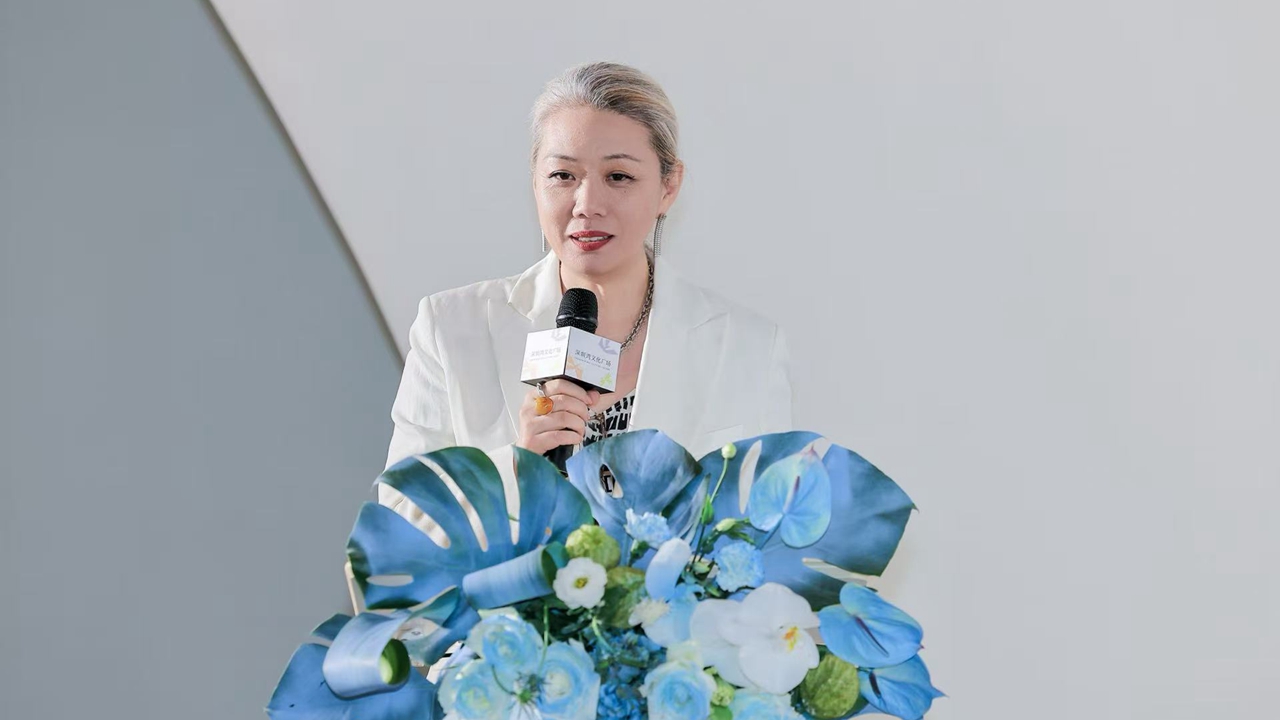
Du Juan, director of Shenzhe Bay Culture Square, gives a speech.
At the opening ceremony, venue director Du Juan described tapestry as a crystallization of traditional craft and a cultural bridge linking Chinese and French civilization, adding that the square would continue to foster dialogue between East and West, tradition and contemporary practice.
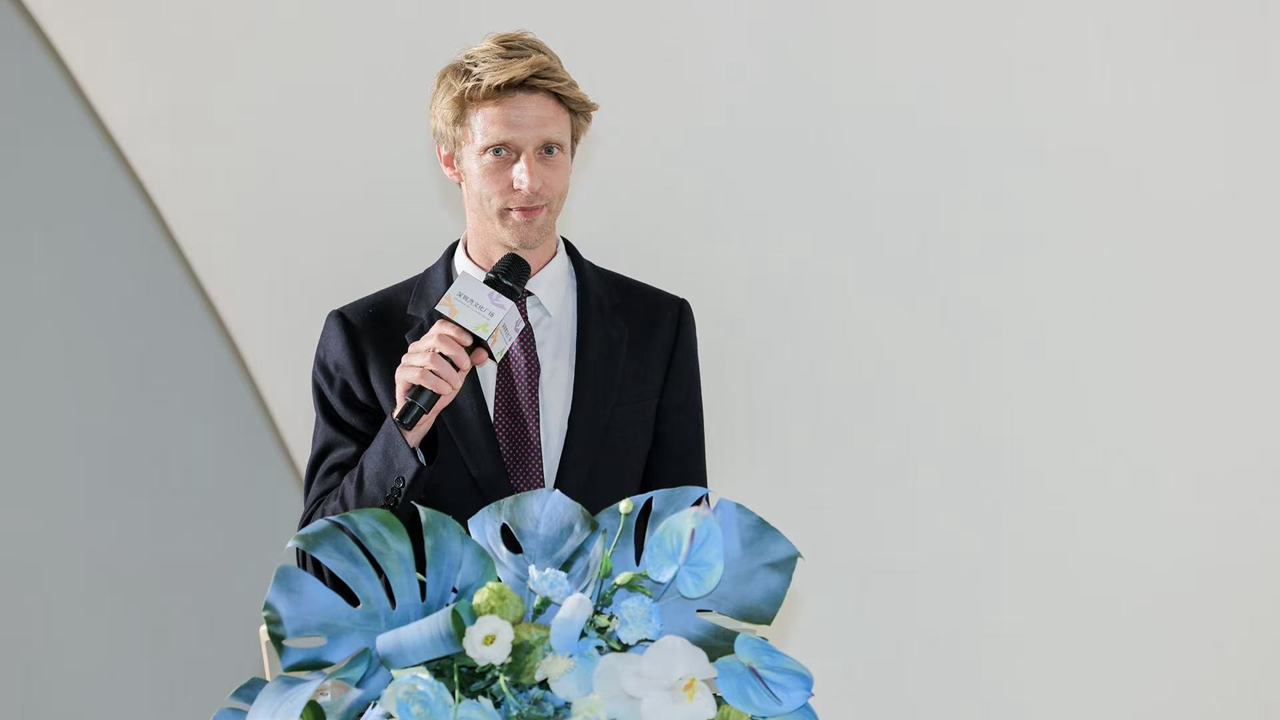
Loïc Turpin addresses the audience on the opening ceremony.
Loïc Turpin, director of Development, Communication and External Relations at the Manufactures nationales, said French tapestry has evolved over centuries into an independent contemporary art form. He described the Shenzhen exhibition as a bridge for dialogue between French and Chinese civilization, built on the city’s innovative character.
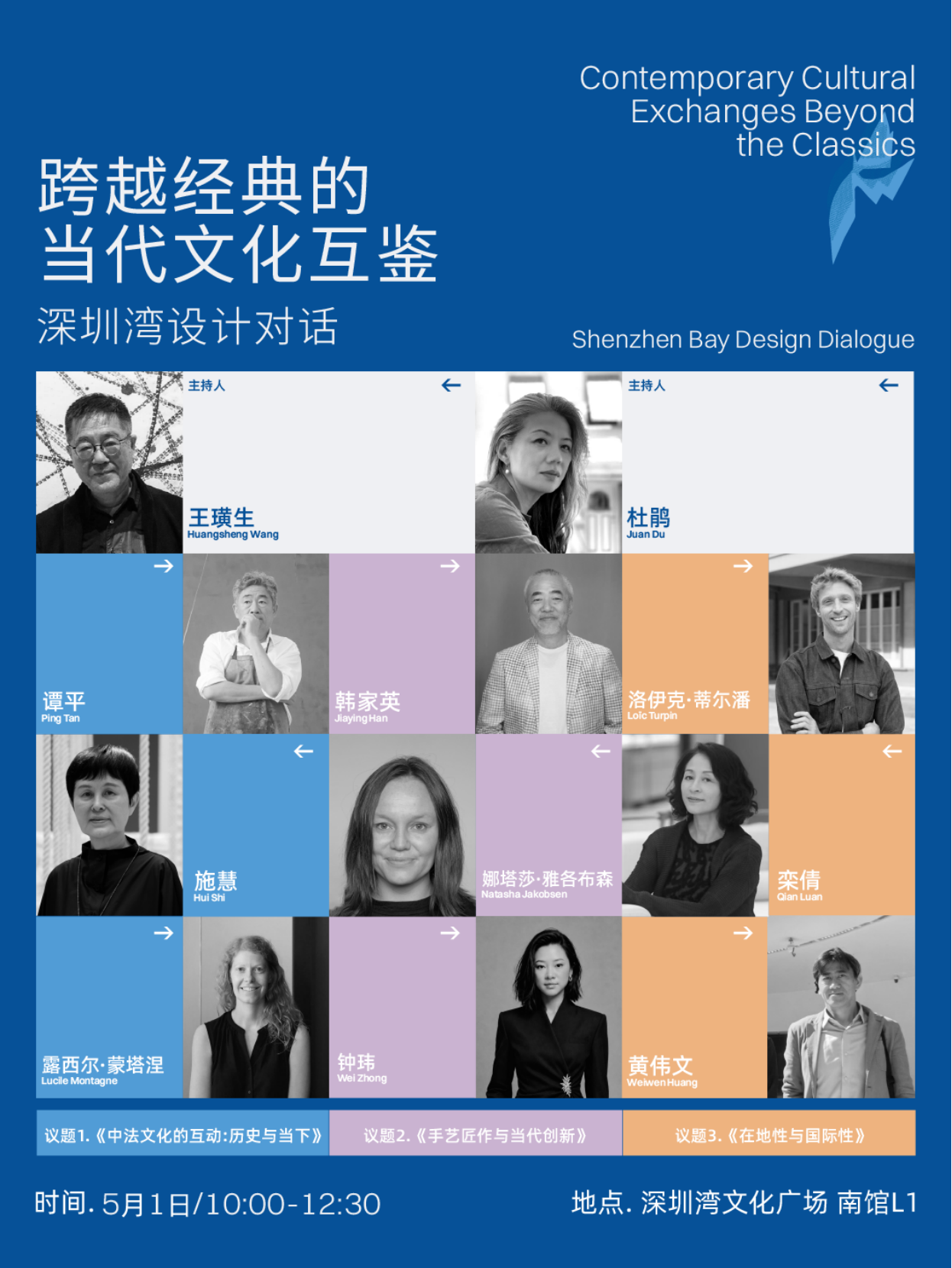
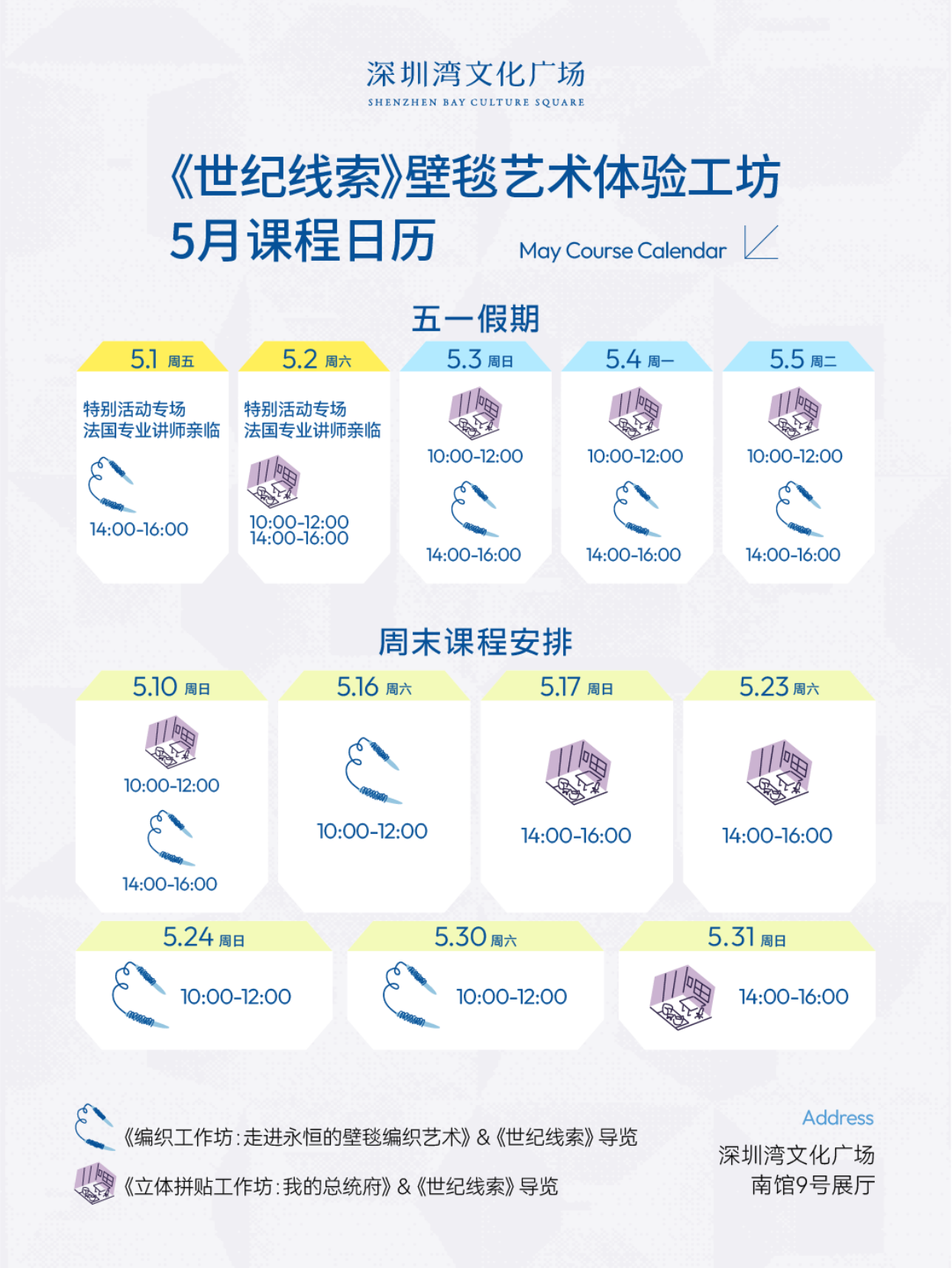
Alongside the main exhibition, the venue has launched a series of public programs including academic forums with Chinese and French cultural scholars, designers and artists, and hands-on workshops led by instructors from the Manufactures nationales covering tapestry weaving and three-dimensional collage. All educational sessions will be conducted in English.
Visitors can scan the QR code below to purchase the ticket via the venue’s official WeChat Mini Program.
More Photos: