
 Share
Share


 Print
PrintSeeking a moment of tranquility in Wang Chaogang's oil paintings
Writer: Debra Li | Editor: Lin Qiuying | From: Original | Updated: 2026-04-28
Running until June 26, an exhibition featuring some 70 artworks by Chongqing artist Wang Chaogang is beckoning art fans to the Guangming Culture and Art Center.
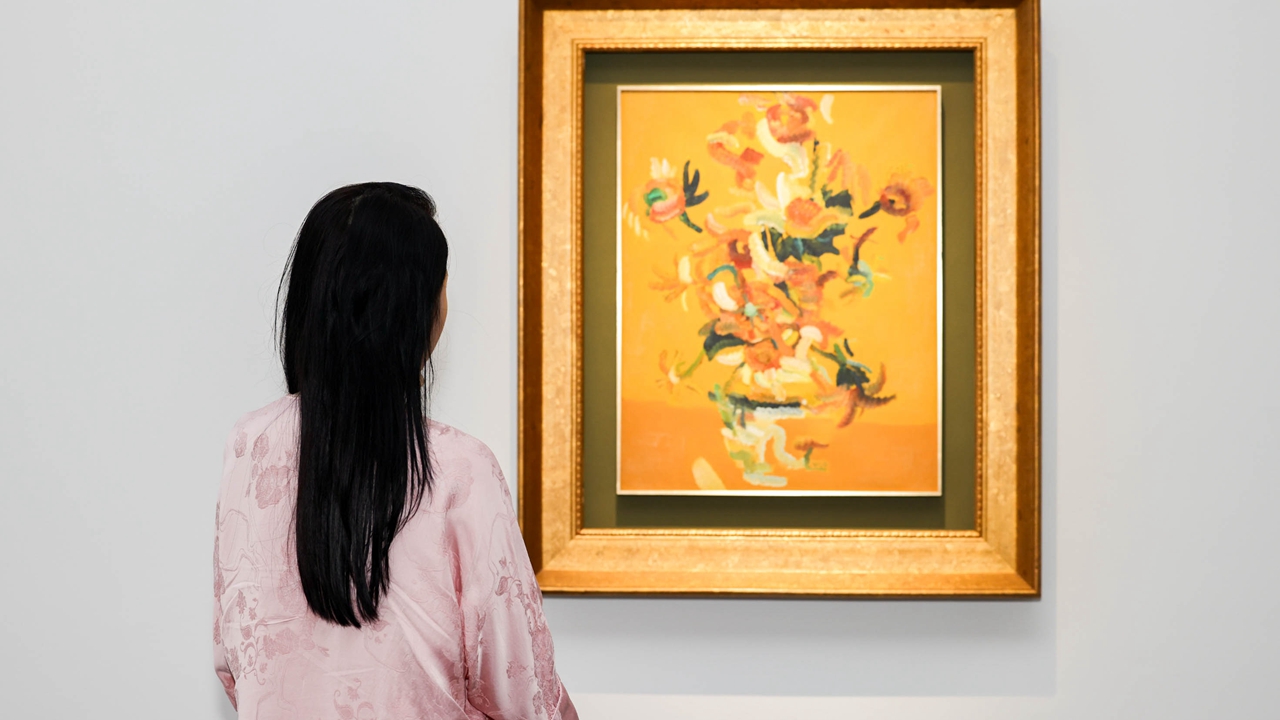
"Blossom, Fruit, Mountain" will run until June 26 at Guangming Culture and Art Center. Photos courtesy of GCAC
Housed in Hall A on the second floor of the center’s Art Museum, the show presents Wang’s works spanning three decades across three sections, echoing the exhibition title “Blossom, Fruit, Mountain.”
Wang, born in 1975, earned a master’s degree in oil painting from the Sichuan Fine Arts Institute in 2002 and now serves as the vice president of his alma mater.
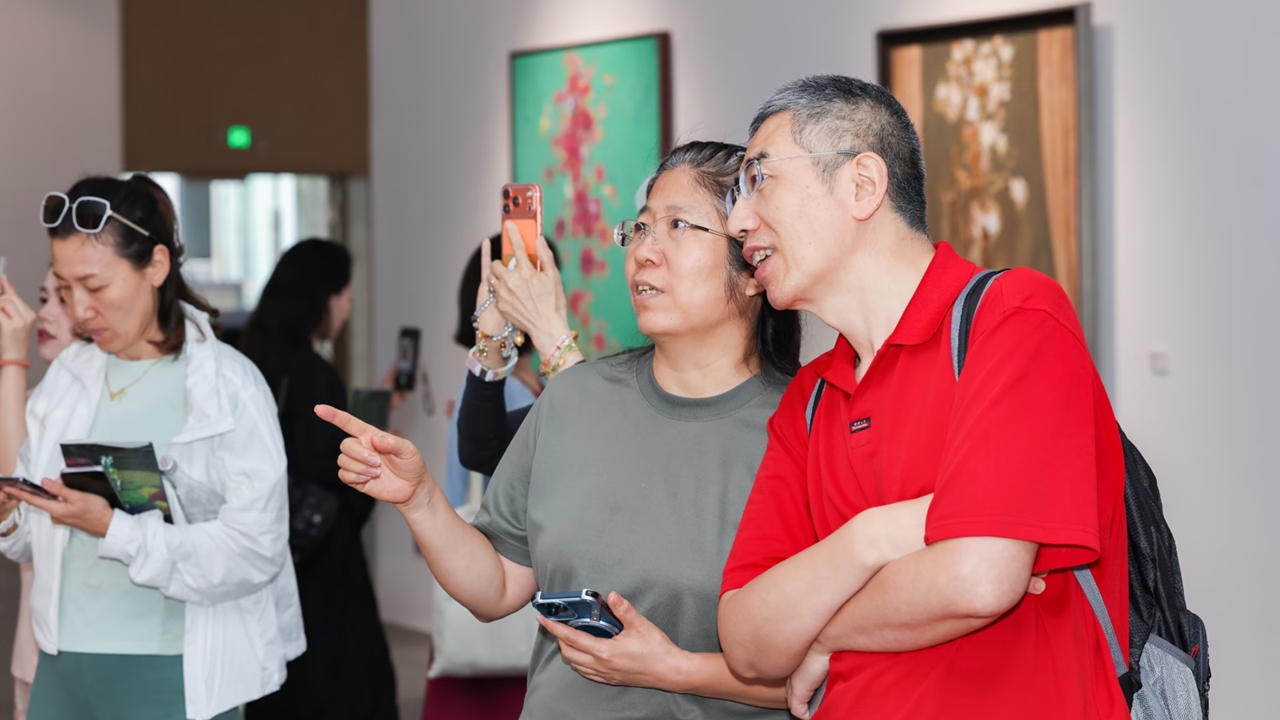
Visitors discuss a painting on display.
His paintings, deeply rooted in the aesthetics of Song Dynasty (960–1279) landscapes, nevertheless display a thriving vitality through the use of vivid contrasting colors. His works, having appeared at the Beijing International Art Biennale, are collected by the National Art Museum of China.
A tongue-in-cheek parody of the Flower and Fruit Mountain from the classical Chinese novel “Journey to the West,” the exhibition title piques public interest and invites viewers to explore the metaphorical meaning of the images.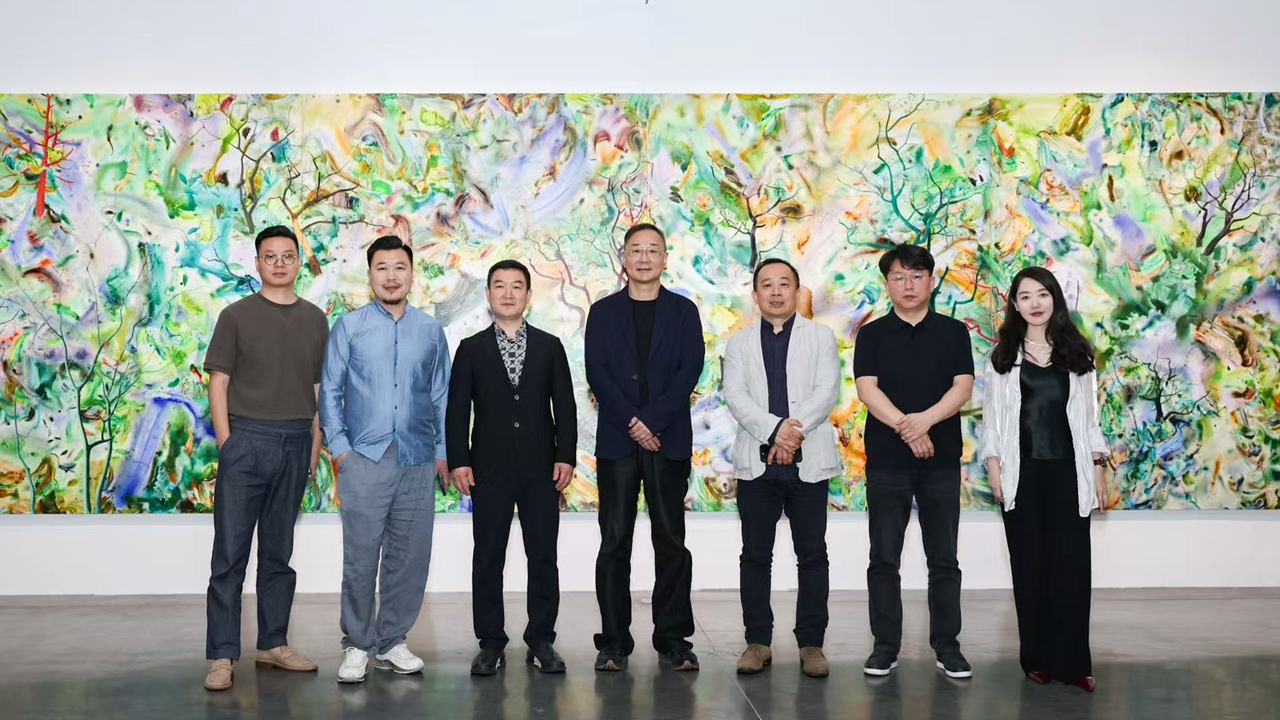
Hui Shuwen (2nd L), Wang Chaogang (3rd L), Fan Bo (4th L) and other guests pose for a photo in front of a painting on display.
“The brilliance of blooming and the ripeness of fruit both point to a more spiritual aspect of life, which is symbolized by mountains,” explains Hui Shuwen, director of Shanghai’s YOUNG Art Museum and curator of the exhibition. “The mountain is a symbol of one’s aspirations in traditional Chinese culture. When we see a mountain in a painting, it always has something to say about the painter himself,” he added.
Feng Zhiguo, vice president of the China Academy of Art, said Wang has developed his own concepts and aesthetics in retrospect of the materialism of our era, although some of the imagery in his works can be traced to the long tradition of Chinese flower-and-bird paintings and landscapes.
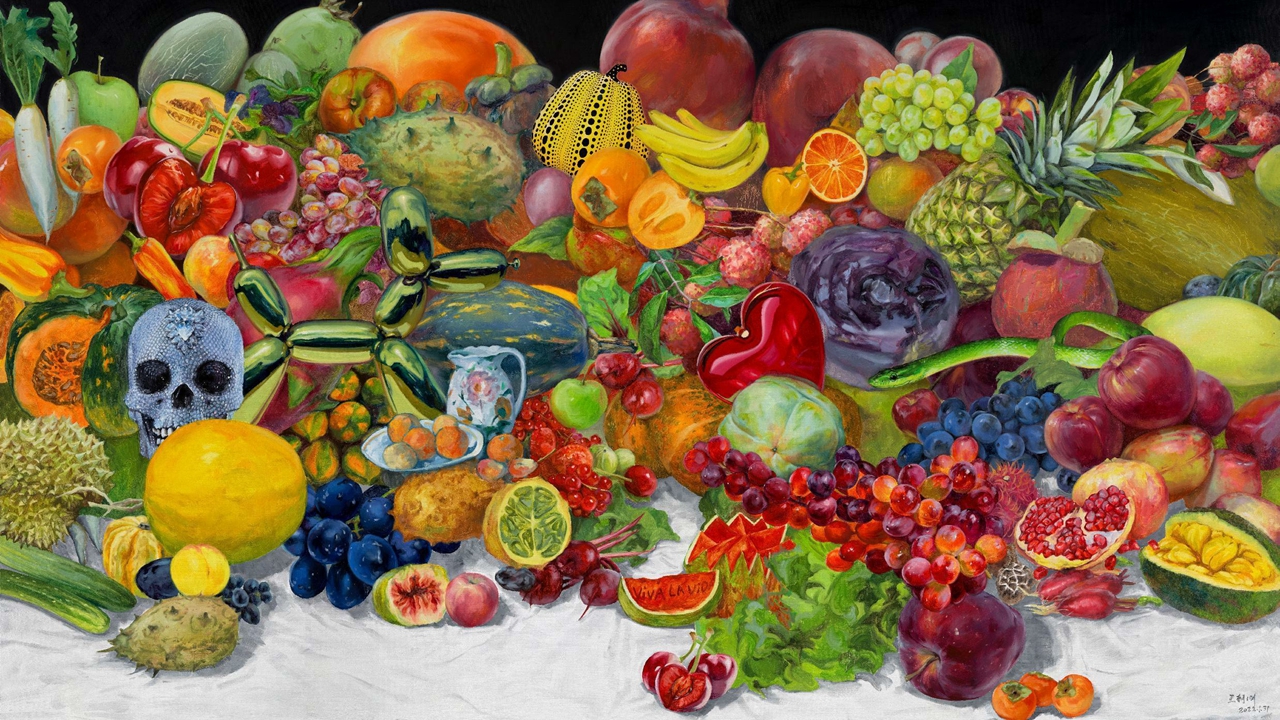
"Existence: Metaphor of Things," oil on canvas, 2022.
One impressive piece, depicting an abundance of fruit and vegetables set upon a white tablecloth, features a grinning skull peeking out from the feast, creating an alarming spectacle and signifying the stark contrast between endless material supplies and the desolate spiritual world felt by many in modern society.
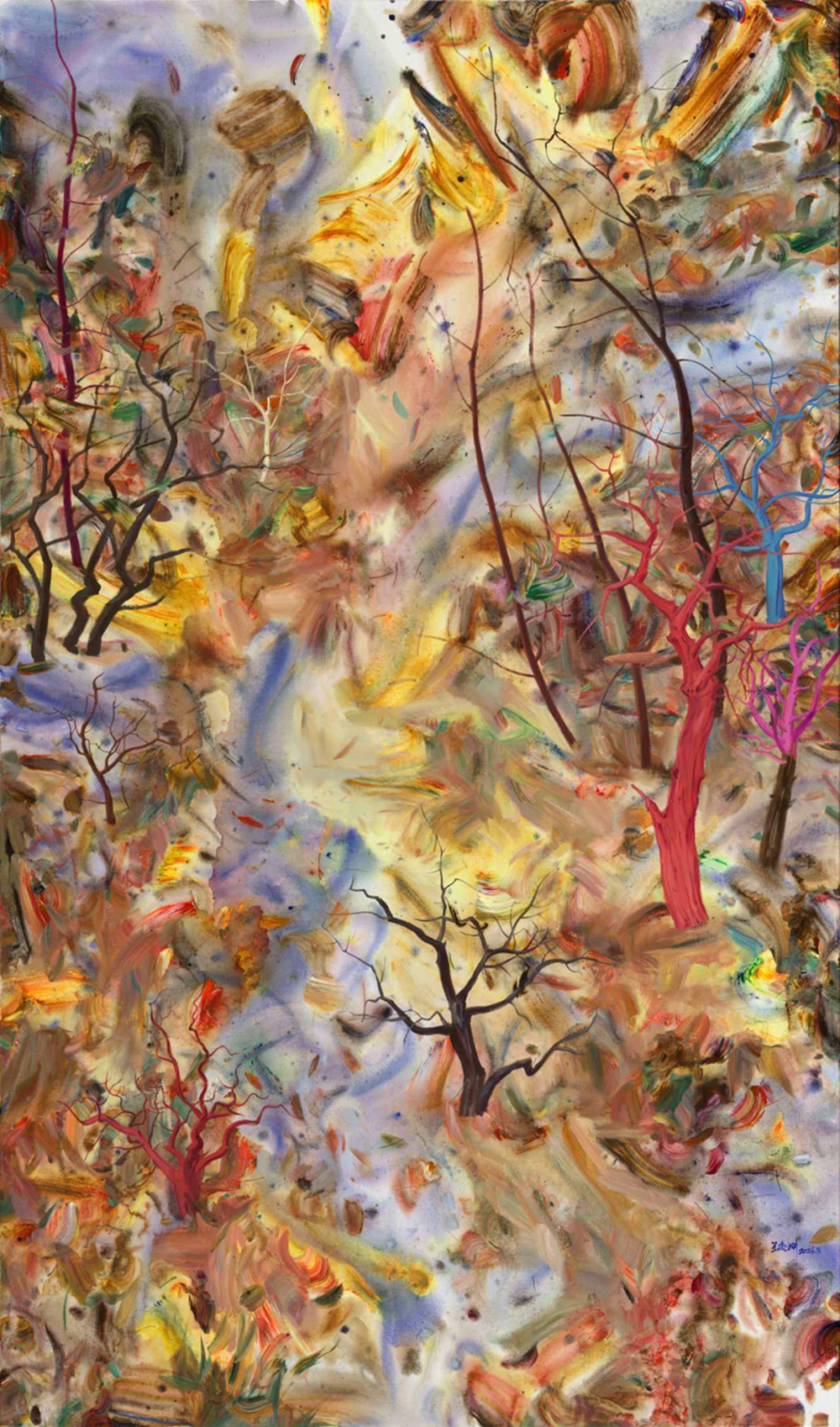
"The Forest of Perception: Landscape on Second Thought," oil on canvas, 2025.
Another series, titled “The Forest of Perception” and created since 2022, reflects the philosophical idea that “impression comes before knowledge.” Rather than offering a direct and concrete depiction of the forest, one piece presents colorful trees like veins growing out of a grotesque dream, alongside blurred images of birds’ beaks and feathers.
As the highly saturated colors in the background contrast with the traditional, fluid, and gentle brushstrokes of the subjects in the foreground, the piece invites viewers to take their time and savor the details.
Pang Maokun, vice chairman of the China Artists Association, praised Wang for reinterpreting Chinese art traditions with a contemporary visual language, which endows his paintings with rhythmic narrative and fluid touch.
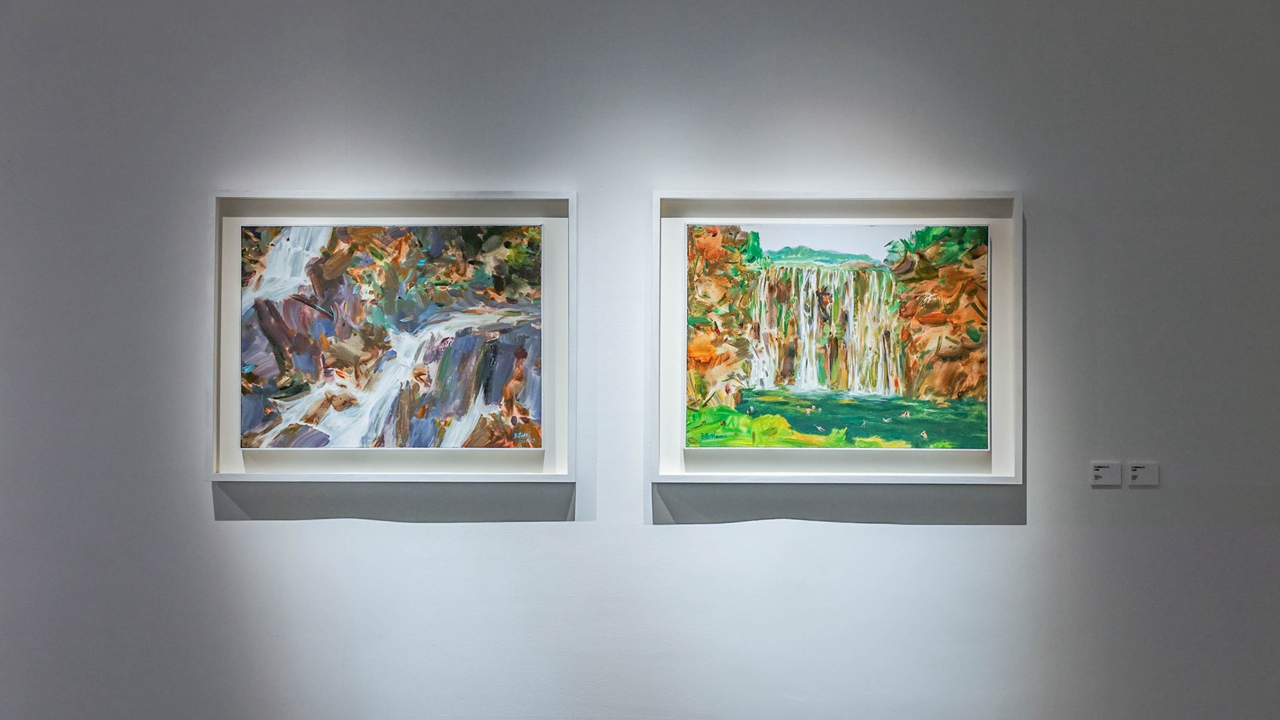
Two paintings on display.
Fan Bo, president of the Guangzhou Academy of Fine Arts, commented that Wang’s paintings “are not in a hurry to tell a story, or blatantly impose a sense of meaning upon the viewer,” but instead let them discern the changes in colors, shapes, and materials in each piece and arrive at their own conclusions.
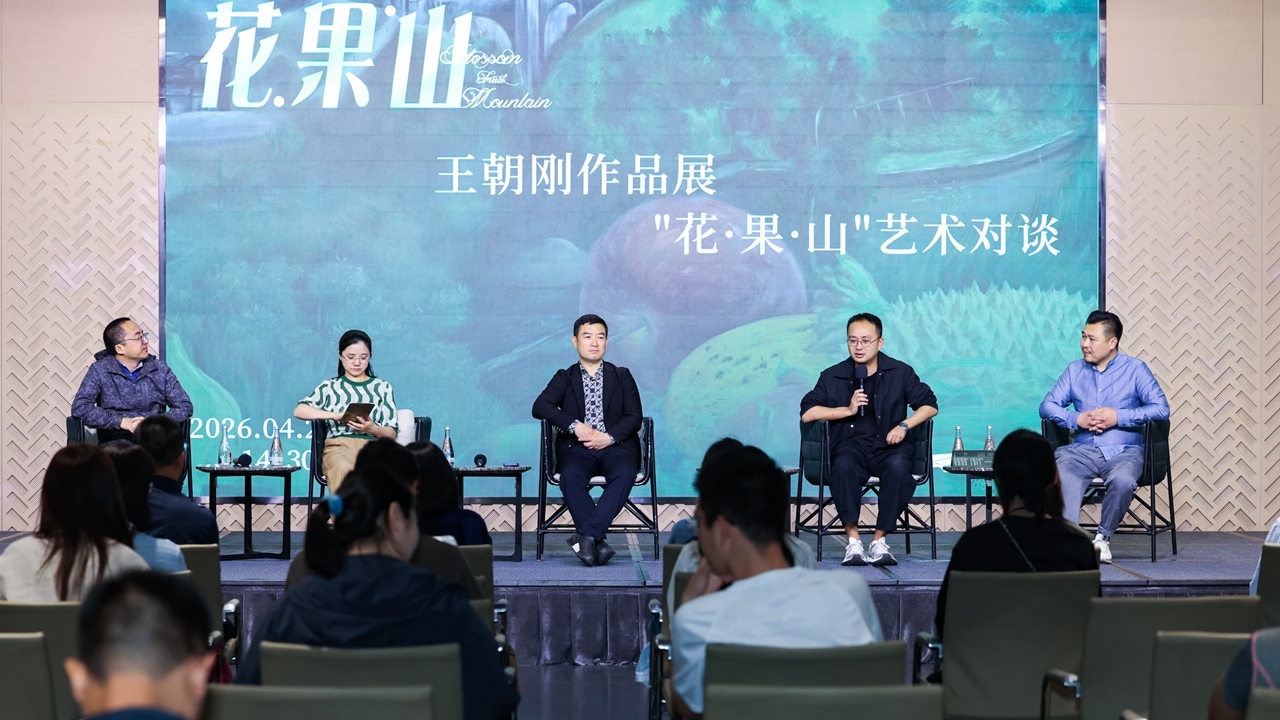
A dislogue helps the audience to better appreciate the exhibition.
Artists and reviewers attended a seminar to discuss Wang’s artistic transformation on Saturday, the opening day of the exhibition.
That same day, audiences were treated to a dialogue involving Wang, Hui, and three art reviewers, which helped them better appreciate the works on display.
The exhibition opens free to the public.
Dates: Until June 26
Venue: Hall A, 2/F, Art Museum, Guangming culture and art center (光明文化艺术中心美术馆2楼A展厅)
Metro: Line 6 to Fenghuang Town Station (凤凰城站), Exit B
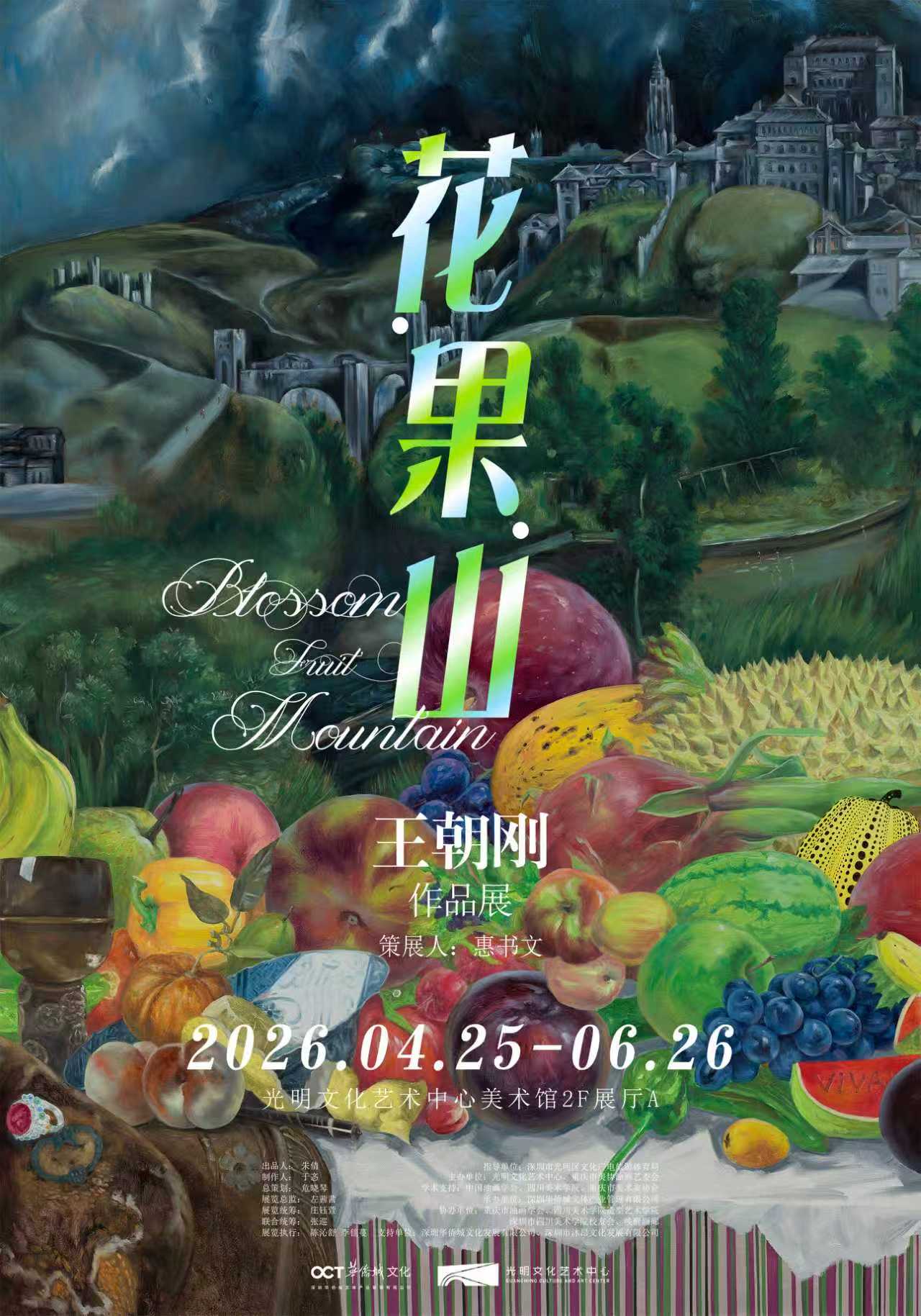
A poster for the exhibition.