
 Share
Share


 Print
PrintHK a strong magnet for global investment
Writer: Debra Li | Editor: Lin Qiuying | From: Shenzhen Daily | Updated: 2026-04-22
Throughout March, the average daily turnover in the Hong Kong stock market reached HK$304 billion (US$38.8 billion), surging 23% from February. On April 8, the figure spiked again to HK$372.6 billion.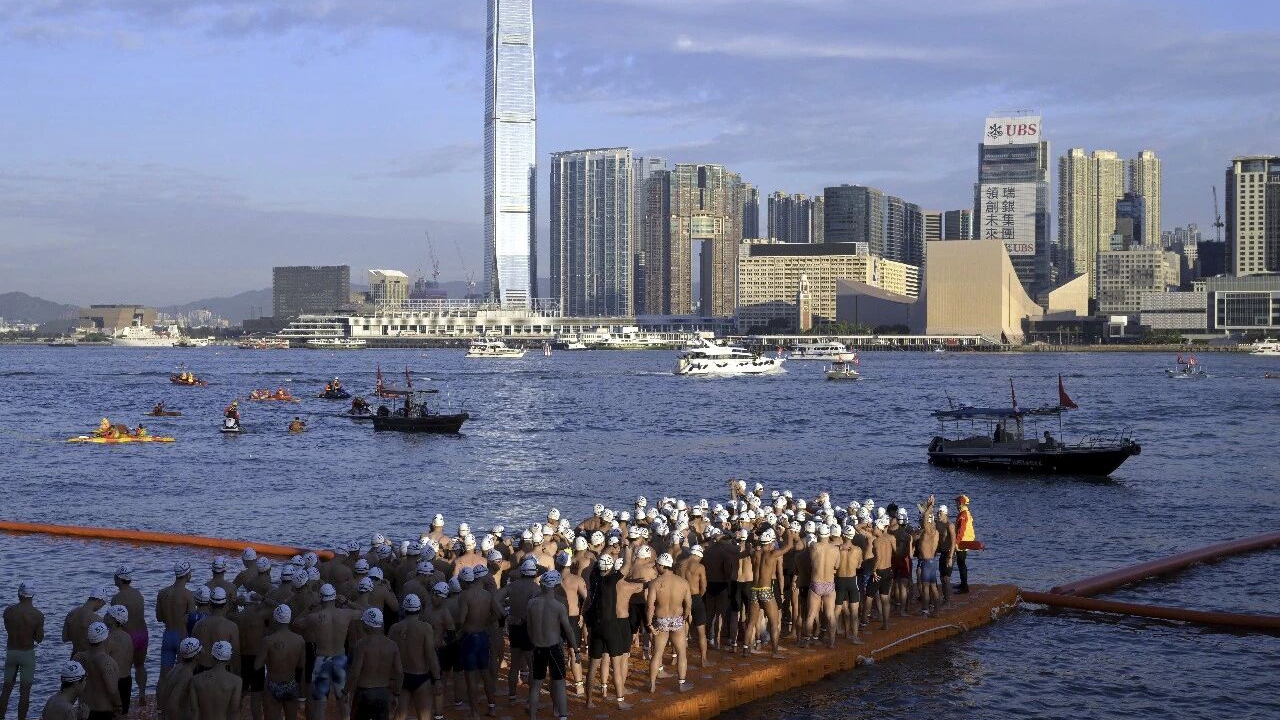
Swimmers wait to participate in the Victoria Harbour Swim in Hong Kong in this Nov. 22, 2025 file photo. Xinhua
Hong Kong Chief Executive John Lee revealed earlier this month that the city’s IPO pipeline includes more than 500 businesses. According to Deloitte, one of the “Big Four” accounting firms, over 560 valid listing applications have been submitted, leaving initial public offering sponsors in very short supply.
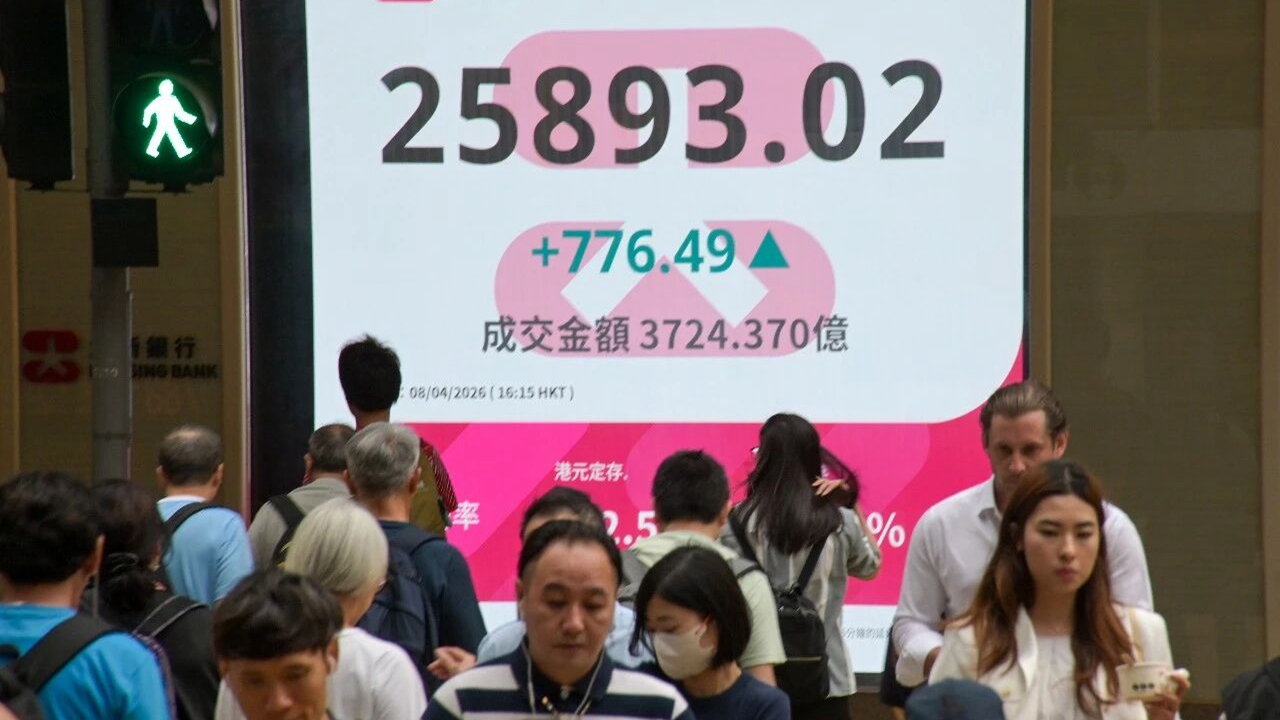
On April 8, the Hang Seng Index closed at 25,893.02 points, up 776.49 points, or 3.09%, with a full-day turnover of HK$372.437 billion. CNS
The city’s IPO market has got off to a strong start this year after reclaiming the global top spot for proceeds last year. In the three months ended March 31, more than US$14 billion was raised by companies going public in the city, keeping Hong Kong first internationally, Lee said at HSBC’s third Global Investment Summit on April 14, which was attended by nearly 5,000 investors and entrepreneurs.
Total fundraising was up six-fold. The proportion of Middle Eastern funds participating as cornerstone investors in Hong Kong IPOs surged from 18% in 2024 to 39.2% in early 2026.
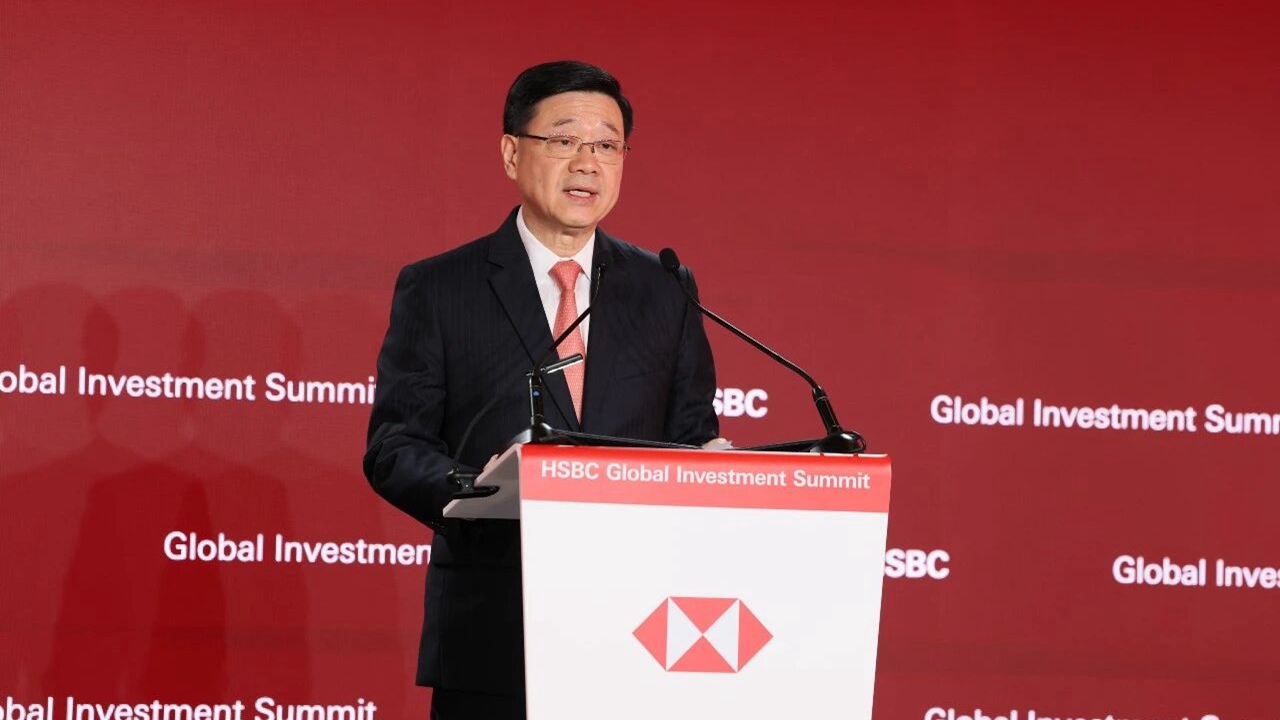
Hong Kong Chief Executive John Lee gives a speech at HSBC’s third Global Investment Summit on April 14. CNS
Jonathan Choi, president of the Chinese General Chamber of Commerce, Hong Kong, revealed that after the outbreak of war in Iran, Hong Kong became the primary destination for Middle Eastern capital, as funds seek a safe haven in the city.
Recent research from BNP Paribas indicates that U.S. investor sentiment toward Chinese mainland and Hong Kong stock markets has turned distinctly positive. From December 2025 to February 2026, a total of approximately US$14 billion flowed into mainland and Hong Kong markets, marking the largest net capital inflow for three consecutive months in over three years.
It is estimated that after this continuous inflow, U.S. investors hold a historical high of US$466 billion worth of mainland and HK stocks.
John Lee explained that Hong Kong’s lure for investors lies in its stability. “The staunch support of the motherland is the solid backing for Hong Kong. Amidst global turbulence, Hong Kong offers advantages that other international hubs find difficult to match.”
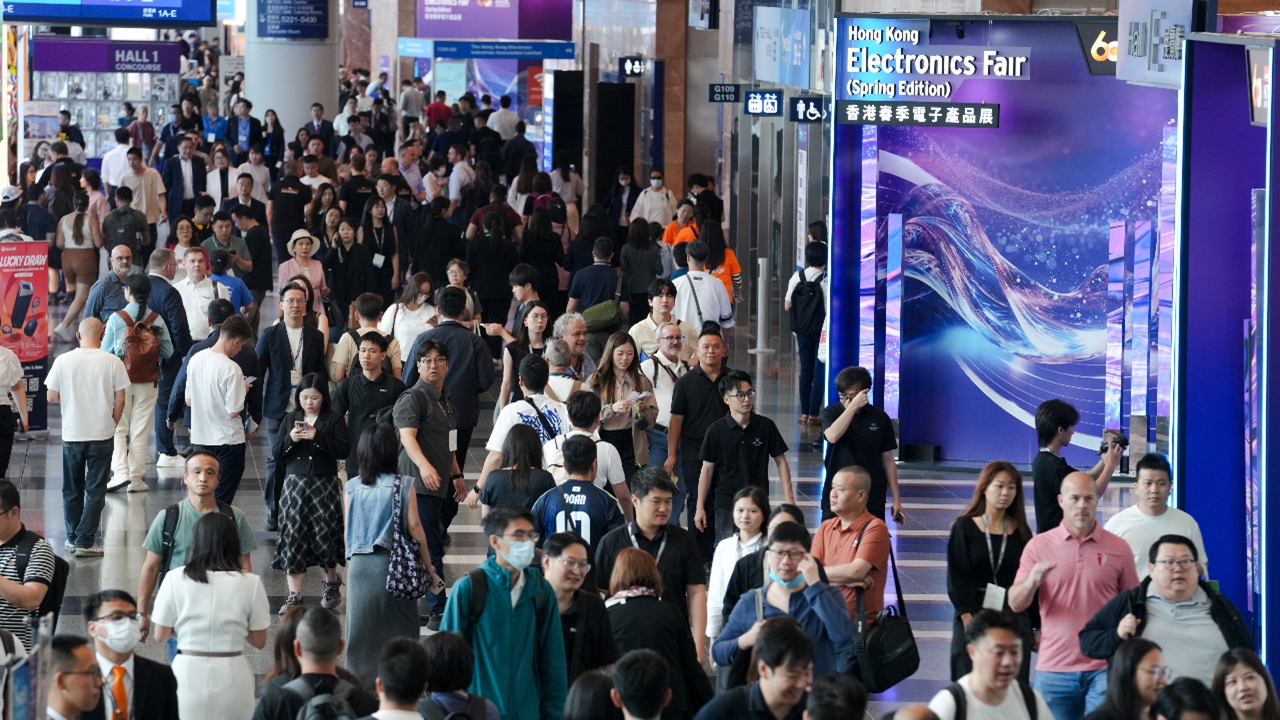
Crowds are seen at the Hong Kong Electronics Fair (Spring Edition) at the Hong Kong Convention and Exhibition Center on April 13. CNS
The influx of multinational corporations and merchants represents deep-seated trust in Hong Kong’s long-term value as an investment destination.
Alpha Lau, Director-general of Investment Promotion at InvestHK, revealed that in the first quarter, the city has already secured over 200 investment projects. Among those seeking collaboration, wealthy Middle Eastern families accounted for a large proportion.
“They ask very detailed questions,” recalled a lawyer involved in the negotiations. “It’s not just about tax rates. They care more about whether the capital will truly be safe here.”
In the first quarter, Hong Kong received over 50 applications from global companies for registration, of which 32 have already been approved, including two insurance firms. After relocating to Hong Kong, Manulife immediately increased its investment in the city’s AI sector.
Wealth management funds are also pouring in. Brendan Nelson, chairman of HSBC, revealed that HSBC has added approximately 1 million new customers from around the globe in Hong Kong annually for the past two years. He predicts that Hong Kong will become the world’s largest cross-border wealth management center by 2030.
Chung Ki-fung, Hong Kong Legislative Council member representing the import and export functional constituency, commented: “The capital inflows are a vote of trust in Hong Kong’s legal system, free flow of capital, and investment opportunities brought by diversified financial products.”
Over the past few years, with support from the State authorities, Hong Kong has continuously upgraded its financial infrastructure, improved the Limited Partnership Fund regime, implemented rules for licensing virtual assets, and established a regulatory framework for stablecoins.
In the first quarter of 2026, Hong Kong’s merchandise exports achieved double-digit growth, and its global trade ranking rose to fifth.
On Feb. 11, the Ministry of Finance of China issued this year’s first tranche of treasury bonds worth HK$14 billion in Hong Kong, which was snapped up by institutional investors and central banks, achieving an oversubscription rate of 3.94 times.
The latest Global Financial Centres Index (GFCI) released by think tank Z/Yen in March saw Hong Kong rise one place to third, continuing to narrow the gap with New York and London.
Paul Chan, Financial Secretary of the SAR government, stated at the HSBC Global Investment Summit: “If you want to invest in the future, you should invest in Hong Kong.” He predicted that in 10 to 15 years, the city is projected to become the world’s second-largest financial center.
The confidence arises from the motherland’s solid support: The 15th Five-Year Plan pledges to improve Hong Kong’s commodity trading ecosystem, and the wave of mainland enterprises going global will bolster Hong Kong's role as a “super-connector.”
Hong Kong’s certainty — its institutions, rule of law, connectivity, and the Chinese market — will remain an anchor that global capital finds hard to forsake.