
 Share
Share


 Print
PrintShenzhen kicks off reading week with AI focus, new library cardless borrowing
Writer: Zhang Yu | Editor: Lin Qiuying | From: Original | Updated: 2026-04-22
The 2026 National Reading Week • Shenzhen event kicked off yesterday with a wide-ranging ceremony that underscores the city’s push to integrate artificial intelligence into literacy efforts.
Participants attend the launch ceremony of the 2026 National Reading Week • Shenzhen event at Shenzhen Book City CBD Store yesterday. Shenzhen Special Zone Daily
The weeklong event, running until Sunday, marks the first observance since the National Reading Promotion Regulations took effect in February, designating the fourth week of April as the National Reading Week and putting reading promotion on a legal, long-term footing.
At the launch ceremony inside the Shenzhen Book City CBD Store, organizers unveiled the Shenzhen National Reading Development Report 2026 via an interactive video presented by an AI-generated host. The report comprises 26 research papers categorized into six key areas, including annual reviews, digital reading trends and Asia-Pacific cooperation. It tracks Shenzhen’s library network, signature reading initiatives and public literacy metrics.
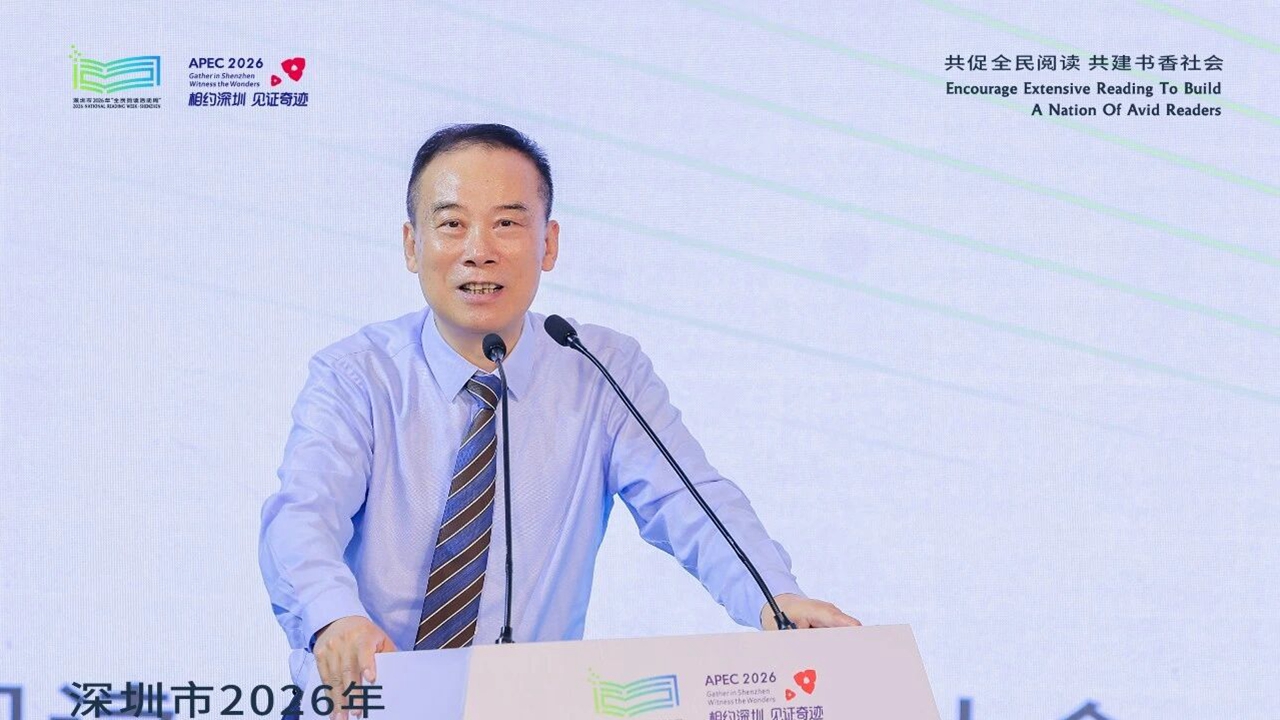
Xu Yangsheng, president of The Chinese University of Hong Kong, Shenzhen, delivers a keynote speech during the launch ceremony of the 2026 National Reading Week • Shenzhen event. Courtesy of event organizer
Xu Yangsheng, a Chinese Academy of Engineering academician and president of The Chinese University of Hong Kong, Shenzhen, delivered a keynote address titled "Reading in the AI Era," drawing on decades of research and education experience.
“I am an avid reader. I read everything. And I have visited all seven stores of Shenzhen Book City,” Xu told the audience. “Whenever friends from other cities or countries visit, I bring them to these stores to show them how different they are.”
He argued that AI makes reading more vital, not less.
“Reading is the anchor of our lives,” Xu said, adding that material and spiritual paths must advance together. He called reading "the source of thought."
“If robots are gradually evolving into ‘humans’ in the AI era, we want humans to evolve into higher beings — thoughtful, reflective people.”
He also described reading as “the most important source of happiness,” urging a return to deep reading as a lifelong companion.
Xu's university’s School of Artificial Intelligence also launched the AI Reading Research Center, which will focus on four areas: building theoretical systems for public reading, big-data analysis of reading behavior, integrating digital culture with tourism, and fostering AI literacy.
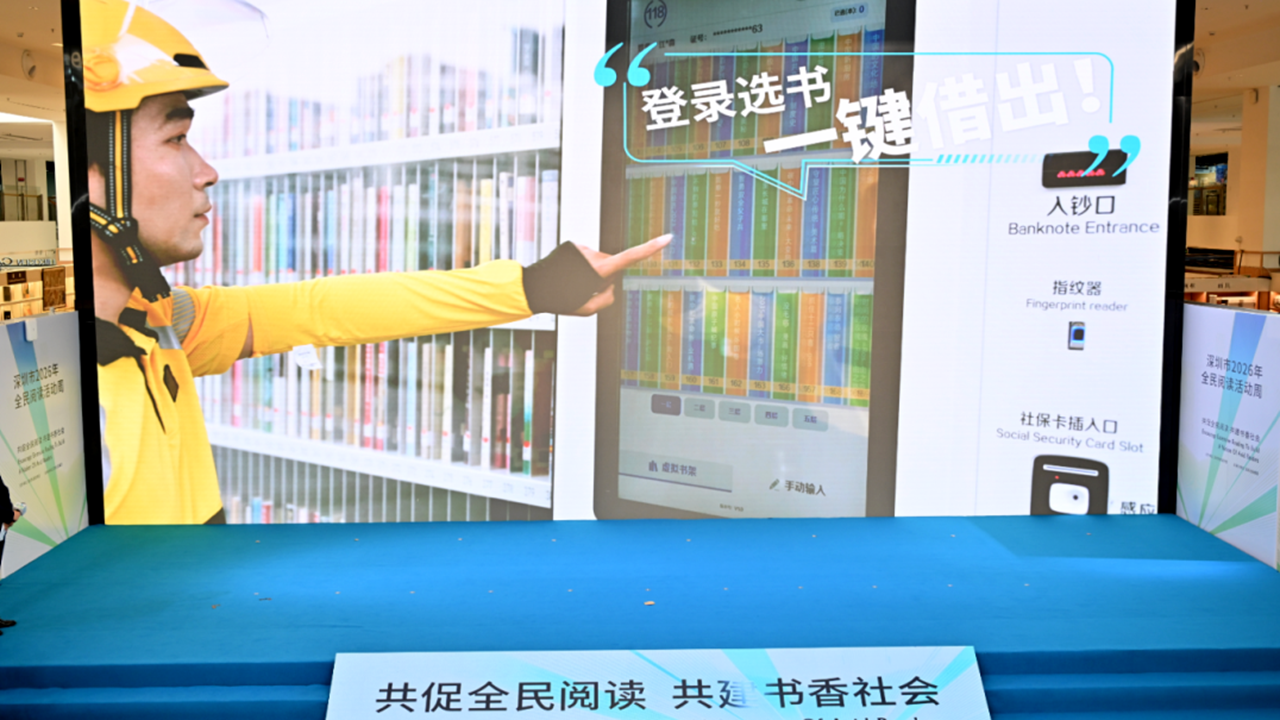
A video introduces Shenzhen’s paperless borrowing service using electronic social security cards during the launch ceremony of the 2026 National Reading Week • Shenzhen event at Shenzhen Book City CBD Store. Shenzhen Special Zone Daily
At the event, Shenzhen also introduced a paperless borrowing service using electronic social security cards, eliminating the need for separate library cards across the city’s library network.
With the city preparing to host the APEC 33rd Economic Leaders’ Meeting in November, the reading week unveiled four themed reading routes for young APEC visitors: tech-innovation, mountain-sea, park and design. Stops include Eyes of the GBA, Egret Slope Book Bar, Lighthouse Library, and the 24-Hour Book Bar.
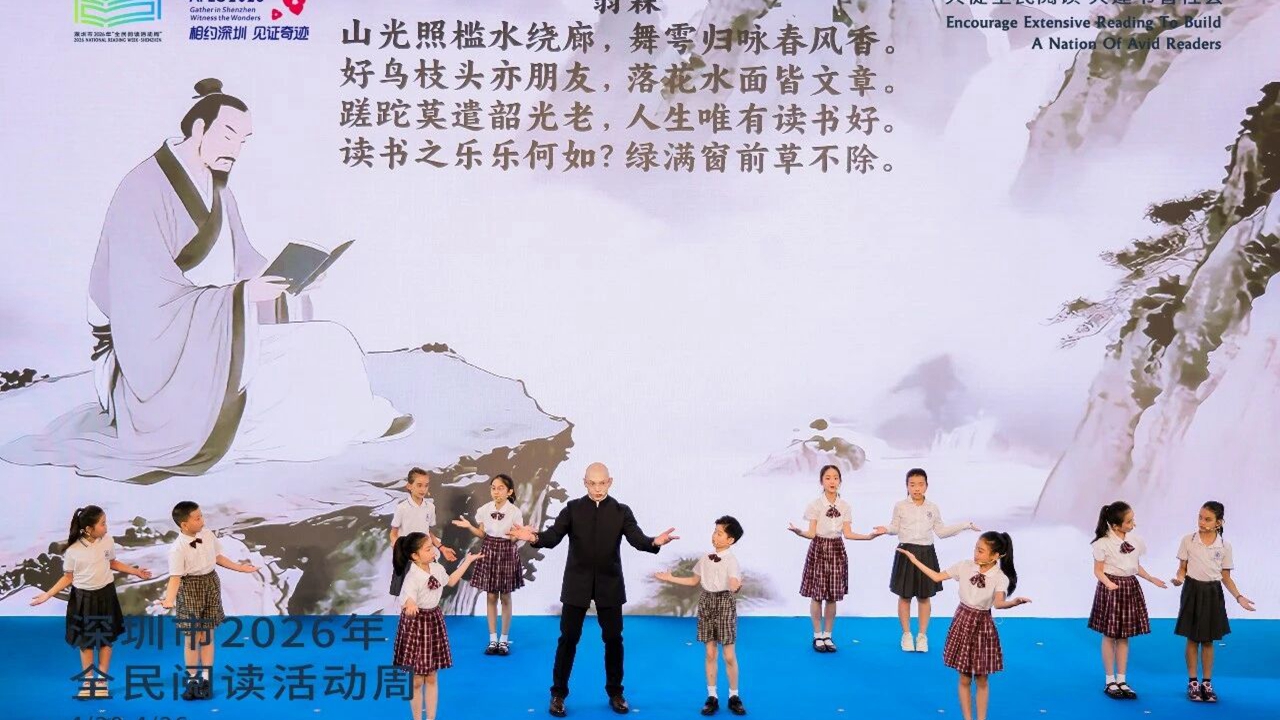
Russian sinologist Ilya Kanaev (center, in black) and students from Shenzhen and abroad recite classical Chinese poems during the launch ceremony of the 2026 National Reading Week • Shenzhen event. Courtesy of event organizer
In a cross-cultural moment, Russian sinologist Ilya Kanaev and students from Shenzhen and abroad recited classical Chinese poems — Yan Zhenqing’s “Exhortation to Study” and Weng Sen’s “The Joy of Reading in Four Seasons, Spring.”
Shenzhen also introduced an expanded initiative to bring reading year-round into schools, government offices, communities, companies, and families.
According to the Shenzhen National Reading Development Report 2025, residents in the city read an average of 22 books per year, with the adult comprehensive reading rate sustaining a high of more than 96%. Shenzhen continues to outpace the rest of the nation in per-capita book purchases, annual reading volume, and digital engagement time.