
 Share
Share


 Print
PrintYoung Shenzhen maker quests for low-cost rocketry
Writer: Wei Jie | Editor: Lin Qiuying | From: Original | Updated: 2026-04-17
In a nondescript industrial park in Shenzhen's Longgang District, a twisted piece of metal sits in the corner of a courtyard. To a passerby, it looks like scrap, but to Lu Yulong and his team at Shenzhen Dragon Aerospace Technology Co., it is a trophy.
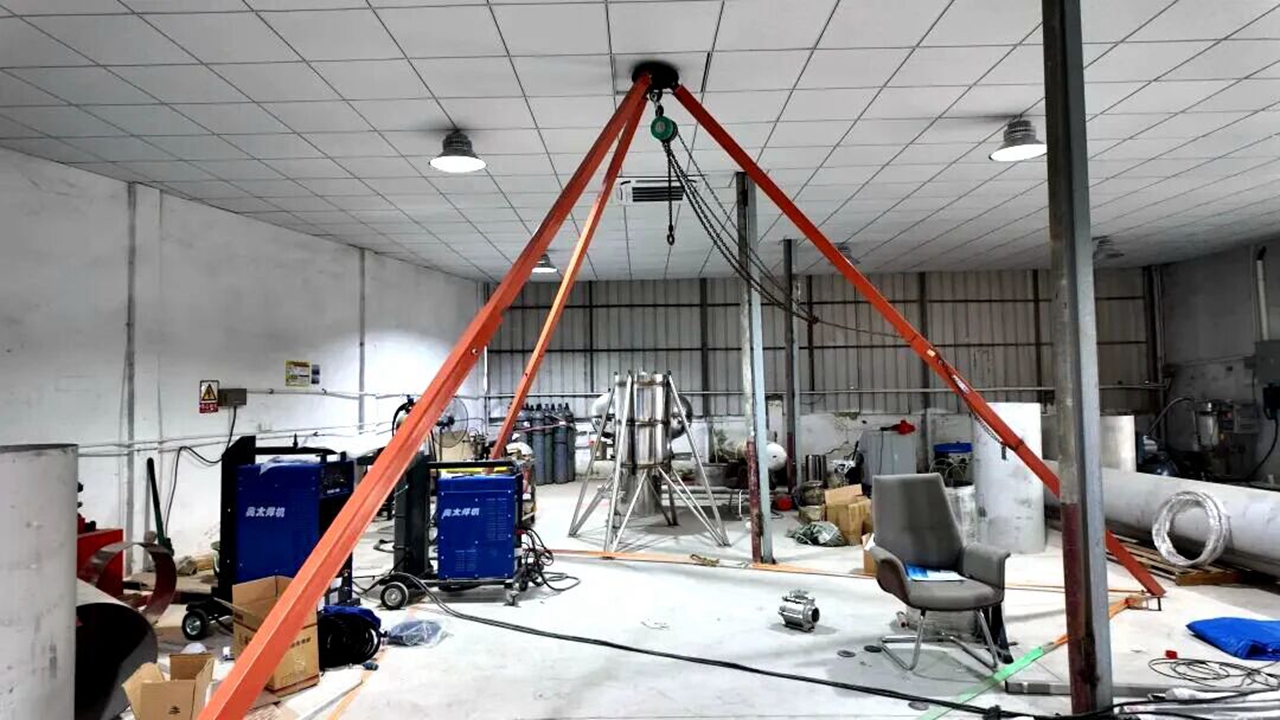 Interior view of the workshop at Shenzhen Dragon Aerospace Technology Co., founded by Lu Yulong. Photos courtesy of the interviewee
This is the wreckage of a liquid-fueled rocket, handcrafted by Lu’s team, which reached an altitude of 3.7 kilometers during a test launch in Qinghai in February 2026.
“We had it shipped back to Shenzhen immediately after the launch,” said Fu Yu, co-founder of Dragon Aerospace.
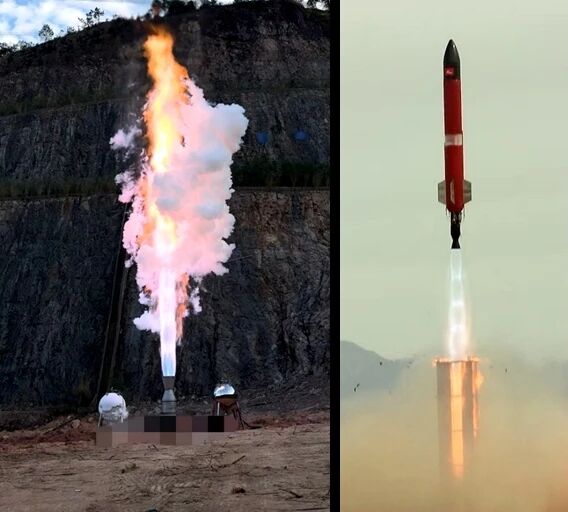
(L) A 20-ton-thrust pressure-fed engine undergoes testing.
(R) The rocket “Shenzhen Pioneer” lifts off during a test launch in Qinghai province in February 2026.
The rocket, named “Shenzhen Pioneer,” was more than just a flight. It was a loud rebuttal to skeptics and a proof of concept for Lu’s “budget aerospace” philosophy.
For years, the industry has viewed pressure-fed cycle engines as simple but limited — suitable for small maneuvers but unfit for launch vehicles. Lu, now in his early 30s, chose to challenge this consensus. He believes that pressure-fed engines can achieve high thrust and that low-cost solutions are viable for stable flight.
The 12-meter-tall Shenzhen Pioneer was assembled by a team of just five people in 15 days, powered by a self-developed 20-ton thrust pressure-fed engine. Despite launching with only one-sixth of its fuel capacity due to airspace restrictions, the rocket successfully completed its ascent and attitude control, meeting all technical objectives.
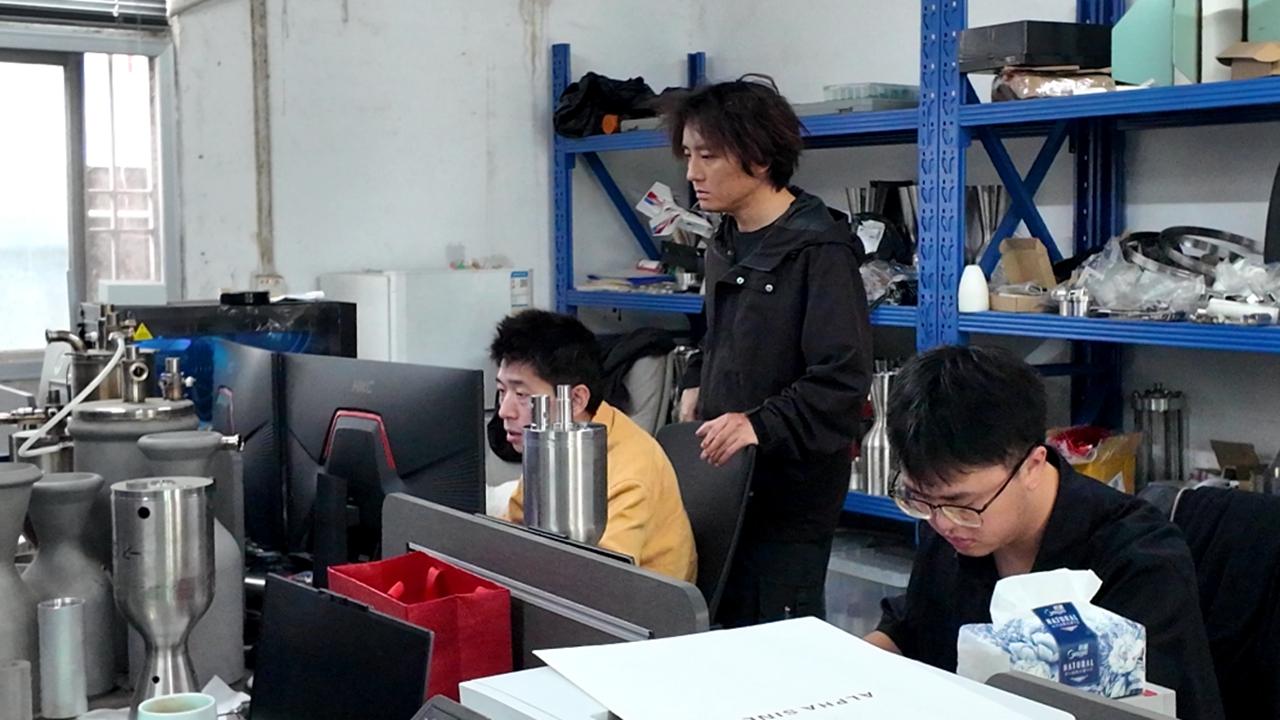
Lu Yulong and members of his team work at the office of Shenzhen Dragon Aerospace Technology Co.
Lu said his team has reduced the cost per unit of thrust to just one-fiftieth of the industry average. Once mass production begins, he aims to bring launch costs down to 300 yuan (US$44)–1,000 yuan per kilogram, a fraction of current market prices.
“Low cost doesn’t mean low reliability,” he explained. “In the era of commercial aerospace, sacrificing marginal performance for mass-production capability is a logical market choice.”
Lu is no stranger to the spotlight. With more than a million social media followers, the 32-year-old man is a polarizing figure known for his “DIY” approach to rocketry. He first gained national fame as a teenager on a talent show where he manipulated artificial lightning, earning the nickname “The Flash.”
However, his true passion has always been rockets. By age 14, he had been experimenting with engines, and by 17, he had registered his first aerospace company to legally purchase regulated fuel chemicals.
“I have always been obsessed with aerospace,” Lu said. “As a tech geek who conducts his own experiments, I’ve found that it isn’t unattainably difficult, and I have developed my own methods.”
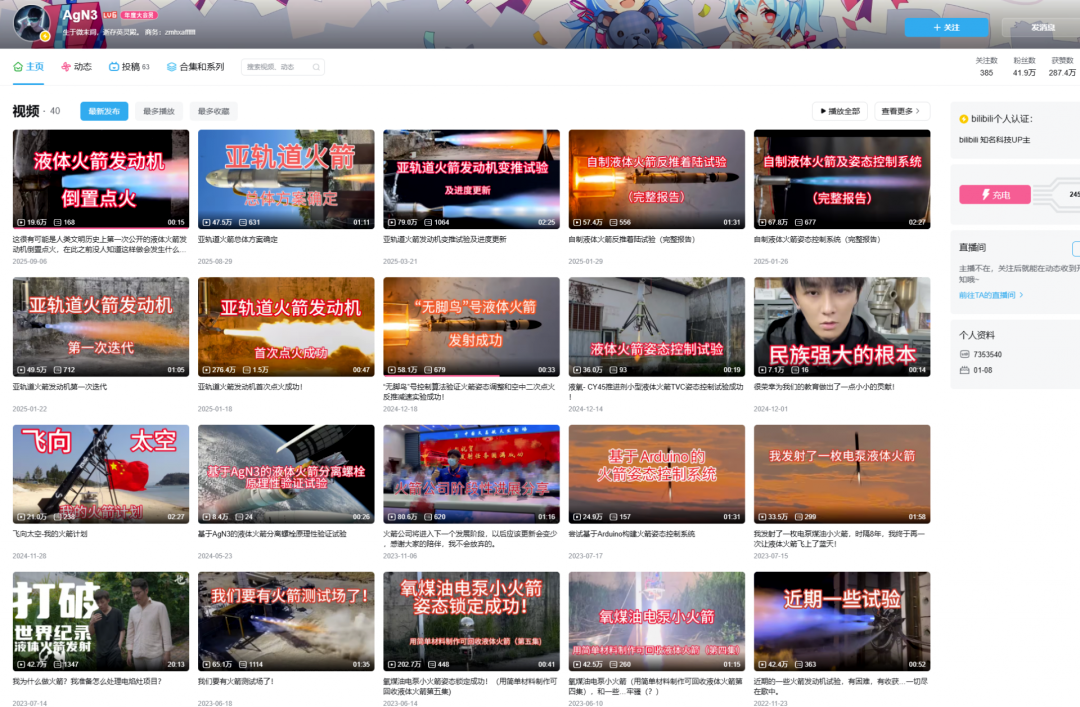
Lu Yulong documents his journey as a “DIY” rocket builder on social media, attracting more than one million followers.
His journey has been rocky. He famously detoured into “Electric Flame Stoves”— a consumer product derived from plasma satellite propulsion research. While the technology was impressive, the business collapsed due to over-expansion, forcing Lu to sell his apartment and car to keep his rocket dreams alive. He now maintains a small team, having learned the hard way not to scale prematurely.
Lu chose Shenzhen for the city's robust supply chain. “The Greater Bay Area (GBA) boasts a high concentration of machining, electronics, and precision manufacturing, allowing for rapid sourcing of components. The high iteration efficiency and low cost make it ideal for startups to fast-track their R&D,” Lu said. He added that the testing grounds provided by Longgang District have helped address the scarcity of space for large-scale ignition tests, a major hurdle for private firms.
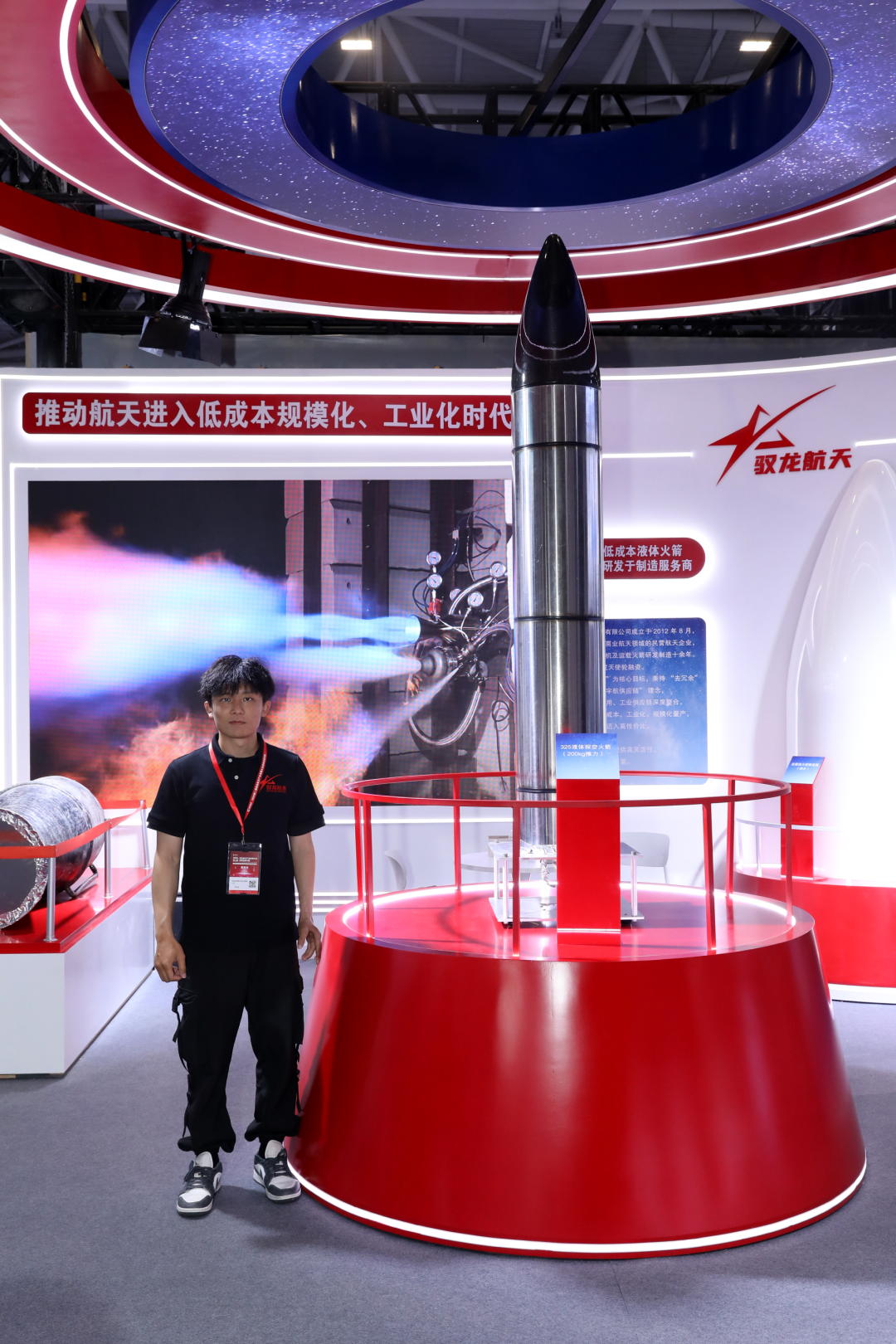
Lu Yulong poses with a rocket developed by his company at an industry expo in an undated photo.
While often compared to SpaceX founder Elon Musk, Lu views the label with mixed feelings, noting that being compared to someone else implies an inability to surpass them. He insists his path is distinct, focusing on large-scale industrialization.
Lu plans to test a 100-ton thrust engine by late 2026, with an orbital launch attempt scheduled for 2027. His ultimate goal is to provide a high-frequency, low-cost “bus service” for low Earth orbit satellites, finally making space accessible to the masses.