
 Share
Share


 Print
PrintMexican journalists in Shenzhen: 'A Model for the World'
Writer: Zhang Yu | Editor: Zhang Chanwen | From: Original | Updated: 2026-04-16
When a delegation of Latin American journalists arrived in Shenzhen on April 14, they came with curiosity. They left with a conviction: that this city's remarkable transformation holds lessons not just for China, but for the entire world.
The delegation, comprising media professionals from Mexico, was invited to experience firsthand Shenzhen's practice of Chinese modernization. For Zhang Yu, a veteran reporter with Shenzhen News Group who has covered the city for years, the visit became an opportunity to see her hometown through fresh eyes — and to ask her fellow journalists a simple question: What stories here are worth telling?
Their answers revealed a deep appreciation for a city that has risen from a fishing village to a global innovation powerhouse in just four decades.
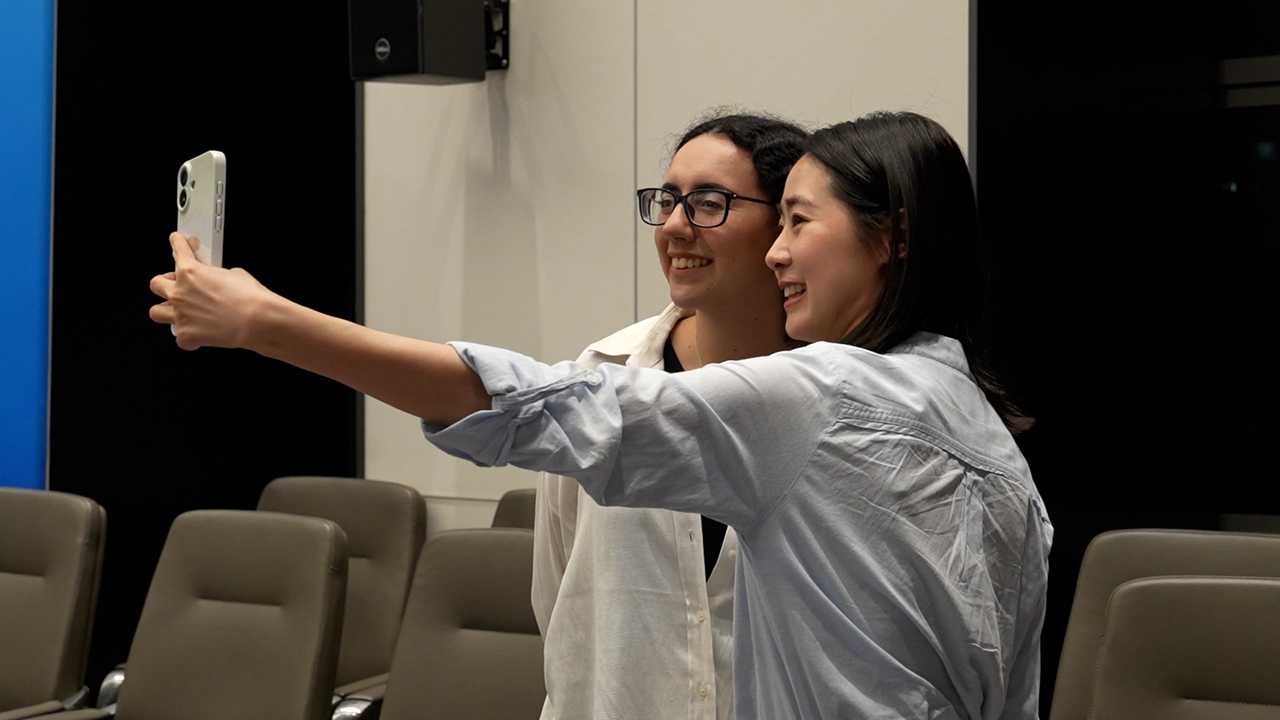
Zhang Yu, a veteran reporter with Shenzhen News Group poses a photo with María José Rentería Paczka who is a web editor at Mexican Institute of Journalism. Photo by Lin Jianping
María José Rentería Paczka, a web editor at Mexican Institute of Journalism, was visiting China for the first time. What captured her attention, however, was not the city's famous skyline, but its invisible infrastructure.
"I think the topic of electricity is really worth talking about," she said. "A lot of the time, we don't really know where it comes from. We know a lot about China because of all the Chinese products we have in Mexico, but we don't know everything. So I find it really interesting to learn that they have these kinds of things and programs that are environmentally friendly."
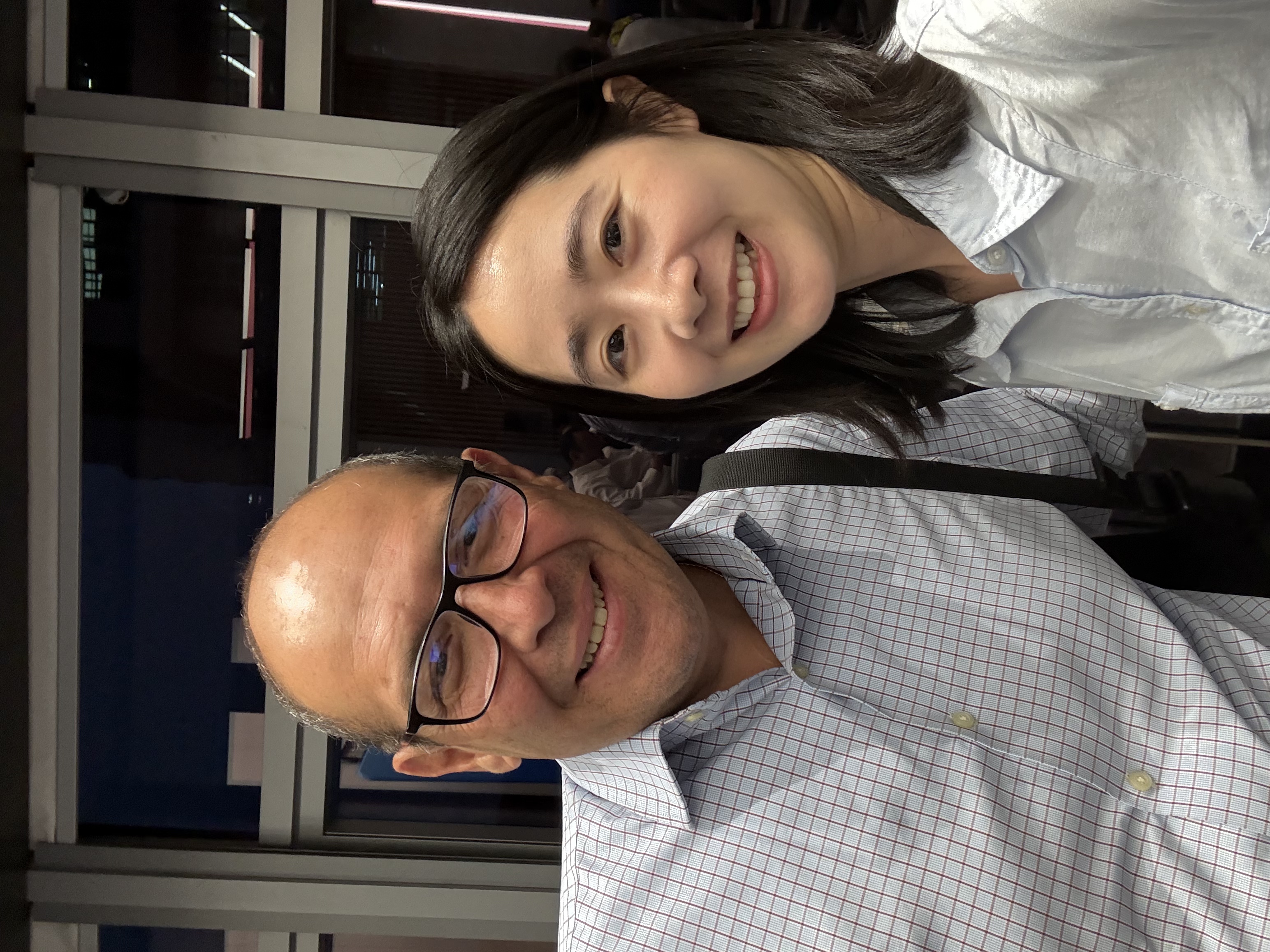
Zhang Yu, a veteran reporter with Shenzhen News Group takes a selfie senior reporter Francisco Alejandro Leyva Aguilar. Photo by Zhang Yu
For senior reporter Francisco Alejandro Leyva Aguilar, the story of Shenzhen is not merely about technology — it is about transformation. And that transformation, he argued, deserves to be told in full.
"All of them are worth telling," he said emphatically. "From the very beginning, from how they started 40 years ago — the Shenzhen of 40 years ago compared to the Shenzhen of 2026 — this must be an extraordinary achievement. You can see it everywhere: in the streets, the avenues, the people, the buildings, the homes, and the impressive tour we just took at the electricity company. It means they got to work."
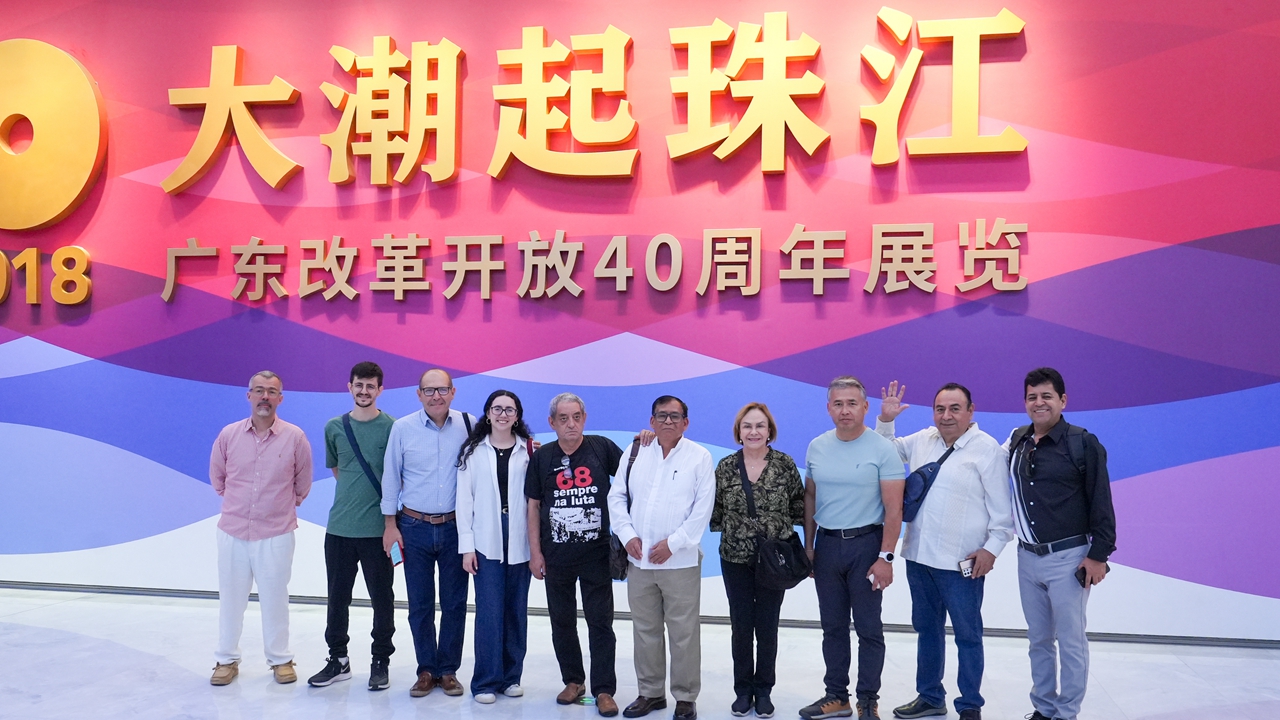
The delegation of Latin American journalists tour the exhibition "Great Tides Surge Along the Pearl River: 40 Years of Reform and Opening Up in Guangdong." Photo by Lin Jianping
His words carried a message that transcended borders. "This should serve as an example for other cities around the world, so that they can also achieve this level of economy, stability and happiness," he added. "Because I see that everyone here is always very happy."
For Zhang, the Mexican delegation's visit was a moment of rediscovery. "After talking with them, these Latin American friends helped me see we're living in Shenzhen's best stories every day," she reflected. "Reform, green development, technology, and openness make up Chinese modernization in its most vivid form."
Her reflection underscores a broader truth: that the city's journey is a narrative that resonates far beyond China's borders. And for Mexican journalists, who come from a country with its own ambitions for development and modernization, Shenzhen offers a compelling example of what is possible.
With China set to host the 33rd APEC Economic Leaders' Meeting in Shenzhen this November, the city is preparing to welcome even more international visitors — including many more journalists from around the world. "I can't wait to see what stories they will tell," Zhang said.
For Mexico, a nation with its own rich history and aspirations, the Shenzhen story offers both inspiration and a roadmap. As Leyva Aguilar put it: "They got to work." And that, perhaps, is the most powerful story of all.