
 Share
Share


 Print
PrintLatin American journalists hail SZ's transformative power
Writer: Zhang Yu | Editor: Lin Qiuying | From: Shenzhen Daily | Updated: 2026-04-16
Videos and photos by Lin Jianping
A media delegation from Mexico and Brazil has highlighted Shenzhen as a global model of technological innovation, inclusive development and green growth, with one senior journalist saying the city proves that "nothing is impossible" when there is vision and collective will.
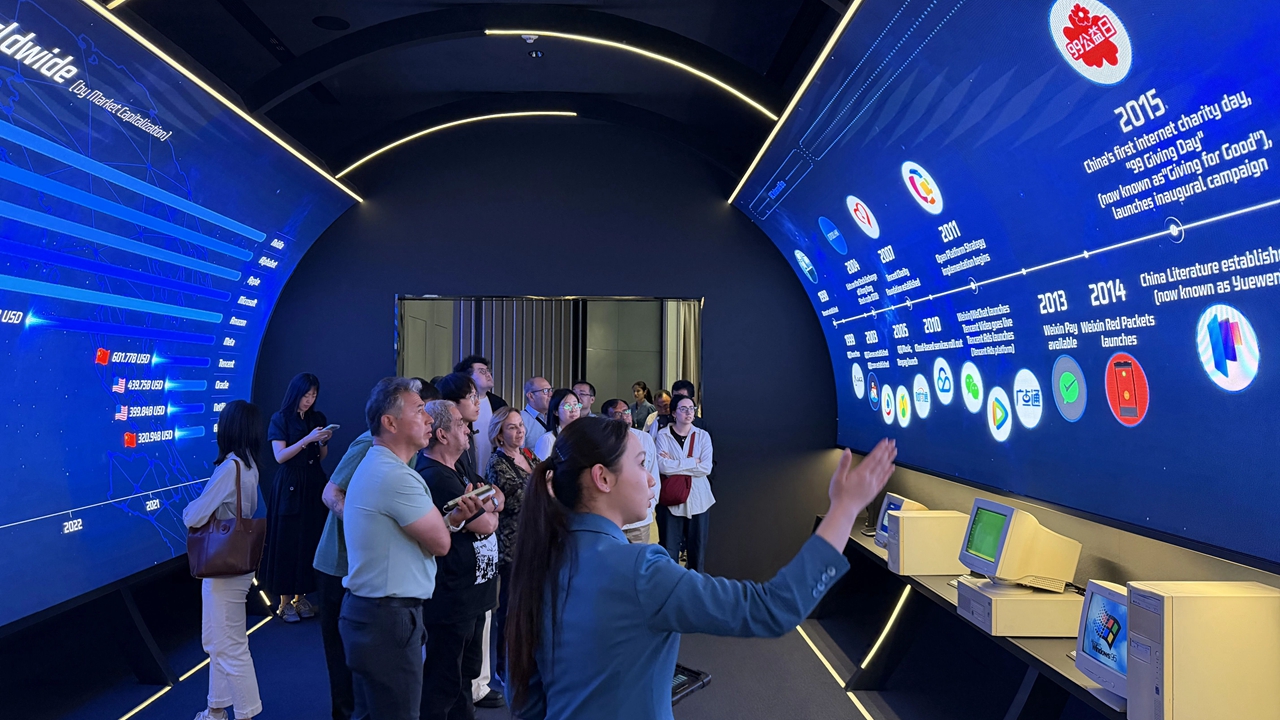
Members of a media delegation from Mexico and Brazil on a visIt to Tencent's exhibition hall in Tencent Binhai Building.
The Latin American media group was in the southern Chinese metropolis Tuesday to observe firsthand the city's practice of Chinese modernization. What they found, they said, was far more than skyscrapers — it was a blueprint for the future.
"Nothing is impossible," said Jamil Cezar Chade from Brazil. "If you have a plan, a vision, and a pact of society to build something new, you can do it. No one would have imagined that a village here 40 years ago would be transformed into this. Transformation is possible."
The city’s transformation also stunned Francisco Alejandro Leyva Aguilar from Mexico.
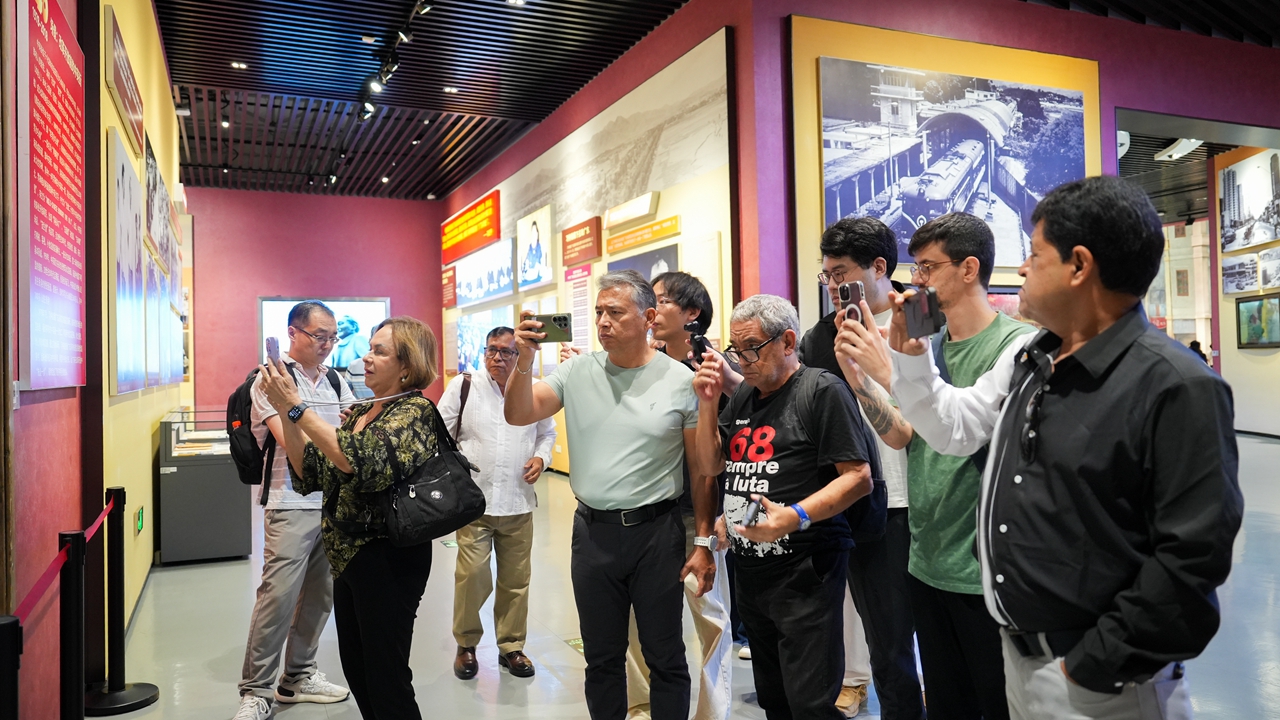
Members of the delegation visit an exhibition on China's reform and opening-up at the Shenzhen Museum of Contemporary Art and Urban Planning.
"In 40 years, they built this. It is extraordinary. You can see it everywhere: in the streets, the avenues, the people, the buildings. This should serve as an example for other cities around the world, so that they can also achieve this level of economy, stability and happiness. I see that everyone here is always very happy."
For many in the delegation, the most compelling story was not the city's modern skyline but the journey it took to get there.
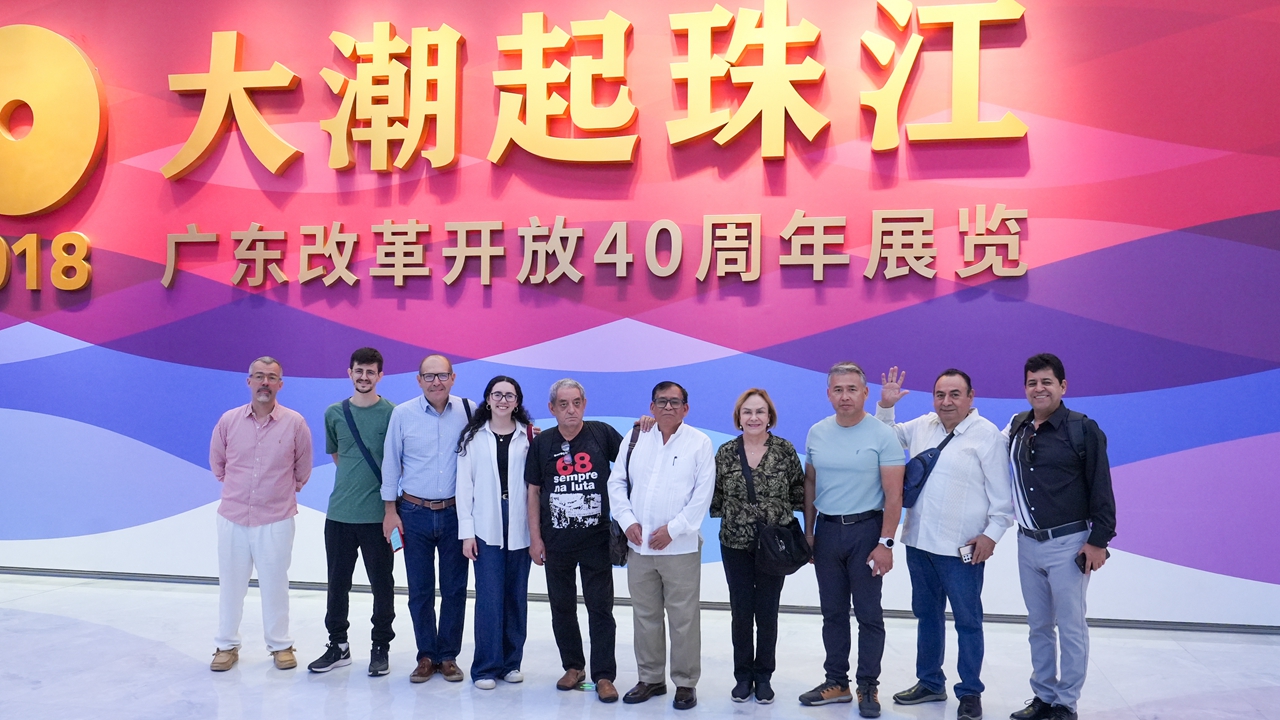
Delegation members pose for a group photo at the Shenzhen Museum of Contemporary Art and Urban Planning.
"The most important story is how it was done," said Moacyr Oliveira Filho from Brazil, after visiting an exhibition on reform and opening-up. "The most important story is to show the path that was traveled – how this evolution was achieved in such a short time, from a simple fishing village into the technological powerhouse that we see today."
Victor Jardim from Brazil called Shenzhen "a very technological city" and "an example of how you can use technology to make people's lives better."
That commitment to people-centered development, the journalists observed, extends to all members of society. Leyva Aguilar noted that Shenzhen is building an inclusive city where people with disabilities can navigate life without barriers.
"You are using technology to close the gap between people with and without disabilities," he said. "Shenzhen is a model of technology applied to real life."
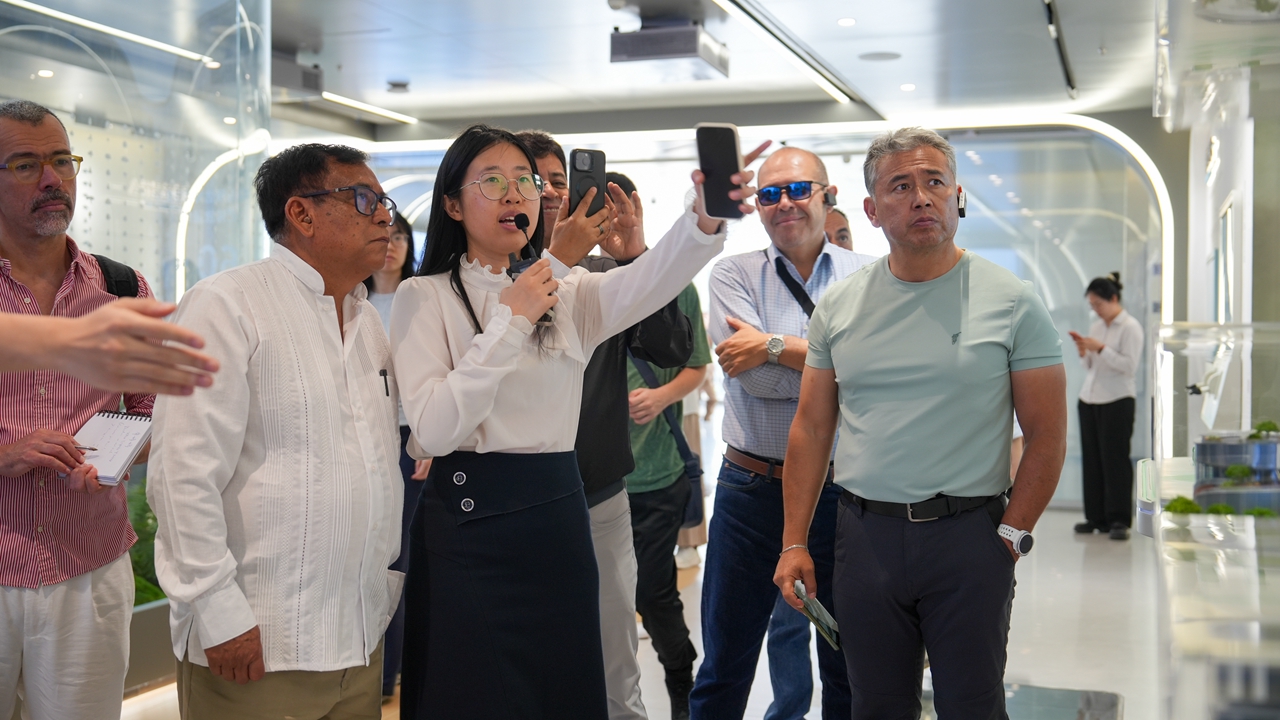
Delegation members listen as a guide introduces exhibits at the Shenzhen Power Culture and Science Education Base.
As a first-time visitor to China, Maria Jose Renteria Paczka from Mexico expressed surprise at the city's environmentally friendly power infrastructure.
Maria Jose Renteria Paczka from Mexico, who turned 27 during her stay in Shenzhen, receives a pleasant surprise from All-China Journalists Association, Shenzhen Journalists Association, and Shenzhen News Group (SNG).
"A lot of the time, we don't really know where electricity comes from," she said. "It's really interesting to learn that they have these kinds of programs that are environmentally friendly."
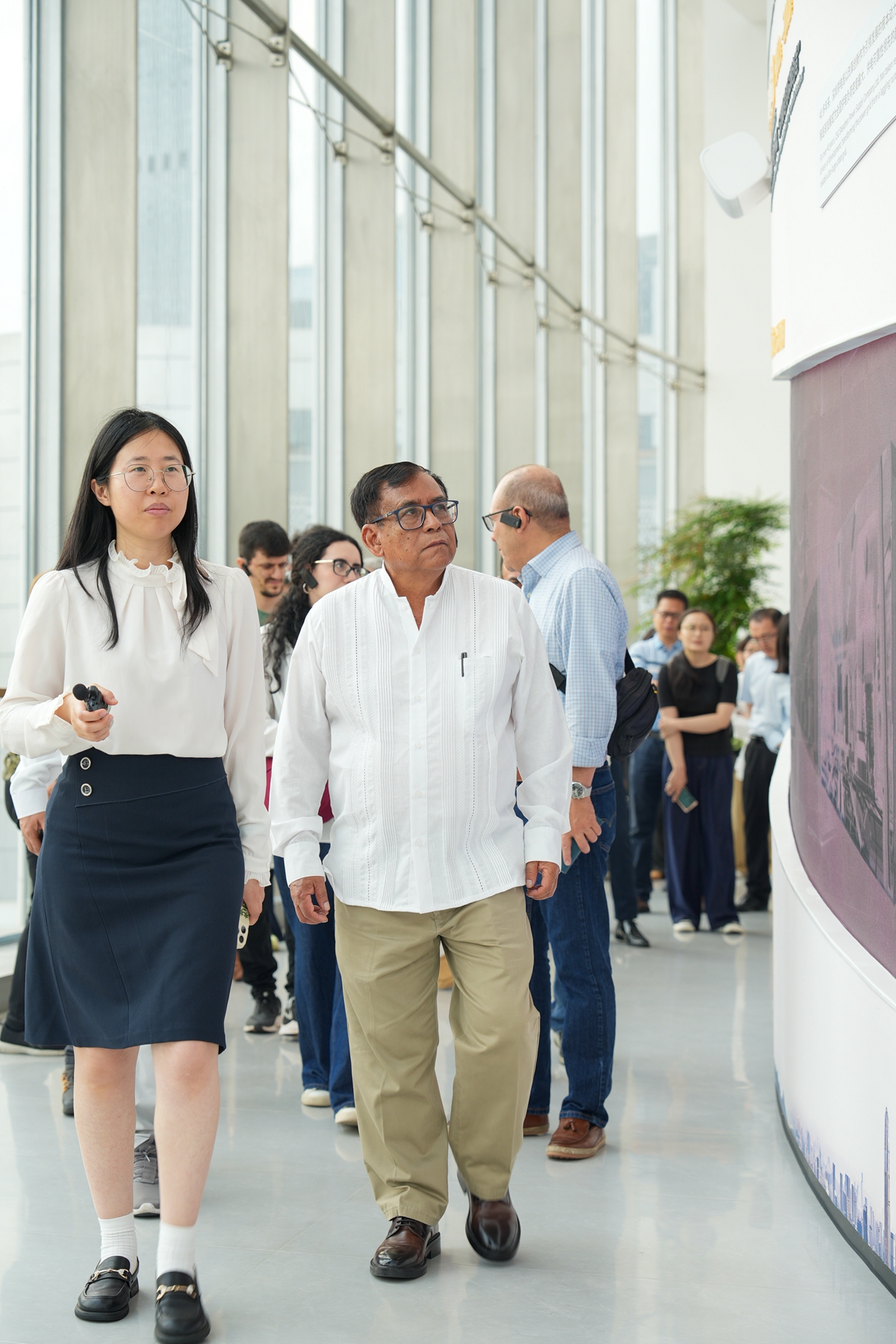
Delegation members on a tour to the Shenzhen Power Culture and Science Education Base.
Jose Arturo Aguirre Bahena from Mexico praised Shenzhen's balanced approach to development. "Without a doubt, what we see – how Shenzhen has grown in just 40 years – is the external manifestation of a great internal vision: to imagine a different world," he said. "Shenzhen is also environmentally friendly, which is very important, because we need to balance technique, technology and humanity."
Chade from Brazil offered a striking statistic to underscore China's innovation drive. According to the World Intellectual Property Organization, China last year registered half of all patents worldwide for the first time.
"In the story of innovation, Shenzhen is the capital," he said. "That is one of the stories I will be writing for sure."
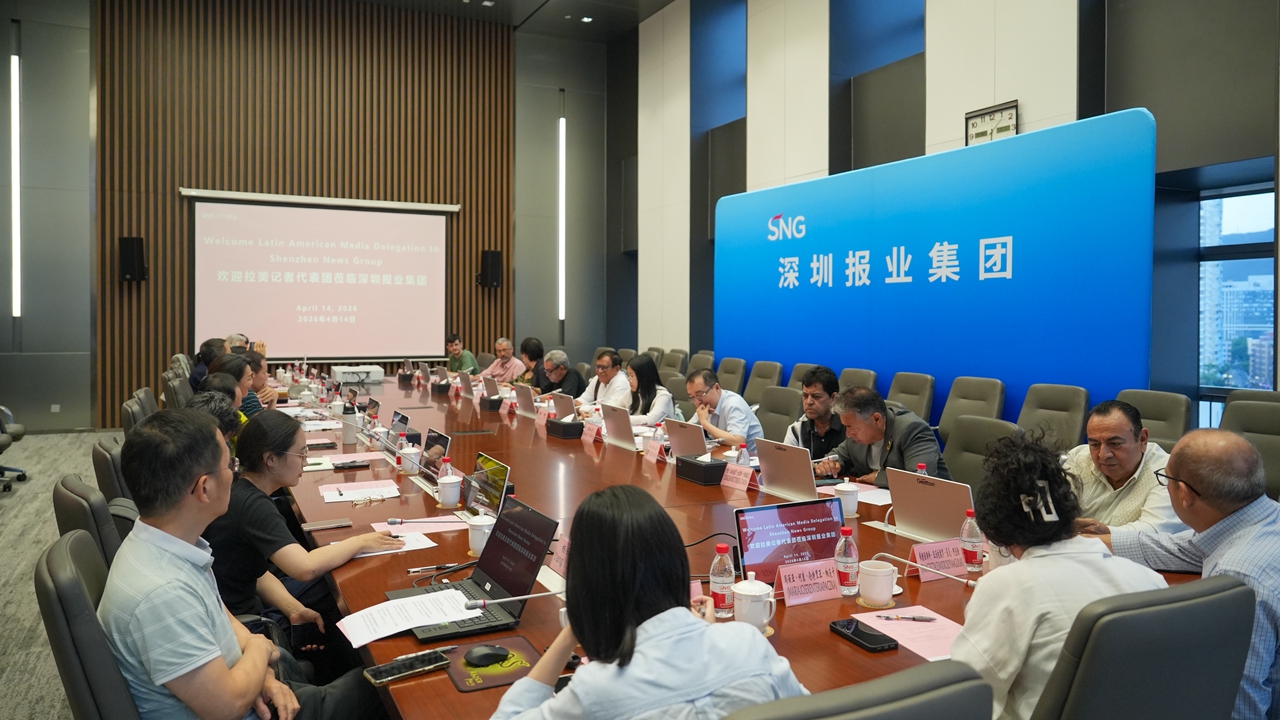
Delegation members and representatives of SNG and Shenzhen Media Group on an exchange meeting held at SNG's New Media Building.
As Shenzhen prepares to host the APEC summit, the Latin American journalists said the choice of host city could not be more fitting. "There is no more important city to host this event than Shenzhen," Leyva Aguilar said. "Shenzhen is the cradle of technology. There is no better host."
When asked what lessons Shenzhen might offer to Mexico and Latin America, his answer was direct. "Work – there is no other choice," he said. "What we are doing in Mexico to develop a smart city, a future city like Shenzhen, is far from enough. We must learn how to use our human and material knowledge to build a future city like this."
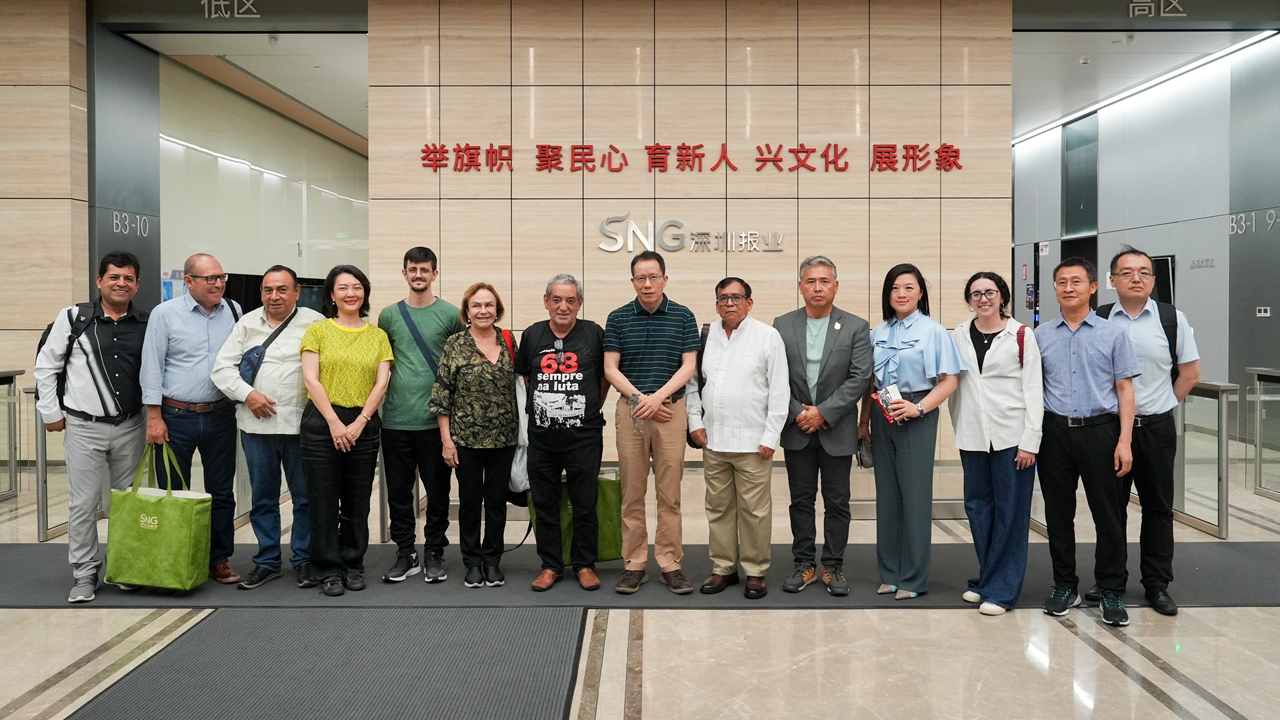
Delegation members pose for a group photo at SNG's New Media Building.
Oliveira Filho of Brazil struck a similar note of optimism. "The energy and vitality of Shenzhen impress me deeply," he said. "This reflects the efforts of the Chinese government over the past 50 years to build this country into – without a doubt – the hope of humanity's future. We are meeting the future here."