
 Share
Share


 Print
PrintLeju Robotics launches pilot line to crack code of humanoid mass production
Writer: Zhang Yu | Editor: Lin Qiuying | From: Original | Updated: 2026-04-14
Leju Robotics, a Shenzhen-based robotics company, has switched on what it calls the city’s first pilot production line for humanoid robots, a step toward solving the manufacturing bottlenecks that have kept advanced machines from reaching factory floors and homes in large numbers.
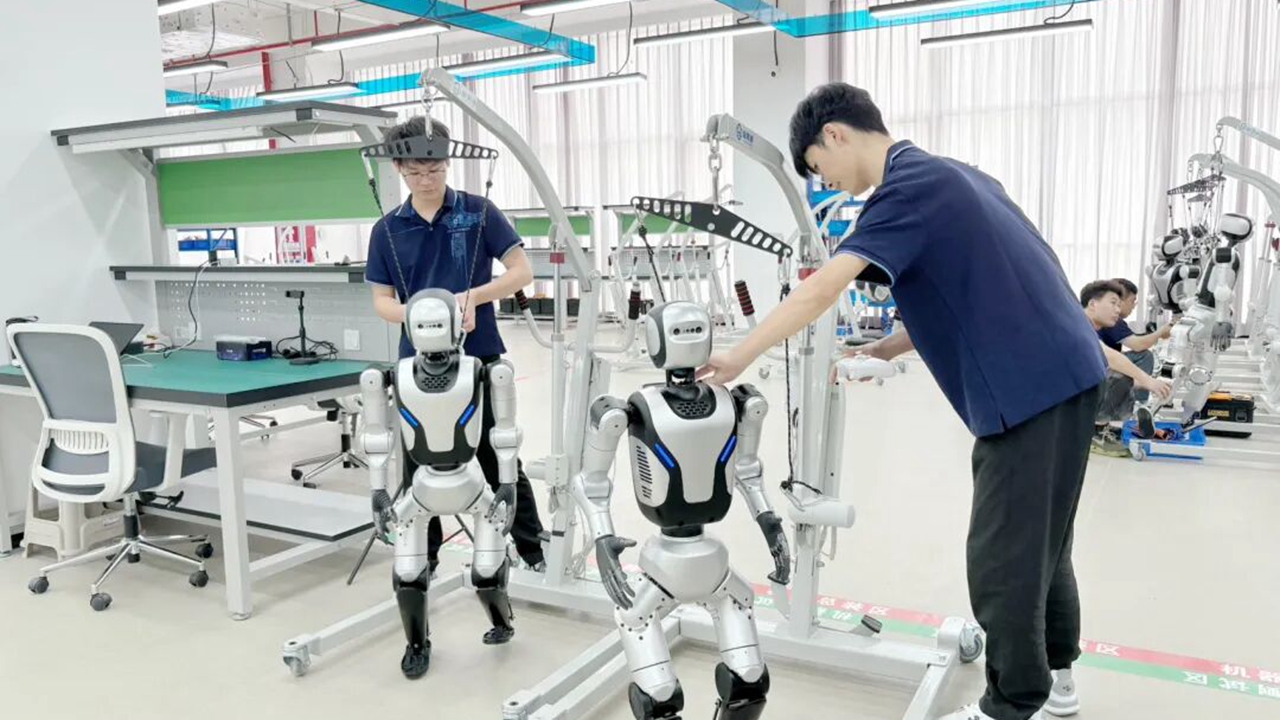
Engineers adjust and test humanoid robots in a pilot production center at Leju Robotics in Longhua, Shenzhen, on April 12. Zhang Yu
The company’s pilot line in Longhua District began operating Sunday. The facility is designed to test and refine production methods before full-scale manufacturing, with an initial capacity of 500 to 1,000 units per year and a cycle time of no more than 120 minutes per robot.
Leju, a national-level “little giant” specializing in humanoid robotics, has built what it describes as a closed manufacturing loop across the Guangdong-Hong Kong-Macao Greater Bay Area: research and development and pilot production in Shenzhen, and mass production in the city of Foshan through a partnership with intelligent equipment manufacturer Dongfang Precision.
“Our priority now is to standardize the operating procedures for future mass production through this pilot line,” said Cao Yu, assistant vice president of Leju Robotics, adding that the Roban 2 model alone has undergone more than 170 process improvements across two major iterations.
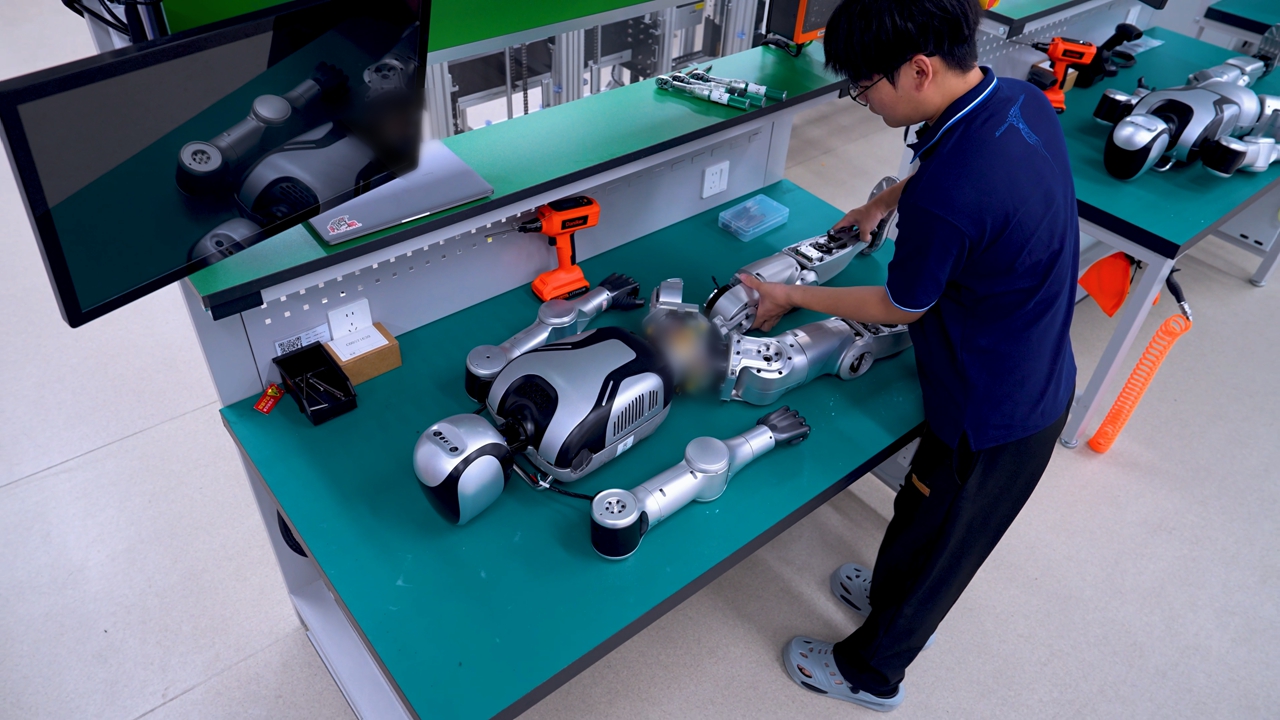
A Leju engineer assembles humanoid robot Roban 2 at a pilot production line in Longhua. Photo courtesy of the company
The pilot line combines flexible assembly with manual checks, modular construction and a digital manufacturing execution system that logs every step for traceability.
Leju is best known for its full-sized humanoid robot Kuavo, which the company says is the world’s first 5G-A humanoid robot. Standing 1.73 meters (5 feet 8 inches) and weighing 63.5 kg (140 lbs), Kuavo can run at over 7 km/h (4.3 mph) and has 41 degrees of freedom. It has been featured on China Media Group, showcased at the Asian Winter Games in -20 degree Celsius conditions, and served as a torchbearer at the 15th National Games.
The company counts Huawei, Tencent, Alibaba Cloud, China Mobile, and FAW Group among its partners. Investors include Shenzhen Investment Holdings, CITIC Goldstone, and Dongfang Precision.
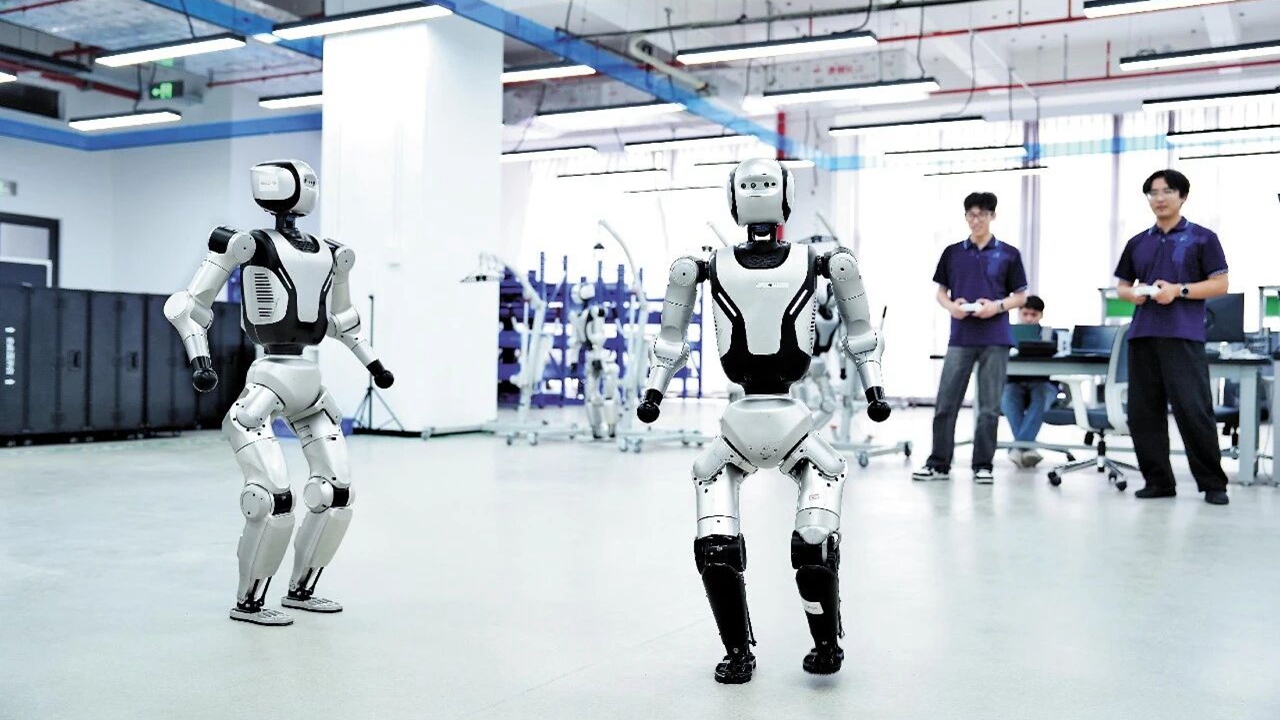
Humanoid robots undergo movement tests at a pilot production facility operated by Leju Robotics in Longhua District, Shenzhen. Chen Jianhua
Market demand for humanoid robots is accelerating. Morgan Stanley forecasts China will sell 28,000 humanoid robots in 2026, and projects the global market could exceed US$5 trillion by 2050.
Guangdong Province, where Shenzhen is located, is already a robotics powerhouse. Its AI core industry is expected to reach 300 billion yuan (US$41 billion) in 2025, and the province leads the nation in both industrial and service robot production, with more than 160,000 robotics-related companies.
Still, the industry faces persistent hurdles: unstable processes, high costs, and inconsistent quality. Leju’s pilot line is designed to address exactly those issues before the company scales up to an annual capacity of 10,000 units at its Foshan facility.
“We are using this pilot phase to mature the product and set the standards — paving the final stretch before mass production,” a Leju engineer said.