
 Share
Share


 Print
PrintSynBio Competition selected for UNESCO 'Science Decade' initiative
Writer: Windy Shao | Editor: Cao Zhen | From: Original | Updated: 2026-04-13
A synthetic biology innovation competition, jointly launched by Shenzhen University of Advanced Technology (SUAT) and leading research institutions, has been selected as one of the first endorsed initiatives under the UNESCO’s International Decade of Sciences for Sustainable Development (2024-2033), marking a significant step in China’s engagement with global scientific collaboration.
The SynBio Challenges competition, hosted by the Chinese Society of Biotechnology and co-initiated with the Shenzhen Institutes of Advanced Technology under the Chinese Academy of Sciences, was recognized for its scientific value, international collaboration potential, and contribution to sustainable development.
Announced by the United Nations General Assembly in 2023 and coordinated by the UNESCO, the “Science Decade” aims to strengthen global scientific cooperation to address pressing challenges such as climate change, public health, and social equity, while accelerating progress toward the U.N. Sustainable Development Goals.
Synthetic biology, widely seen as a transformative technology for tackling issues such as resource scarcity, environmental pollution, and food security, has become a key driver of sustainable development. The SynBio Challenges competition not only showcases the achievements of young researchers in China, but also serves as a platform for international knowledge sharing and talent cultivation.
Zhang Xian’en, chair of the competition’s organizing committee and dean of the Faculty of Synthetic Biology at SUAT, said the competition’s scientific rigor, public-oriented innovation, and growing global influence were key factors behind its selection.
Since its launch in 2022, the event has expanded rapidly, from 24 teams representing 21 Chinese universities in its first edition to 280 teams from around the world in its fourth. The latest finals brought together nearly 1,000 participants from six countries, including Russia, Japan, and Singapore.
Speaking at the endorsement ceremony, Shahbaz Khan, director and representative of the East Asia Office of the UNESCO, described the initiative as “a global call to place science more firmly at the service of humanity.”
He emphasized that science is “not only a source of discovery, but also a common good, a force for cooperation, inclusion, and practical solutions to the challenges facing our world.” He said that UNESCO will continue to support open, responsible, and inclusive scientific innovation, encouraging young talent to contribute to a more sustainable future.
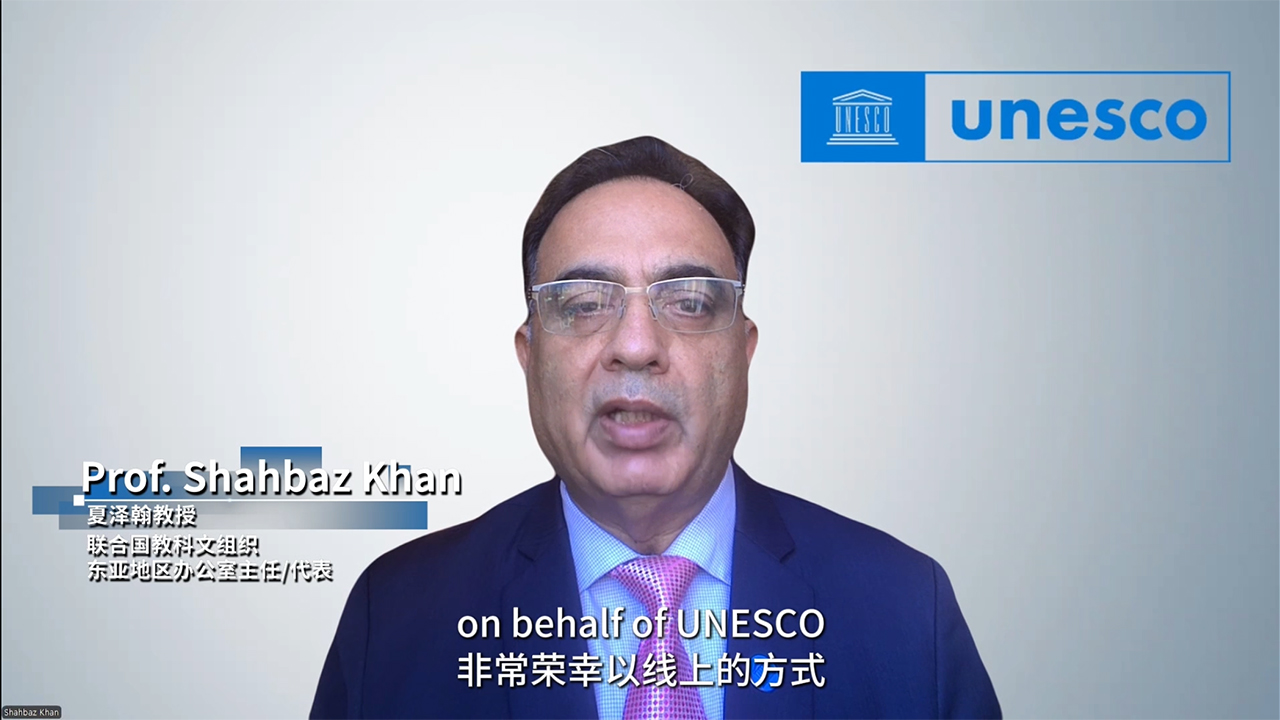
Shahbaz Khan, director and representative of the East Asia Office of the UNESCO.