
 Share
Share


 Print
PrintShenzhen project advances world's first space hospital
Writer: Shao Jingfeng | Editor: Lin Qiuying | From: Original | Updated: 2026-03-31
Video by Wang Haolan
Five cutting-edge medical research projects from Shenzhen University of Advanced Technology’s “Future Space Hospital” initiative were successfully launched aboard an experimental spacecraft from the Jiuquan Satellite Launch Center on March 30, the university said.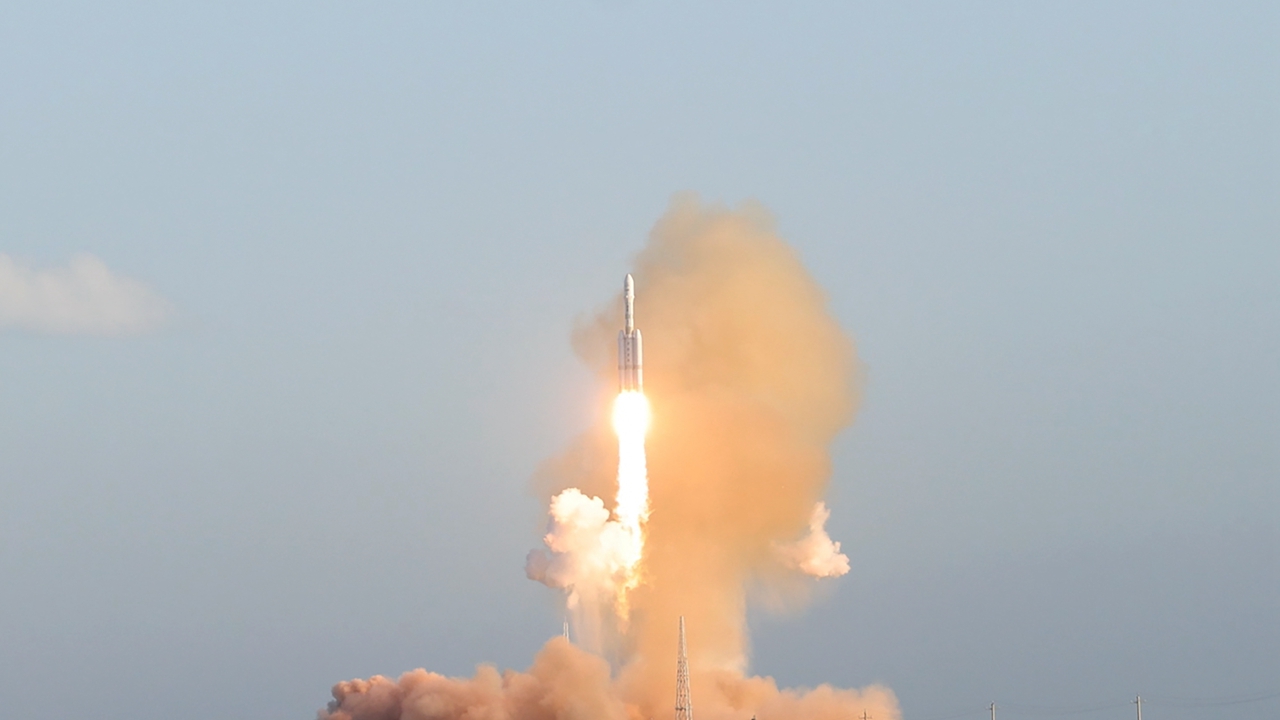
A rocket lifts off from the Jiuquan Satellite Launch Center on March 30, carrying five medical research projects from Shenzhen University of Advanced Technology’s “Future Space Hospital” initiative into orbit. Photos courtesy of SUAT
The projects will undergo in-orbit experiments over the next three years, marking a significant step in turning the world’s first “future space hospital” concept into a functional reality.
Shenzhen University of Advanced Technology (SUAT) is the first institution in the world to propose and implement the “future space hospital” concept. In July 2025, the university teamed up with the Innovation Academy for Microsatellites of the Chinese Academy of Sciences to jointly develop the initiative.
The project aims to enhance astronaut health protection and advance human healthcare by expanding in-orbit medical monitoring and life-support capabilities. By bridging the gap between aerospace engineering, medicine, and biology, the initiative seeks to address challenges in disease prevention and treatment for future space tourism and interplanetary exploration.
“As global competition in space exploration intensifies, China is strengthening its efforts to fill critical technological gaps,” said Zhu Dijian, Party secretary of the university.
“The health challenges faced by astronauts in space have become a major focus of scientific research. By integrating strengths in medical devices, biomedicine, and innovative healthcare technologies with aerospace expertise, we aim to build a next-generation space medicine platform and secure a leading position for China in this field.”
The concept of the future space hospital was first proposed by Xu Zhiming, executive director of the university’s Future Medicine Center and dean of its Clinical Medical School.
According to Xu, the project will be implemented in three phases. The first phase involves adapting advanced medical technologies for space applications and conducting in-orbit experiments — a process now underway following this launch.
The second phase will establish an in-orbit “space hospital station” to support emergency medical response and scientific research in space.
The final phase envisions building medical modules on the Moon or other planets to support human lunar missions and space travel.

A non-invasive ultraviolet phototherapy device designed to simulate sunlight and support vitamin D synthesis during space missions.
Among the projects currently in orbit is a non-invasive ultraviolet phototherapy device developed by Gu Ying, an academician of the Chinese Academy of Sciences and director of the Future Medicine Center. The device simulates specific wavelengths of sunlight that promote vitamin D synthesis. Regular use by astronauts aboard space stations or on deep-space missions can safely and effectively maintain vitamin D levels, helping prevent deficiencies.
In microgravity, astronauts lose between 1% to 2% of their bone density per month due to reduced skeletal loading. By maintaining adequate vitamin D levels, the device supports calcium metabolism and works in synergy with exercise and pharmaceutical interventions to form a comprehensive bone health protection system.
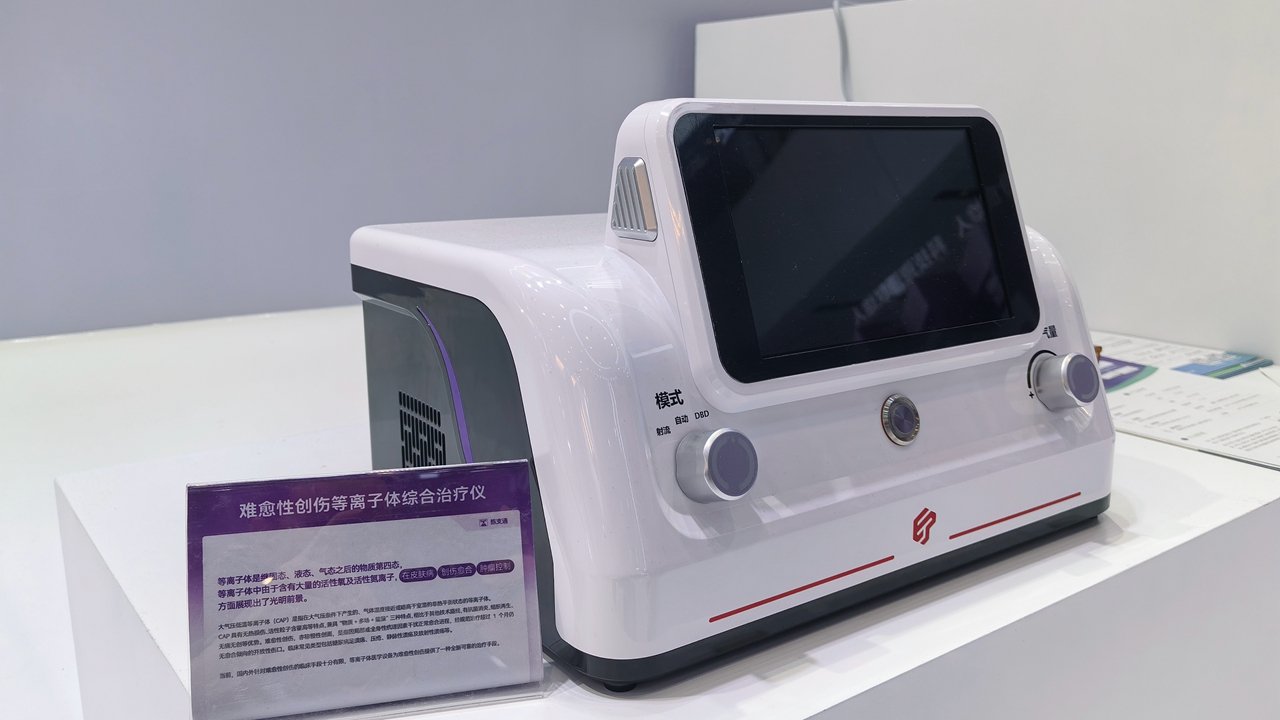
A plasma-based integrated therapy device for chronic wounds, designed to accelerate healing and reduce infection risk in microgravity environments.
Also launched is a plasma-based integrated therapy device for chronic wounds, jointly developed by Xu and Chen Zhitong, a researcher at the Shenzhen Institutes of Advanced Technology and the National Innovation Center for High-Performance Medical Devices.
“In a microgravity environment, changes in bodily fluid distribution and abnormal blood circulation can significantly slow wound healing, increasing the risk of chronic wounds,” Xu explained.
The plasma device promotes cell proliferation and collagen synthesis by releasing reactive oxygen and nitrogen species, accelerating tissue regeneration and counteracting delayed healing. It operates without liquid or gel media, using gas-based plasma to avoid splashing or contamination in a weightless environment. In addition to treating skin ulcers, the device can also be used to sterilize medical instruments and wearable device interfaces, making it a versatile, multi-functional tool.
Looking ahead, the university plans to use China’s Shenzhou spacecraft for in-orbit experiments across four major scenarios: space stations, lunar missions, Mars exploration, and future space travel. It intends to adapt these aerospace medical advancements for civilian healthcare applications.