
 Share
Share


 Print
PrintGlobal designers from six countries discuss 'Garden City' blueprint
Writer: Staff writers | Editor: Cao Zhen | From: Original | Updated: 2026-03-28
Videos by Lin Jianping
On March 27, a sharing session themed “Gardening for People: Ecology · Gardens · Life” was held at Bijiashan Sports Park in Shenzhen, featuring an international dialogue on building a garden city. Guided by the Urban Administration and Law Enforcement Bureau of Shenzhen Municipality, the event was co-hosted by the Shenzhen Park Service and Shenzhen Daily.
As an official extension of the 2026 Greater Bay Area Flower Show, it brought together award-winning designers from six countries including South Africa, the United Kingdom, New Zealand and Singapore for exchanges and discussions. Some Chinese and international citizen representatives were also invited to attend.
The guests held in-depth discussions on four themes: APEC green development, the dual value of garden design — the symbiosis of ecology and experience, the exemplary role of gardens in the climate environment, and bringing garden design back to people’s daily lives. They exchanged design concepts and insights, contributing to Shenzhen’s efforts in building a “Garden City.”
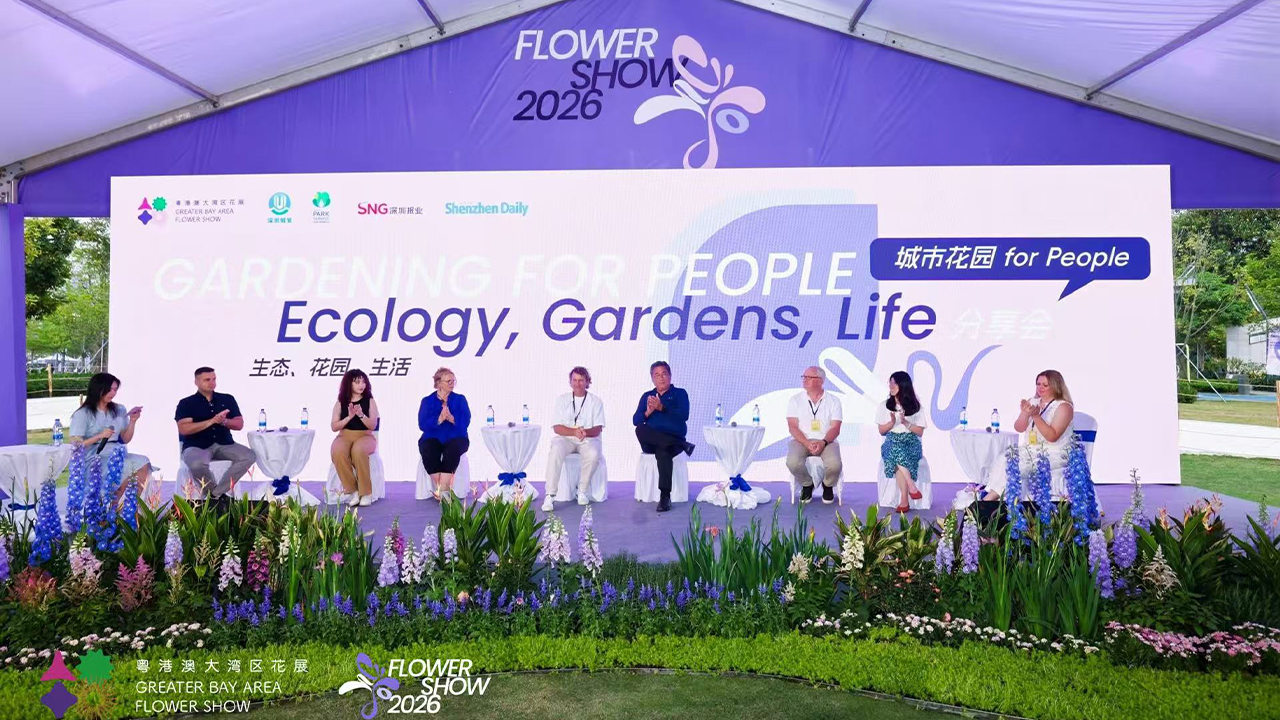
Global designers and citizen representatives exchange ideas at the sharing session held March 27 at Bijiashan Sports Park. Photos courtesy of Shenzhen Park Service
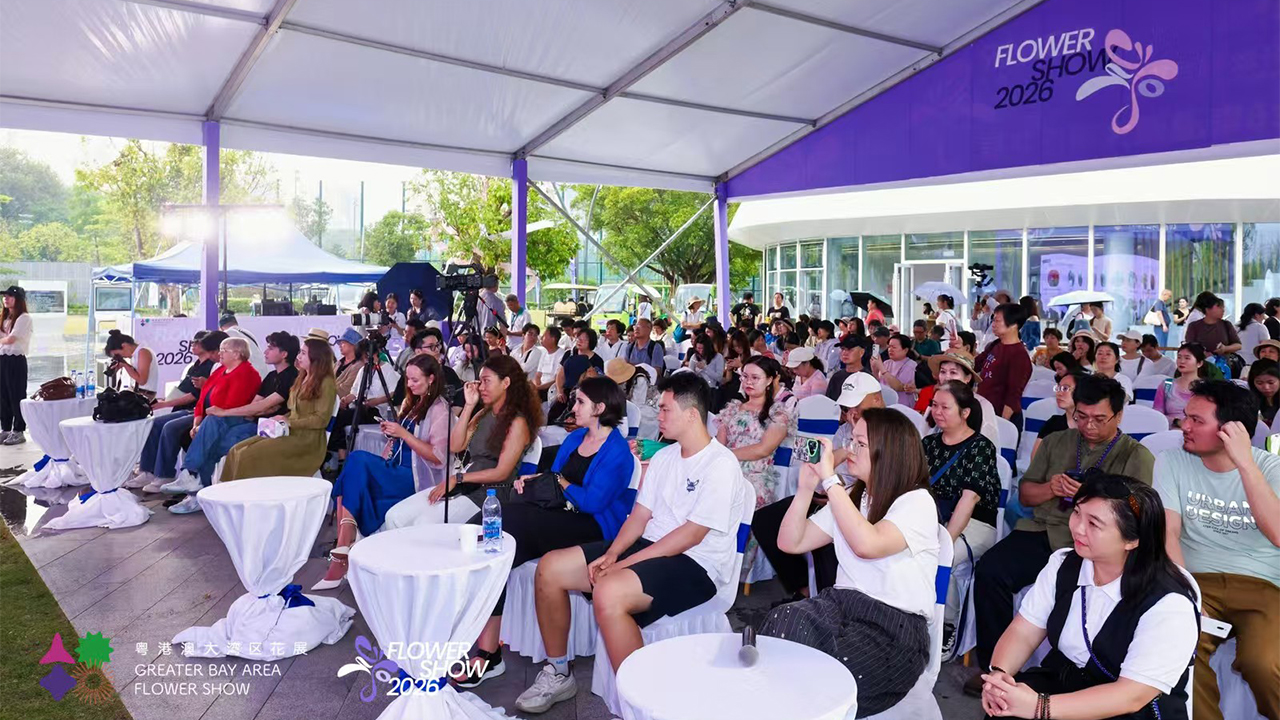
Attendees are drawn to global designers’ talks at the sharing session.
APEC green development: small gardens carry big missions
2026 marks the APEC “China Year.” Designers agreed that gardens are not only scenic embellishments of cities, but also important platforms for practicing the concept of sustainable development.
Hu Shiyang, designer of Singularity Garden, pointed out that excellent garden design should integrate such concepts as microclimate adaptation, sustainable drainage systems and holistic ecosystem integration, all of which are closely linked to the daily lives of urban residents.
She said that the flower show, as a vibrant platform for international cultural and technical exchange, is highly consistent with the green development goals advocated by international cooperation frameworks such as APEC. Designers are not only showcasing their works, but also contributing the “Chinese solutions” and “international wisdom” on ecological restoration and sustainable development.
Every corner can be a garden
The designers agreed that every corner can be turned into a garden, and the key is to awaken the ecological vitality of space through scientific design.
Morgunova Evgeniia, Russian representative of The Bee Heaven, emphasized that the top priority for any ecological project is to define human experience — whether for peaceful relaxation, community gatherings, or nature education. Such design must be grounded in sociology, anatomy and physiology to achieve a deep connection between people and nature.
Eliam Eng, from Singapore, designer of Canopy of Three Friends, discussed the topic from a micro-perspective. He said that microclimate conditions are critical to plant health, insect attraction and overall garden functionality. Water features should be incorporated with foresight to enhance the garden’s role in preserving biodiversity.
The wisdom of urban ecological restoration
“How to make garden design closer to people’s lives” was highlighted at the sharing session. Designers said that gardening should break down barriers, become more integrated into ordinary families and communities.
Jules Moore, from New Zealand, designer of Oceans Edge, pointed out that given the limited space for private gardens, it is necessary to explore scalable and inclusive alternatives such as community gardens, enabling people to keep participating in planting and food education and retain the joy of rural life in cities.
When talking about the unique advantages of garden design in urban ecological restoration, Peter Chmiel, British designer of Rainbow Garden-The Messenger’s Path, shared that compared with traditional rigid engineering, garden design uses plants to restore abandoned land and riverbanks. It can purify air and water, restore biodiversity, and inject natural vitality into cities, making it an effective approach to improving urban environmental quality.
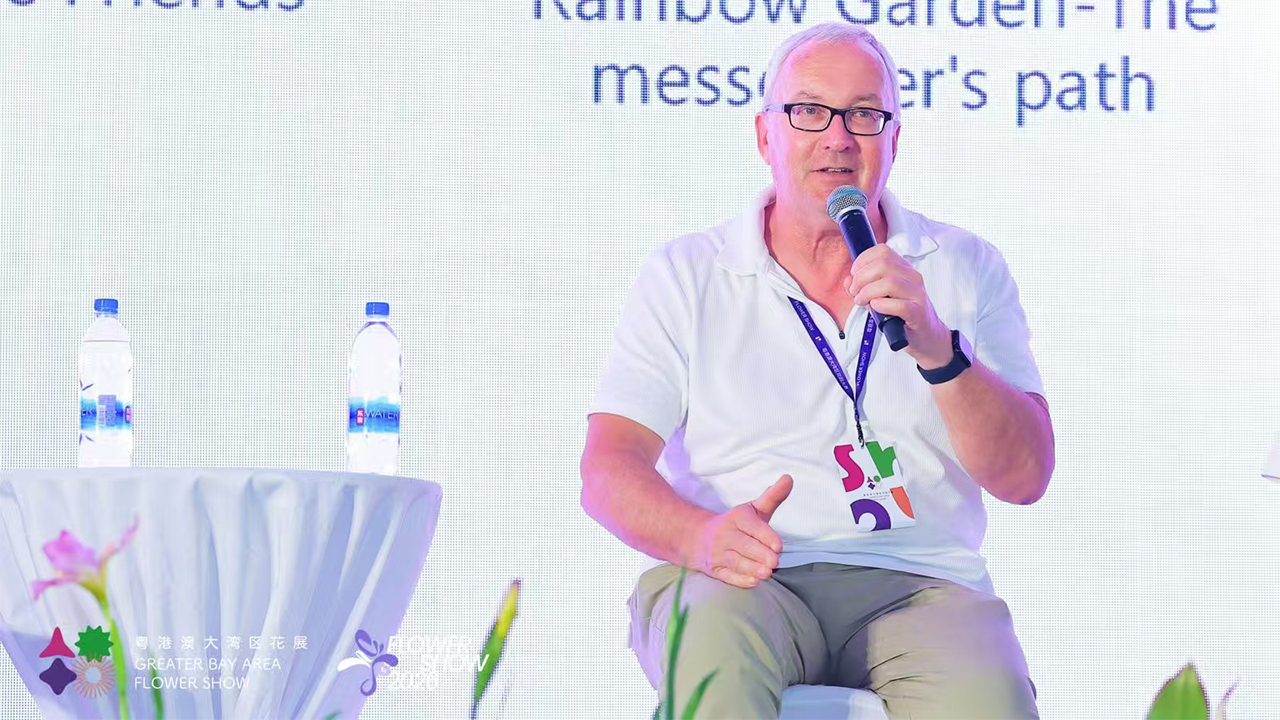
Peter Chmiel, British designer of Rainbow Garden-The Messenger’s Path.
Greenery for a better life
The original intention of design must return to people’s feelings, as shared with deep emotion by Haris Memic from Montenegro at the event. He added that Shenzhen’s rapid development often gives people the illusion that “technology crowds out nature.” Yet Shenzhen is home to more than 1,000 parks, which has effectively broken the traditional stereotype that “technology and nature cannot coexist.” In his view, Shenzhen’s design truly serves the people, and parks have become the best symbol of an inclusive urban space.
Neima Ait Lahcine, a Gen Z international student from Morocco, said: “Gardens and parks are healing spaces for stress relief. Being immersed in them brings joy and emotional stability, allowing us to rediscover the sense of being alive.”

Haris Memic from Montenegro.

Neima Ait Lahcine, a Gen Z international student from Morocco.