
 Share
Share


 Print
PrintHow SZ is transforming into an AI-powered city
Writer: | Editor: Lin Qiuying | From: | Updated: 2026-03-27
Shenzhen, China’s southern technology hub, is systematically transforming its urban fabric into an AI testbed, spanning smart factory floors, robot janitors, the nation’s first AI bureau and even an AI-powered court system.
Earlier this month, hundreds of AI enthusiasts and developers queued outside Tencent’s headquarters in the city to complete deployments of OpenClaw, a popular AI agent, with assistance from engineers on site.
The scene unfolded amid Shenzhen’s broader push to harness AI to catalyze a new wave of wealth creation. It aims to establish over 100,000 square meters of “One Person Company” communities by 2027, an initiative riding the tide of AI-powered entrepreneurship that is reshaping how individuals launch and scale businesses.
A defining characteristic of the city is its strong entrepreneurial culture, with both businesses and the government eager not to miss out, making them bold early adopters.
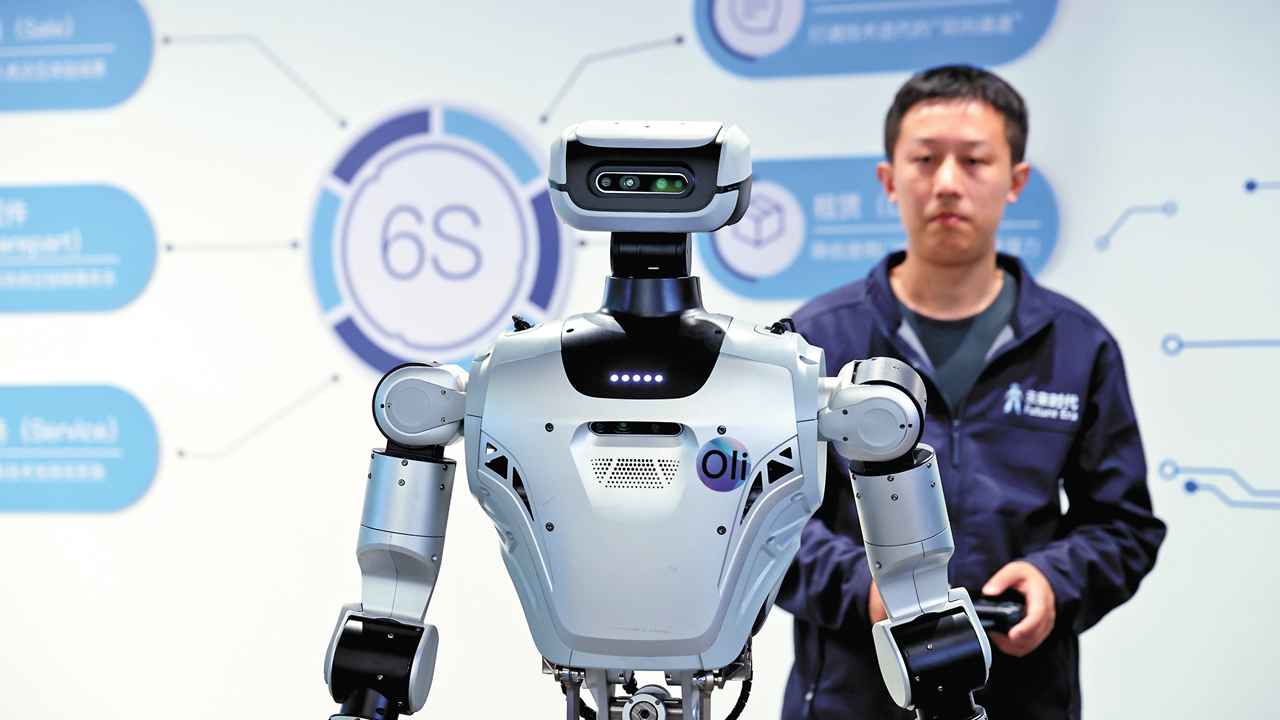
A humanoid robot is demonstrated at the world's first robot 6S store in Longgang District on Jan. 16. Photos from Xinhua except otherwise stated
Local authorities’ embrace of AI became particularly evident in March 2025, when Longgang District established China’s first dedicated AI and robotics administration, a regulatory body purpose-built for the machine age.
“This administration exists to break down departmental walls and provide one-stop coordination from industrial planning and ecosystem building to investment services, scenario promotion and safety management,” said Yu Xiquan, secretary of the CPC Longgang District Committee.
In the district, Neolix autonomous delivery vehicles now ferry packages along a newly opened road. Opening up bustling commercial districts to such new scenarios reflects the metropolis’ transformation into a proving ground for intelligent technologies.
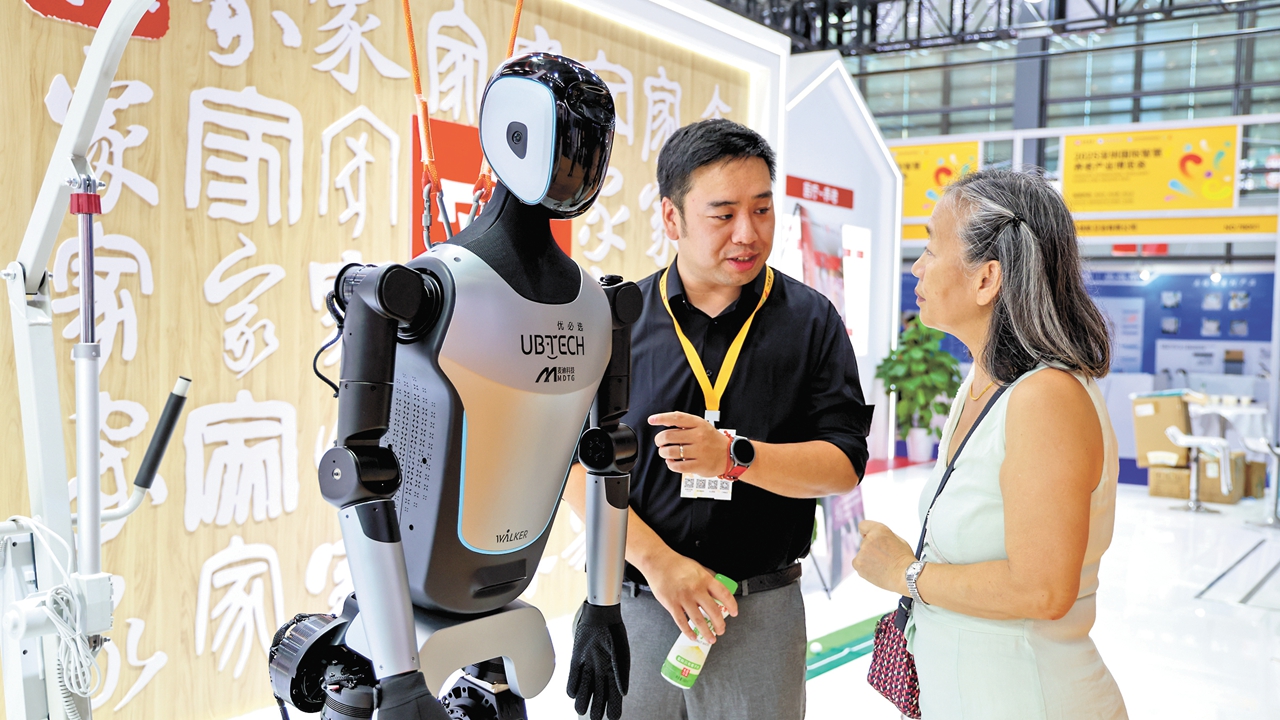
A visitor learns about a humanoid robot at the 2025 Shenzhen International Intelligent Elderly Care Industry Expo at the Shenzhen Convention and Exhibition Center in Futian District on Sept. 12, 2025.
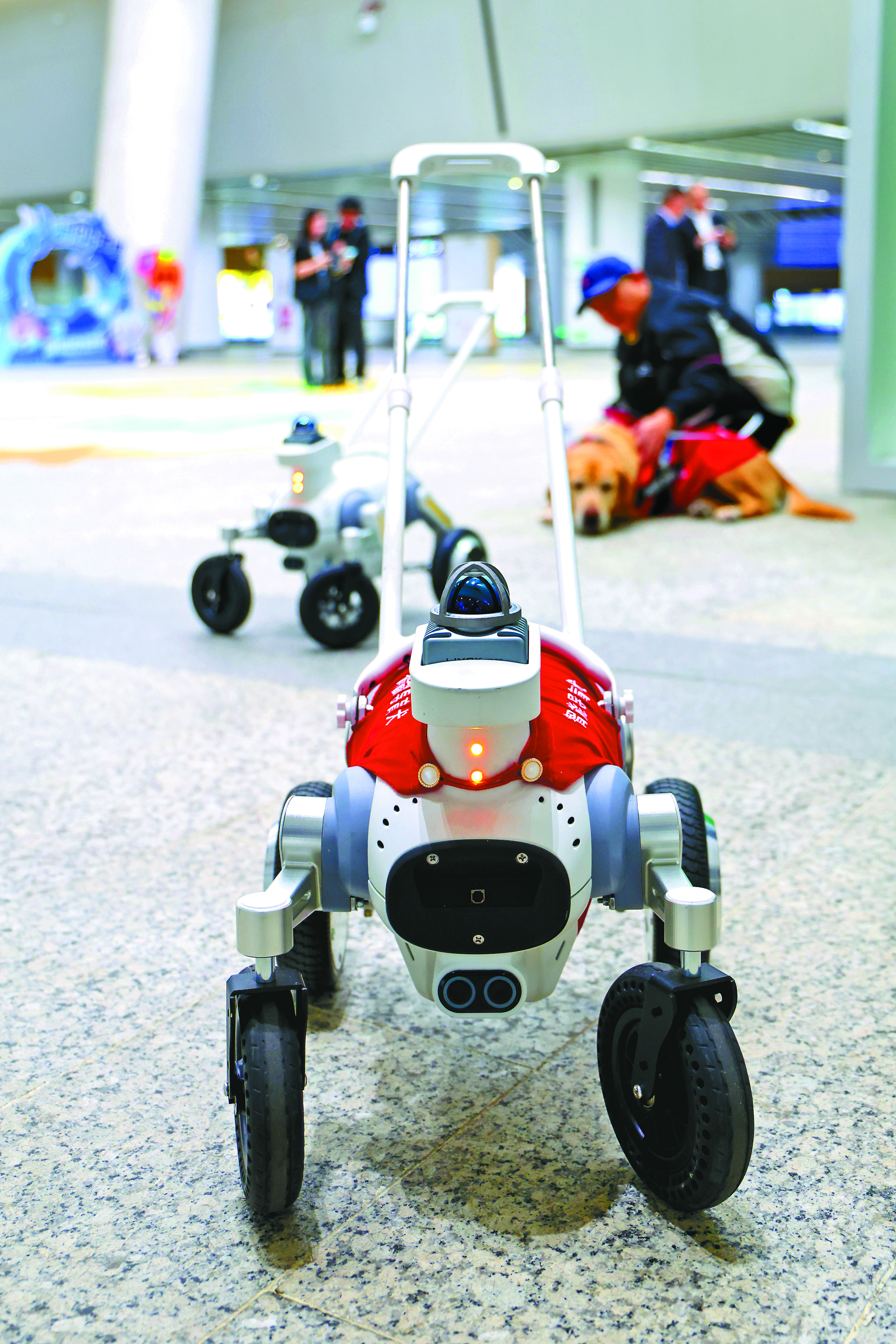
A robotic guide dog undergoes testing to assist visually impaired passengers with subway travel at Shenzhen Metro's Huangmugang Transport Hub on Dec. 13, 2025.
The city has been bold in experimenting with municipal management. Humanoid robots assist with subway security screening, patrol the streets alongside police officers, and deliver government services through pilot applications powered by OpenClaw.
“I used to have to go to the service hall to pay my water bill, but now I just say ‘pay water bill’ on my phone, and it’s done in seconds,” said a Longgang resident surnamed Li, explaining the convenience of AI services through the “iShenzhen” app.
The Shenzhen Intermediate People’s Court has launched China’s first AI model for judicial proceedings, piloting AI-assisted case handling throughout the trial process.
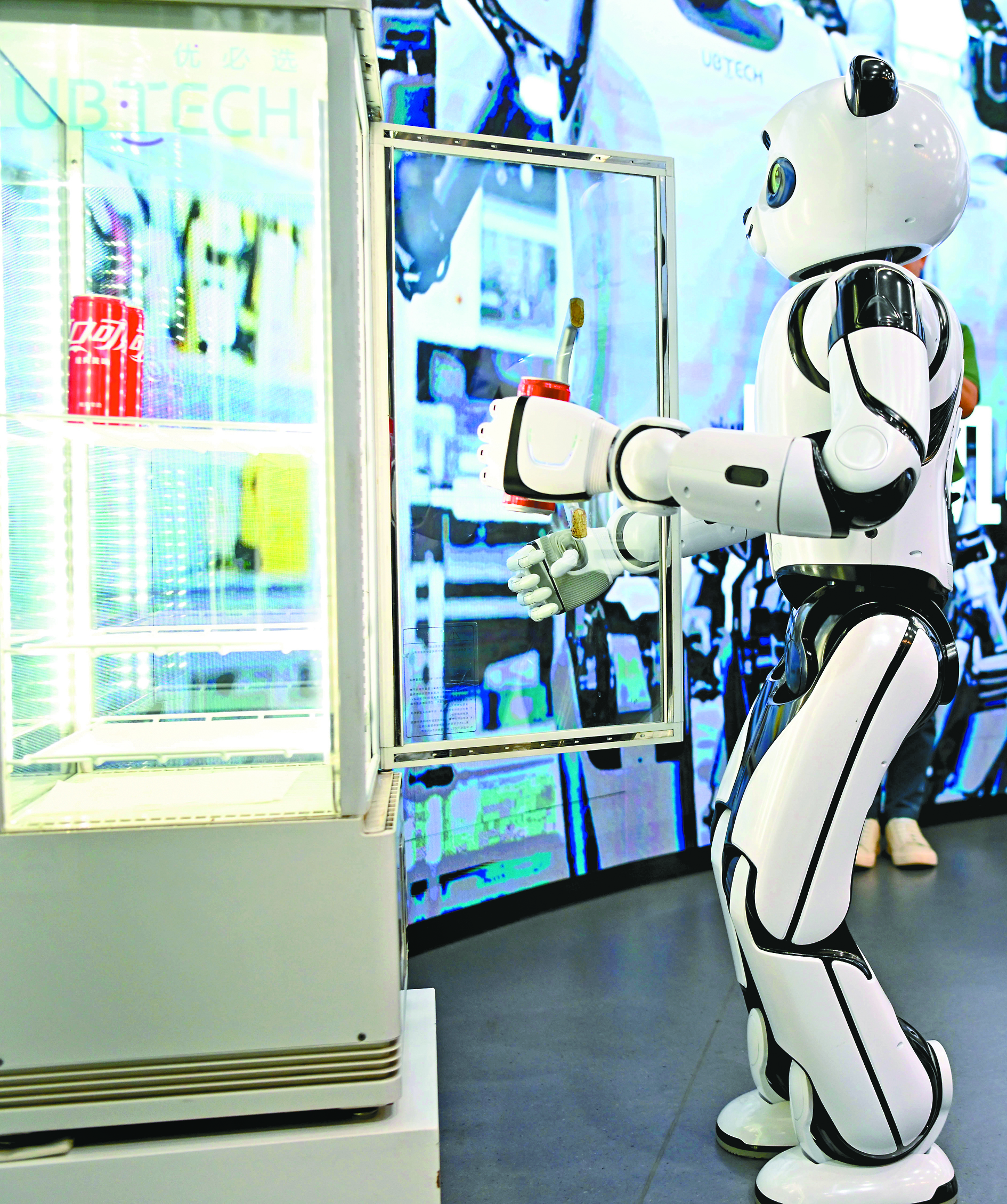
A humanoid robot demonstrates its capabilities at UBTECH's exhibition hall in Shenzhen on March 26, 2025.
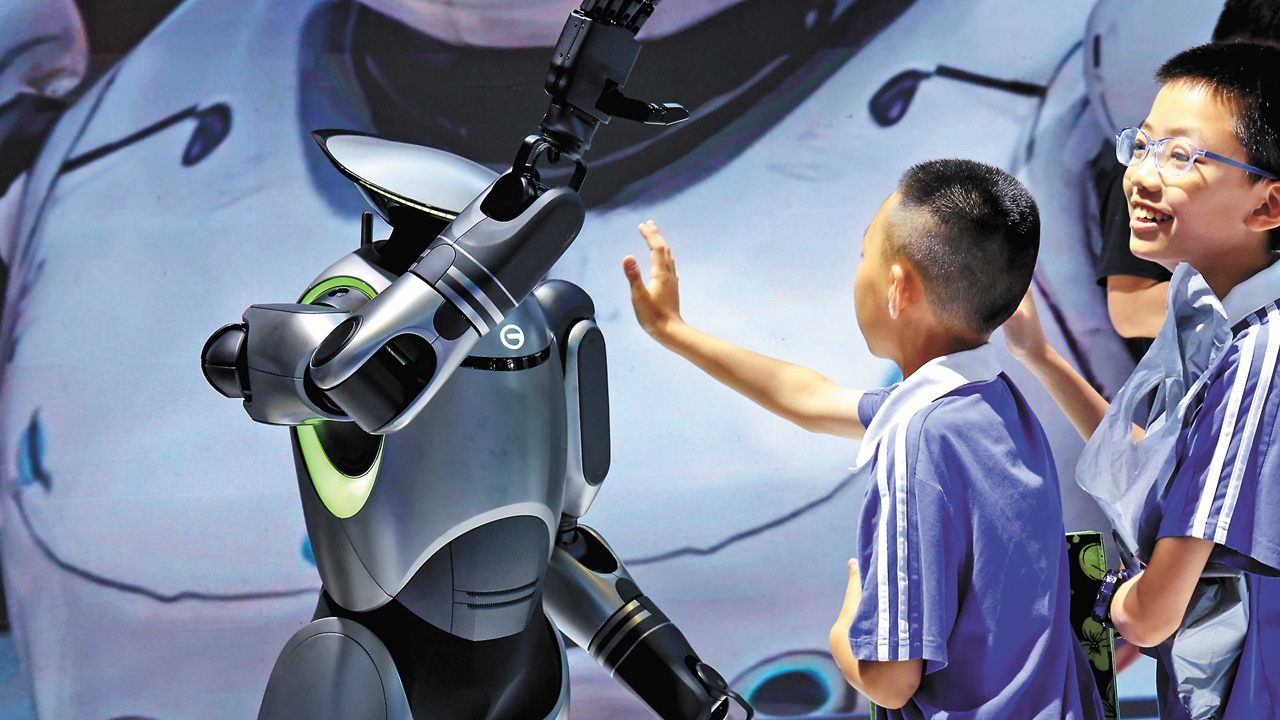
Children interact with a humanoid robot at the 21st China (Shenzhen) International Cultural Industries Fair on May 23, 2025.
To rapidly integrate into the smart economy, Shenzhen has pioneered a voucher system to lower innovation barriers, with 500 million yuan (US$72 million) in “training vouchers,” 50 million yuan in “data vouchers,” and 100 million yuan in “model vouchers,” aimed at encouraging AI technology application.
Last year, Shenzhen established a 10-billion-yuan AI and robotics industry fund. This year, it launched an “AI plus” advanced manufacturing action plan to support the deep integration of AI and advanced manufacturing.
The numbers reflect this commitment. In 2025, the city’s core AI industry generated approximately 220 billion yuan in revenue, and its AI industry cluster output value is projected to grow by over 10% in 2026.
Shenzhen also aims to achieve 1 trillion yuan in smart terminal output this year, with production expected to exceed 150 million units and more than 50 AI-enabled terminal products. While AI-enabled hardware produced in Shenzhen made a splash at January’s CES in Las Vegas, creating “new forms of the smart economy” was written into China’s government work report this month.
AI technology is now boosting efficiency on the city’s assembly lines. Automaker BYD’s factories use AI visual inspection systems, achieving 99.8% accuracy in detecting battery defects.
Chinese smartphone brand Honor’s smart manufacturing campus in Pingshan District — the industry’s only Level 4 intelligent factory — produces one device every 28.5 seconds. AI simulation has compressed foldable phone hinge design “from six months to two months,” said Hu Wei, an engineer at Honor.
In healthcare, AI large models have been deployed across 30 top-tier hospitals citywide, assisting in diagnosing over 100,000 complex cases in early tumor screening. A brain-wave cognitive screening model developed by Shenzhen Bay Laboratory and a local hospital can detect Alzheimer’s signals before symptoms appear.
The consumer front also shows similar momentum. In February, driverless tech firm Pony.ai achieved monthly per-vehicle profitability for its robotaxi service in Shenzhen.
Recently, China’s first home cleaning robot launched operations in Shenzhen. Working alongside human cleaners, the robot from startup X Square Robot precisely identifies and neatly arranges scattered shoes, organizes desktop clutter, and picks up toys from the floor. After tidying, it switches modes to wipe surfaces and clean pet litter boxes, all in one go.
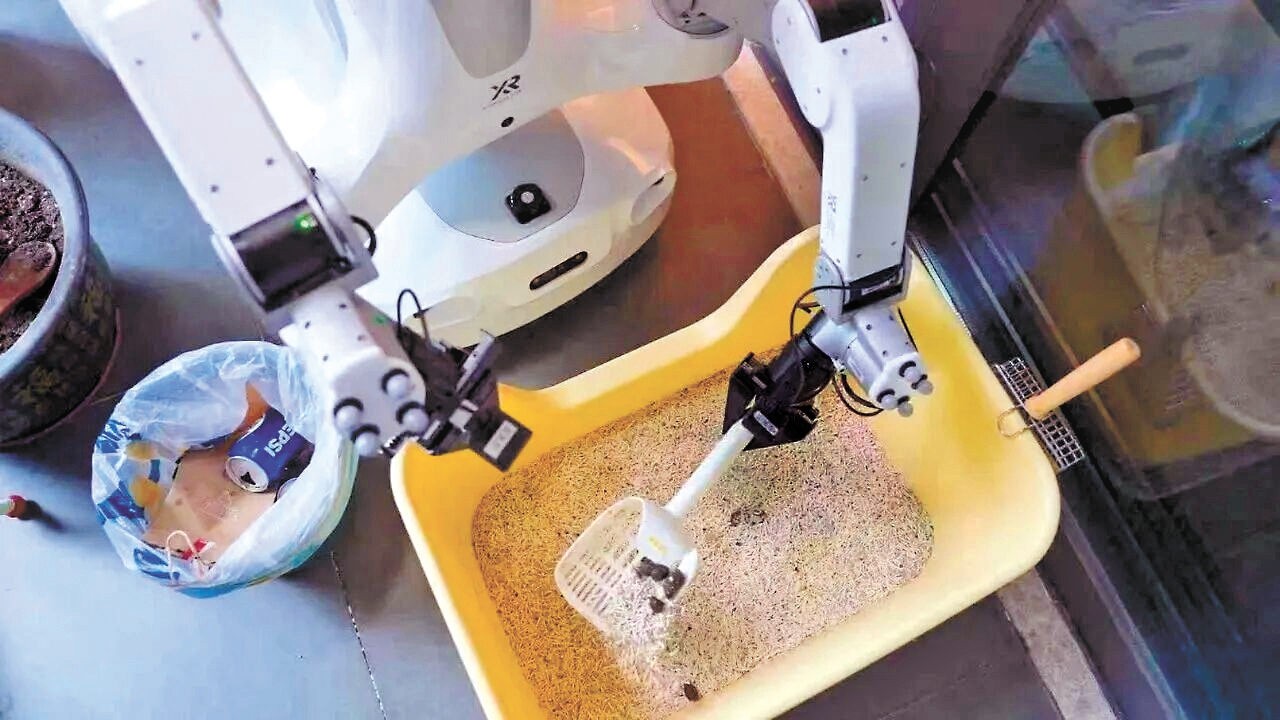
China’s first home cleaning robot cleans a pet litter box at a home in Shenzhen. File photo
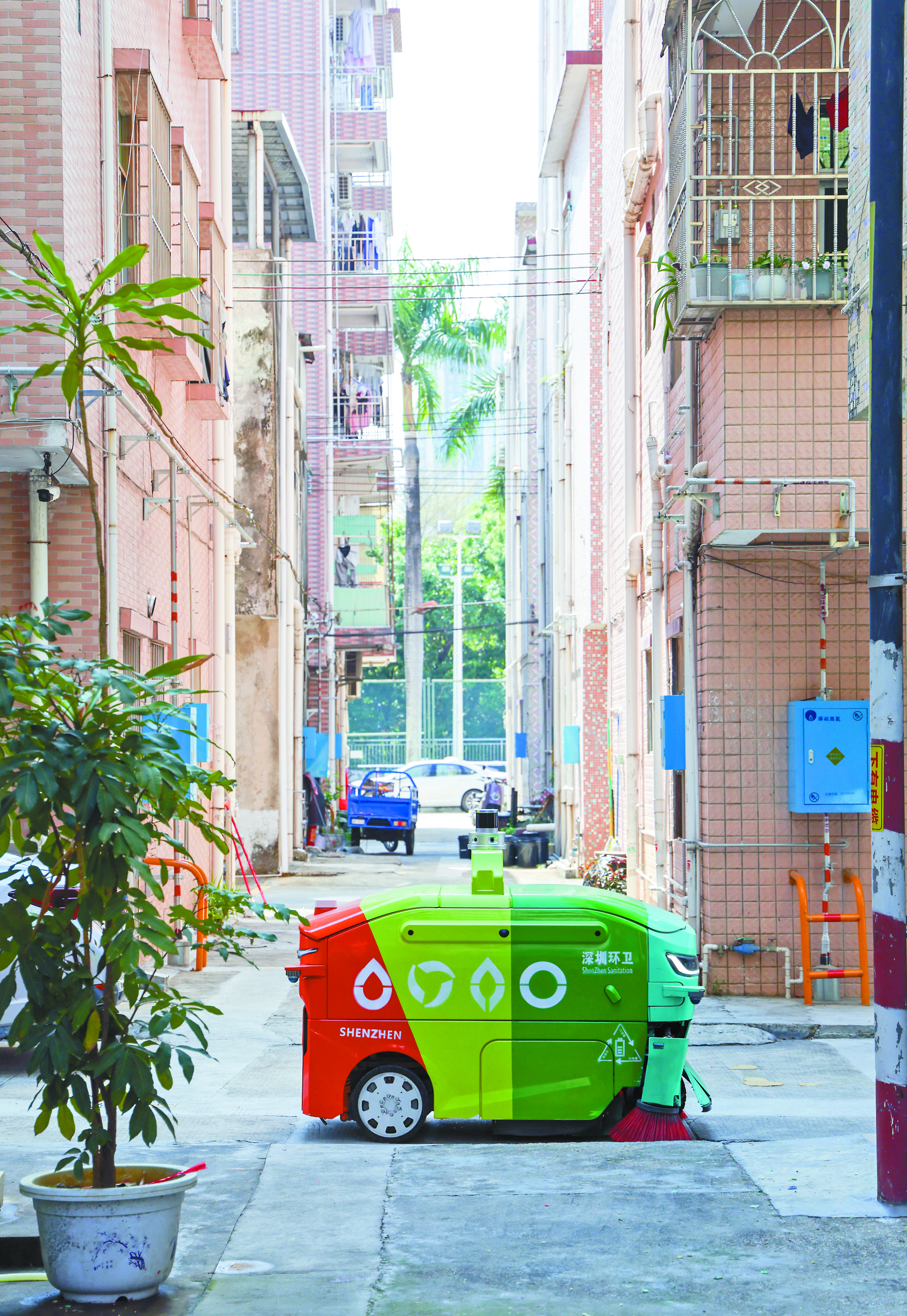
A sanitation robot cleans an urban village in Pingshan District on March 25, 2025.
In 2025, the Shenzhen-Hong Kong-Guangzhou cluster jumped to the top of the world’s 100 leading innovation clusters. In the coming years, Shenzhen is set to evolve into an AI native metropolis, embedding intelligence across factory floors and urban infrastructure, algorithm by algorithm and scenario by scenario. (Xinhua)