
 Share
Share


 Print
Print'Walking in the Sun' maps Ai Jing's artistic journey
Writer: Cao Zhen | Editor: Cao Zhen | From: Original | Updated: 2026-03-25
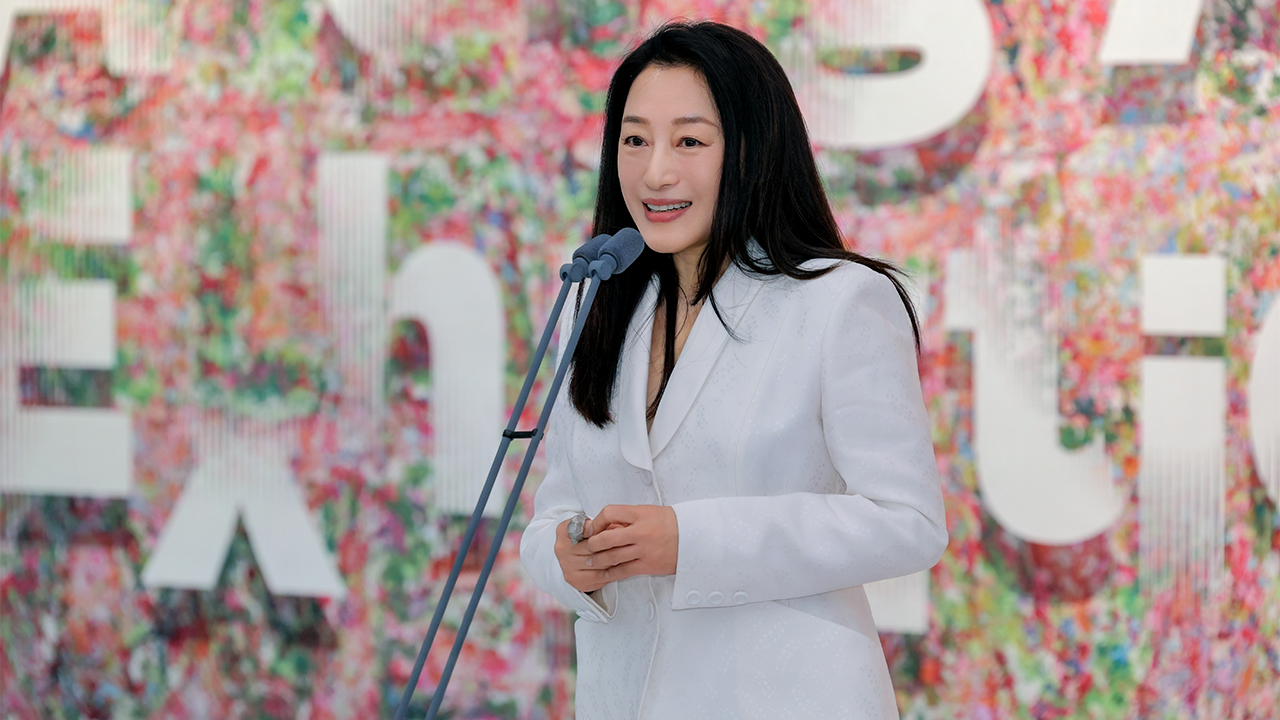
Ai Jing speaks to visitors during the opening ceremony of “Walking in the Sun: Ai Jing Art Exhibition” at Shenzhen Museum of Contemporary Art and Urban Planning on March 23. Photo courtesy of the exhibition organizers
Differing from her 1990s songs, which often used simple lyrics, Ai Jing’s new exhibition in Shenzhen offers a visually captivating artistic journey.
Titled “Walking in the Sun,” the exhibition — featuring paintings, installations, sculptures and videos — maps the life journey of the singer-turned-artist, who first made headlines in the early 1990s with her hit song “My 1997.”
The exhibition at Shenzhen Museum of Contemporary Art and Urban Planning (MOCAUP) is divided into three sections.
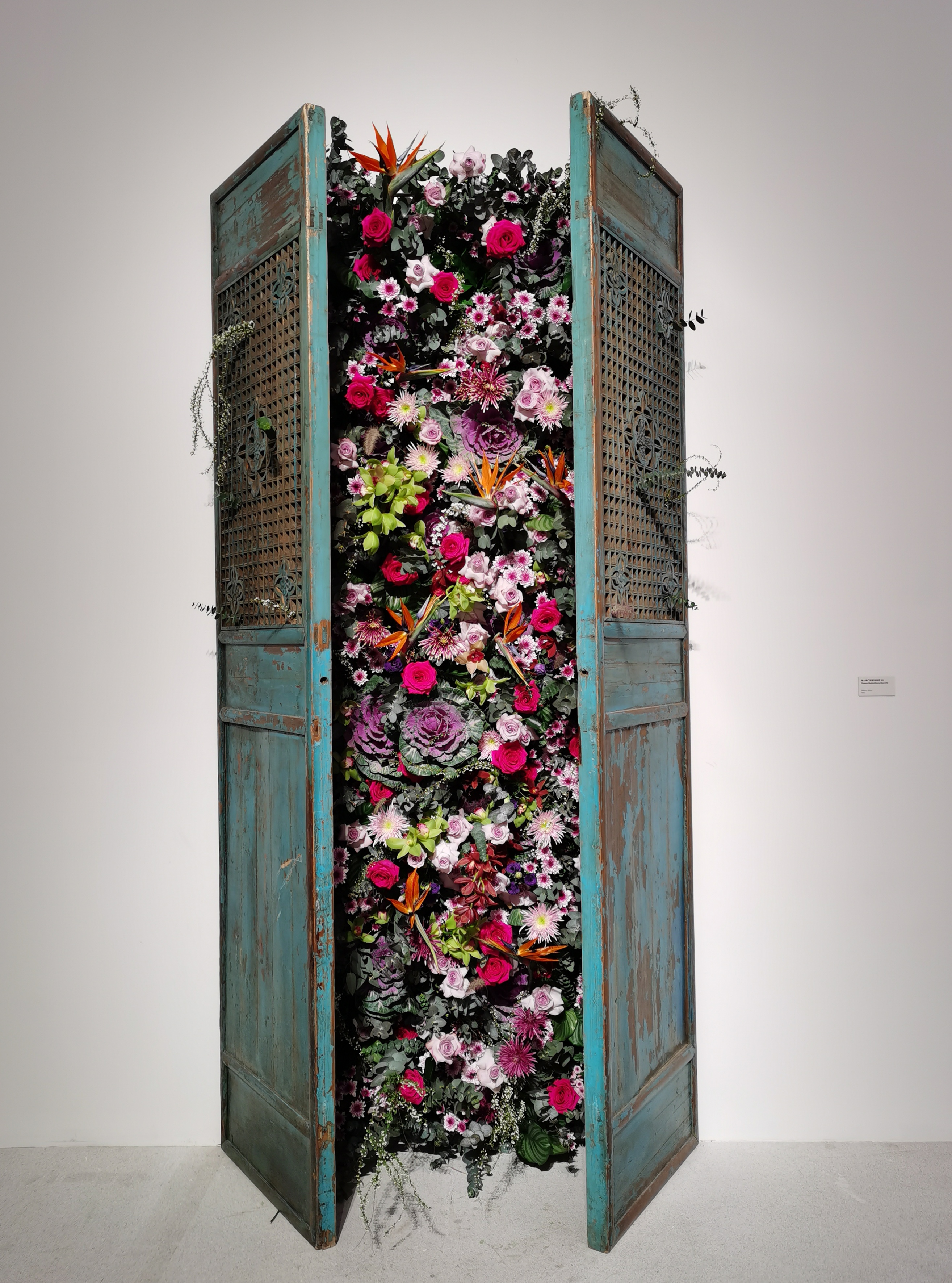
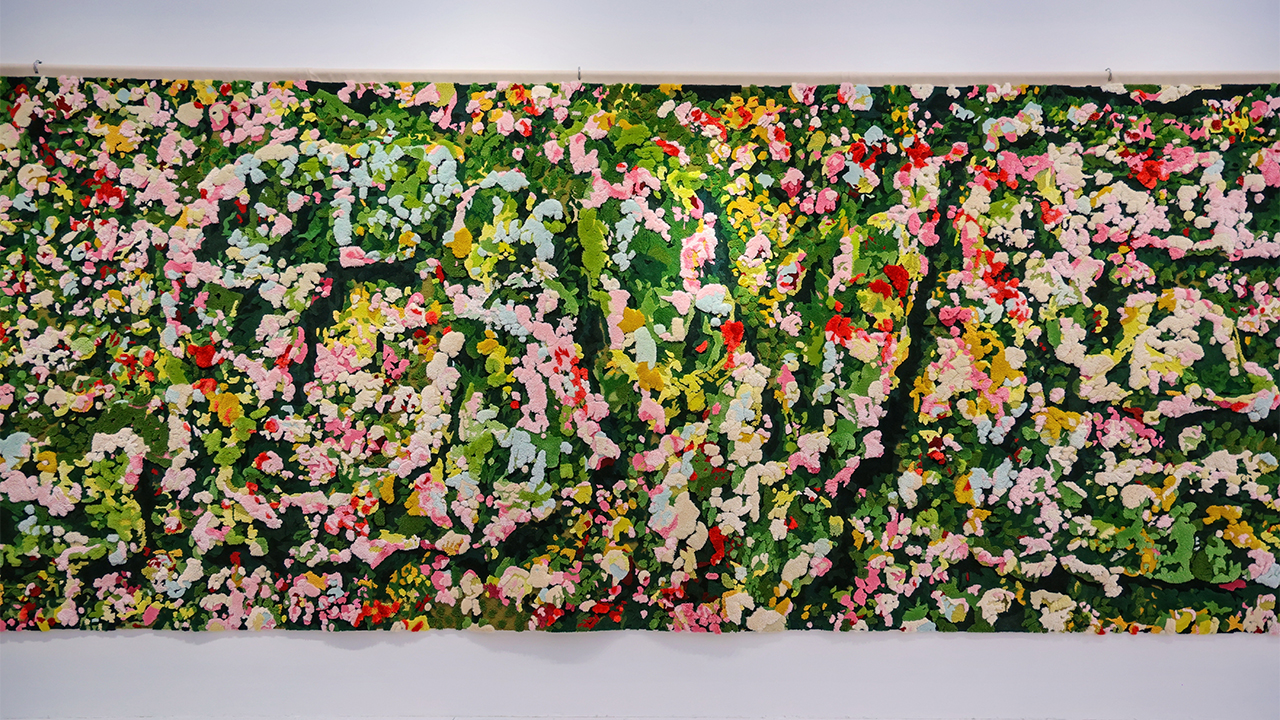
“Flowers Behind Every Door #3” on display. Photos by Cao Zhen unless otherwise stated
The first section, “My Mom and My Hometown,” draws on Ai’s childhood growth, linking her deep memories of her mother with her lasting recollections of her hometown, Shenyang in Liaoning Province, northeastern China. Through a range of works — including vibrant yarn pieces, commonly used in her family and neighbors for weaving clothes — this section revisits the origins of life.
In one corner, black soil transported from the northeast is spread across the floor, while wall-hung paintings are lit with a sunset-like effect, projecting Ai’s memories of the region: cornfields, labor and harvest.
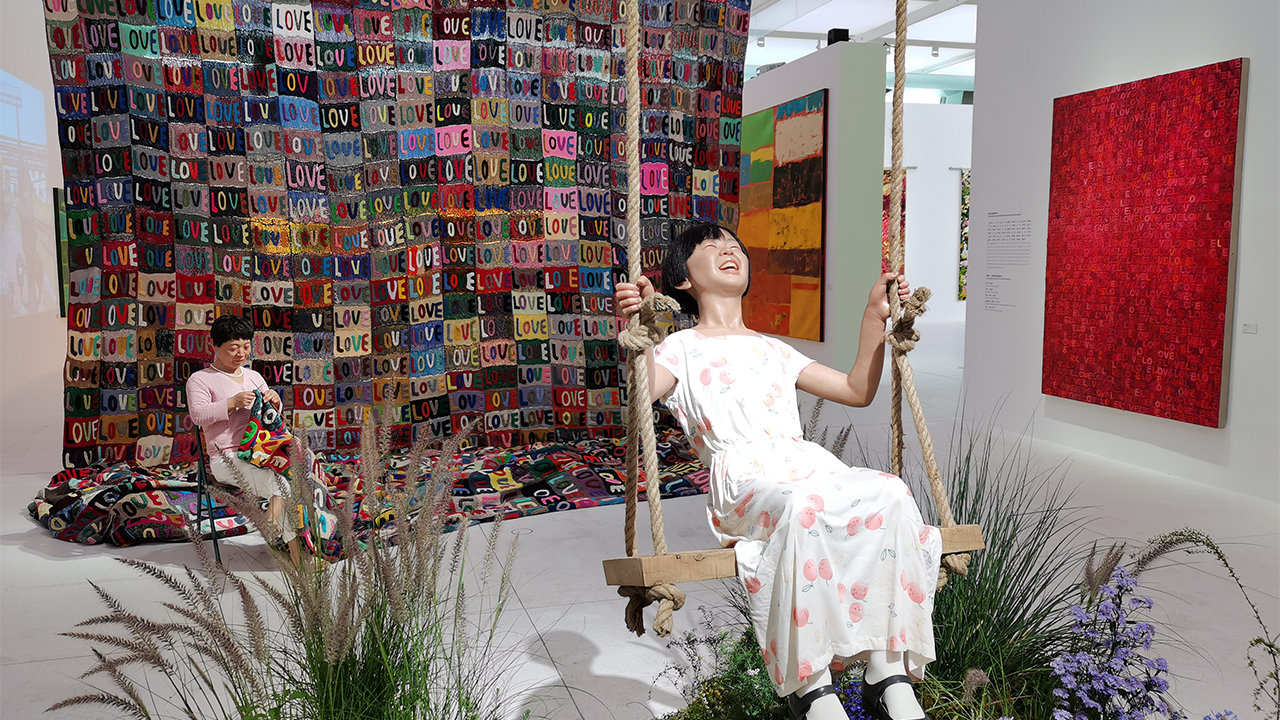
“Girl and Swing” and “My Mom and My Hometown”
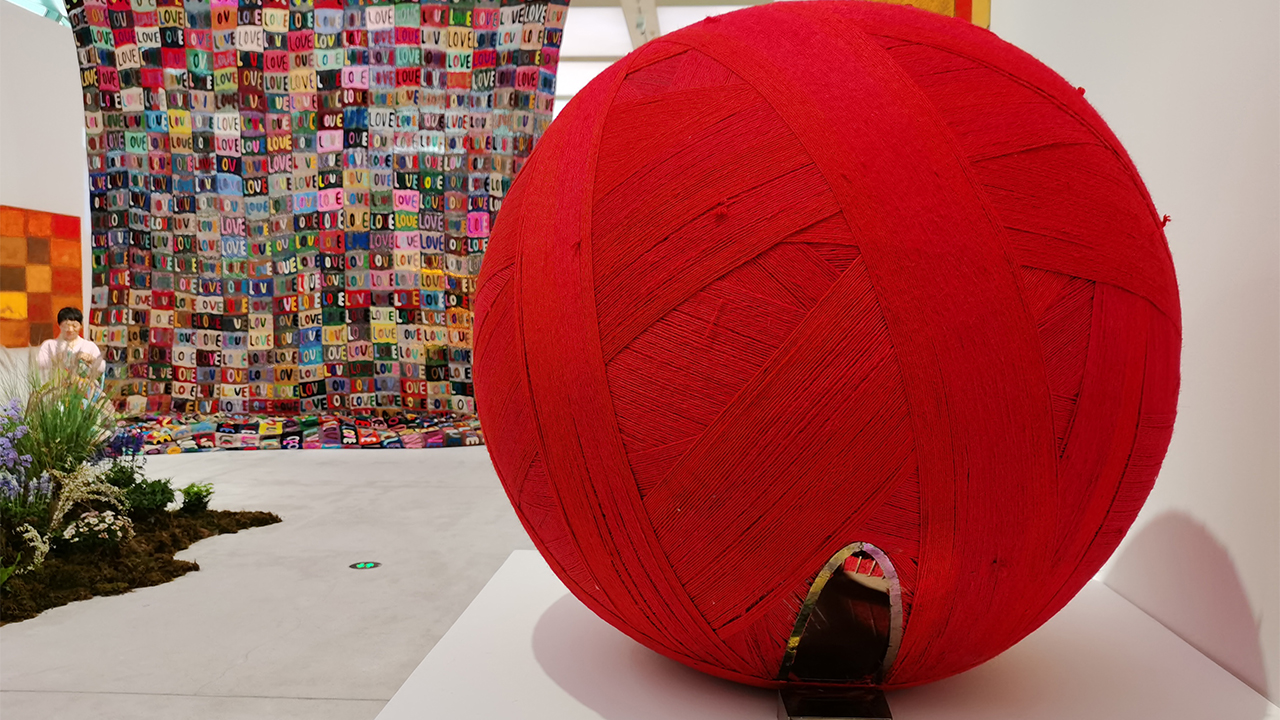
“Mother’s Fragrance”
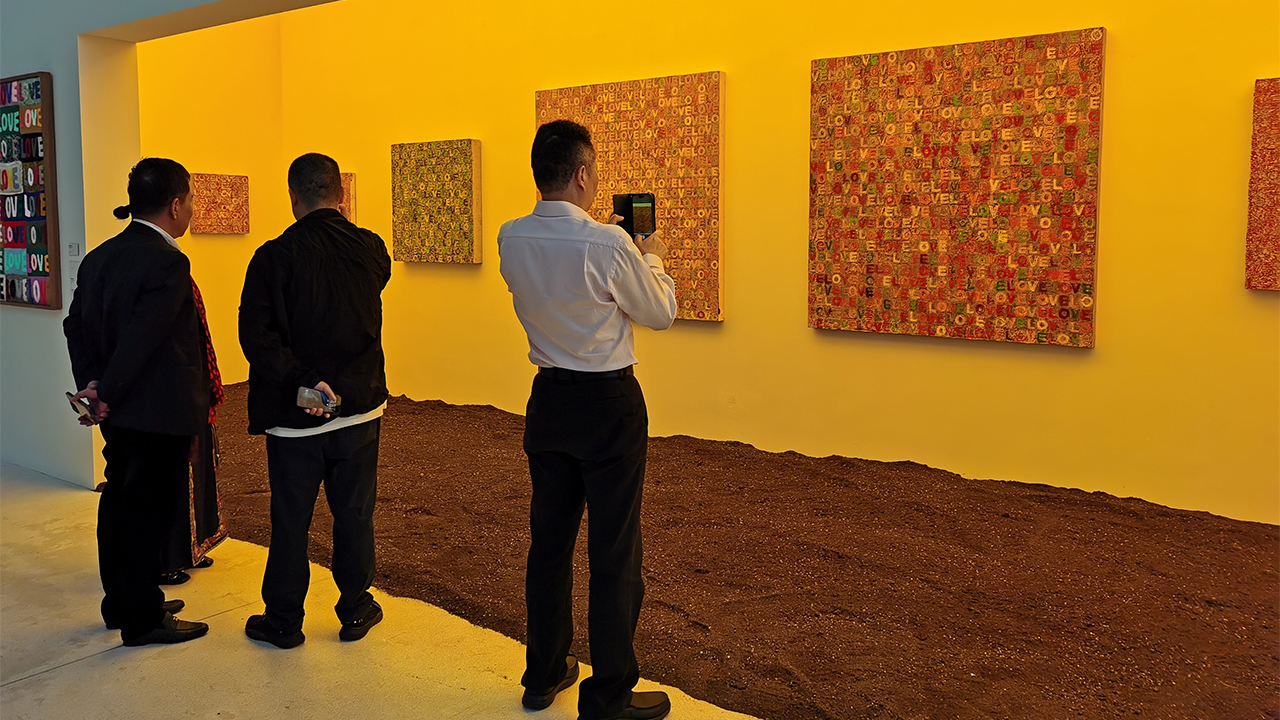
Visitors take photos of a space where black soil covers the floor.
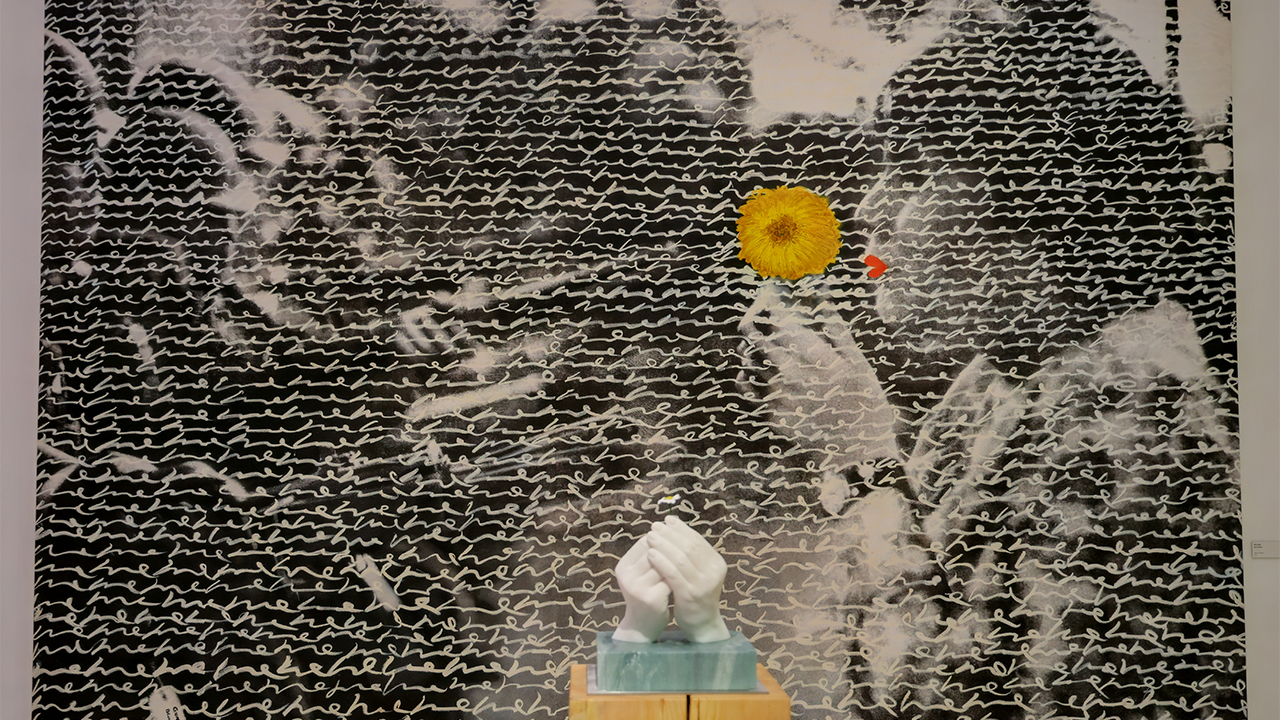
The second section, “The Power of Flowers,” explores the artist’s profound engagement with nature, love and peace, and celebrates the resilience of life. Featuring sculptures of hands alongside flower-themed paintings and installations, the works also speak to the immersive strength embodied by human beings amid war and suffering.
“I have noticed that many artists are drawn to making works of hands — Picasso, Rodin, Bourgeois, and more. The hand feels almost like an artist’s second portrait: a part of the body the artist can rely on. It is used to express one’s inner self and wishes; in that sense, hand and heart become one,” Ai said.
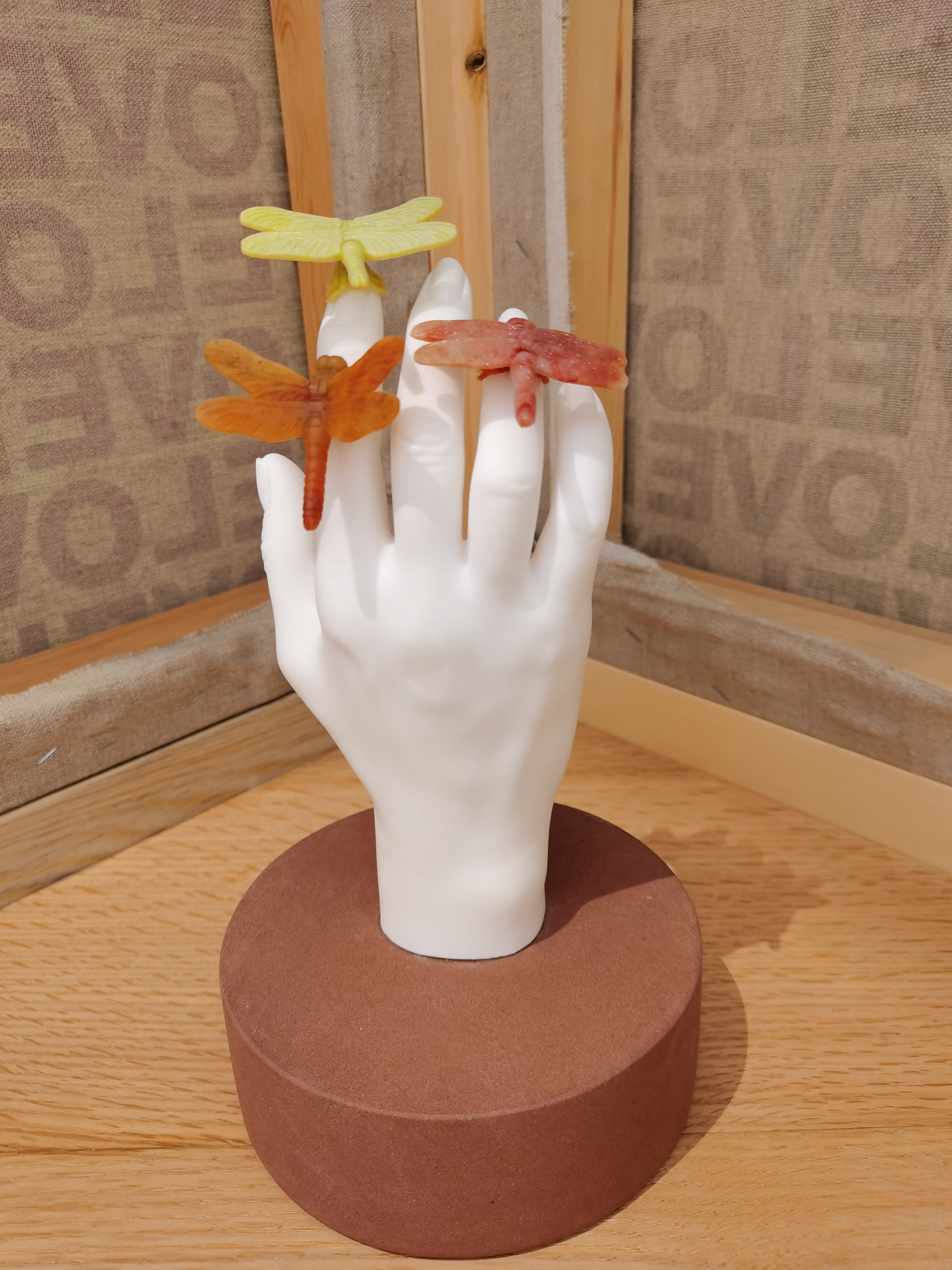
“The Memories #2”
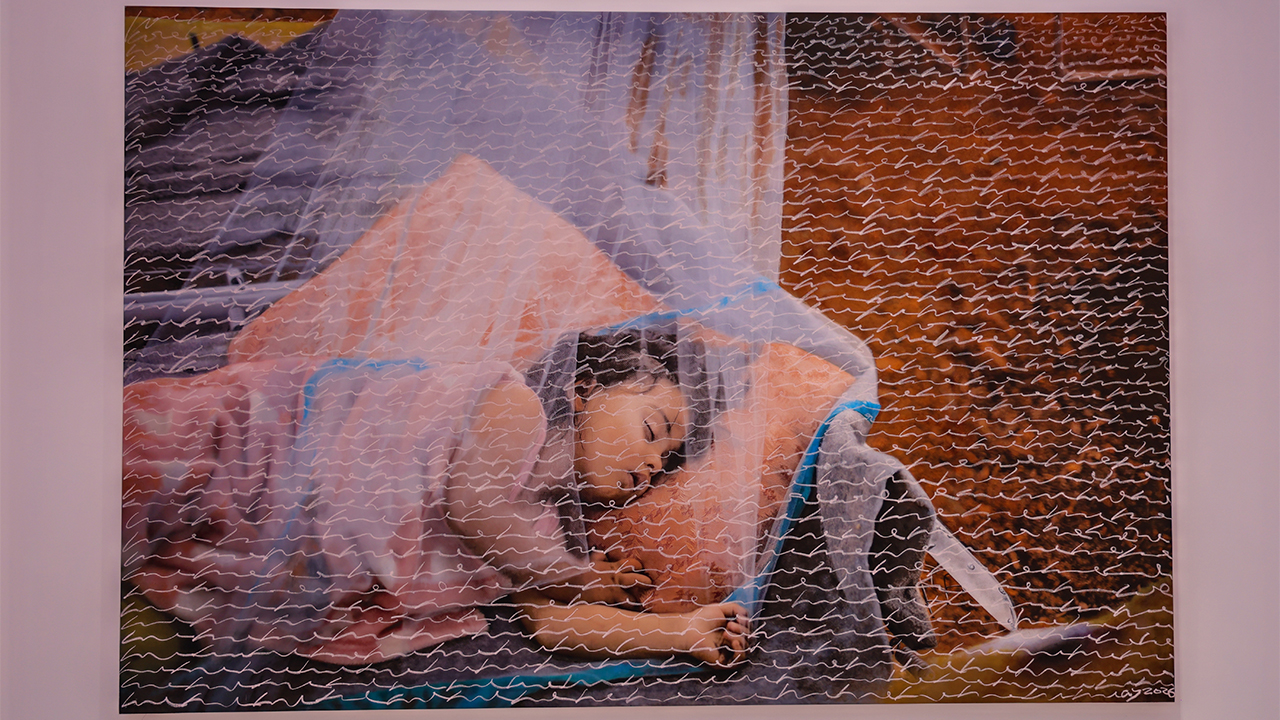
The third section, “Walking in the Sun,” is grounded in Ai’s reflections on modernity and globalization. It focuses on the plight of refugees during wartime and the conditions of individual existence. Through core themes such as love and devotion, the section examines the value and meaning of an individual’s life in the present moment.
Curator He Guiyan explained that the exhibition title, “Walking in the Sun,” is inspired by the ideas of French philosopher Michel Foucault. Its core message is that in the end, all confusion and questions can be resolved through walking under the sun.
Ai believes that walking is more than movement — it is an ongoing confrontation between the self, reality and the era; and she expresses these feelings through both music and visual art.
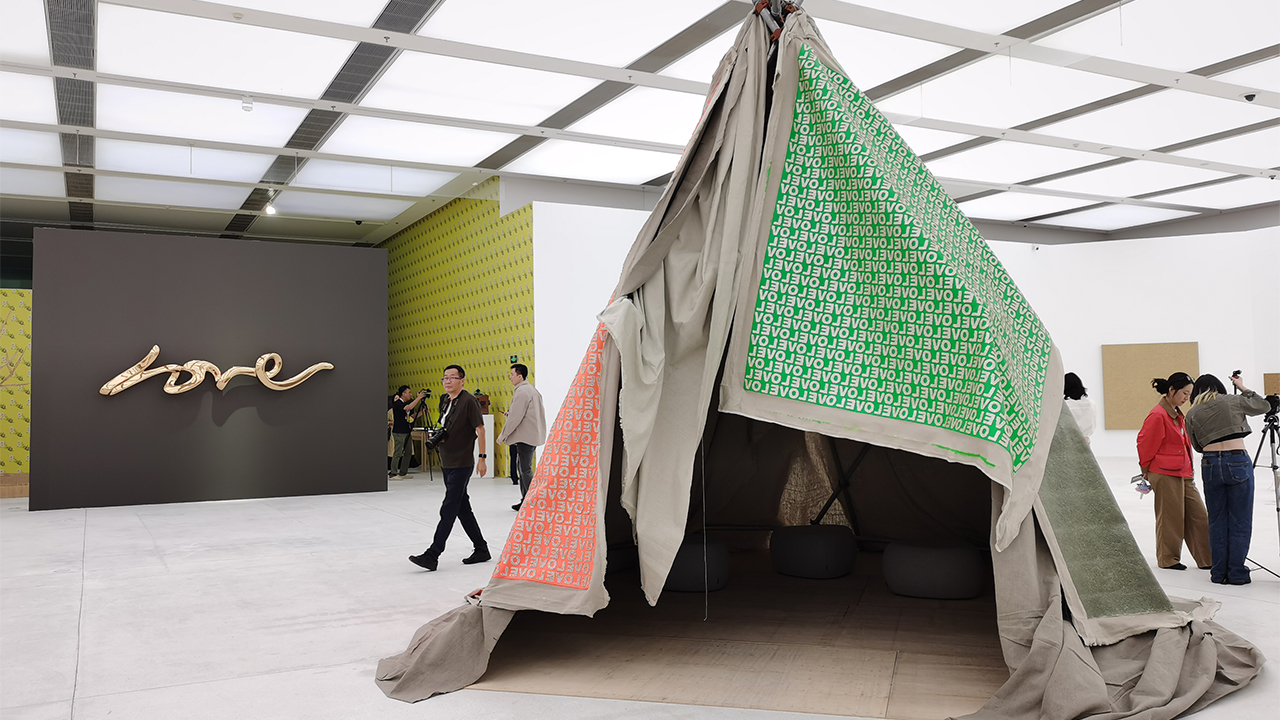
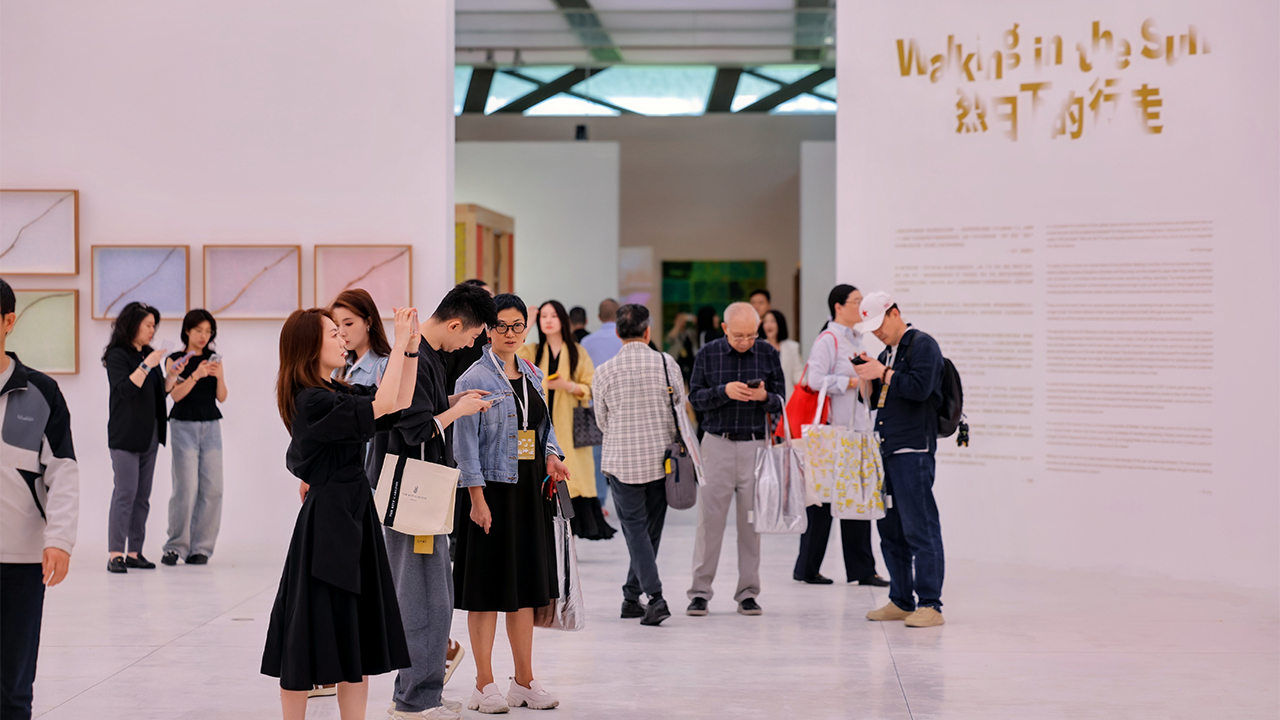
A glance at the exhibition.
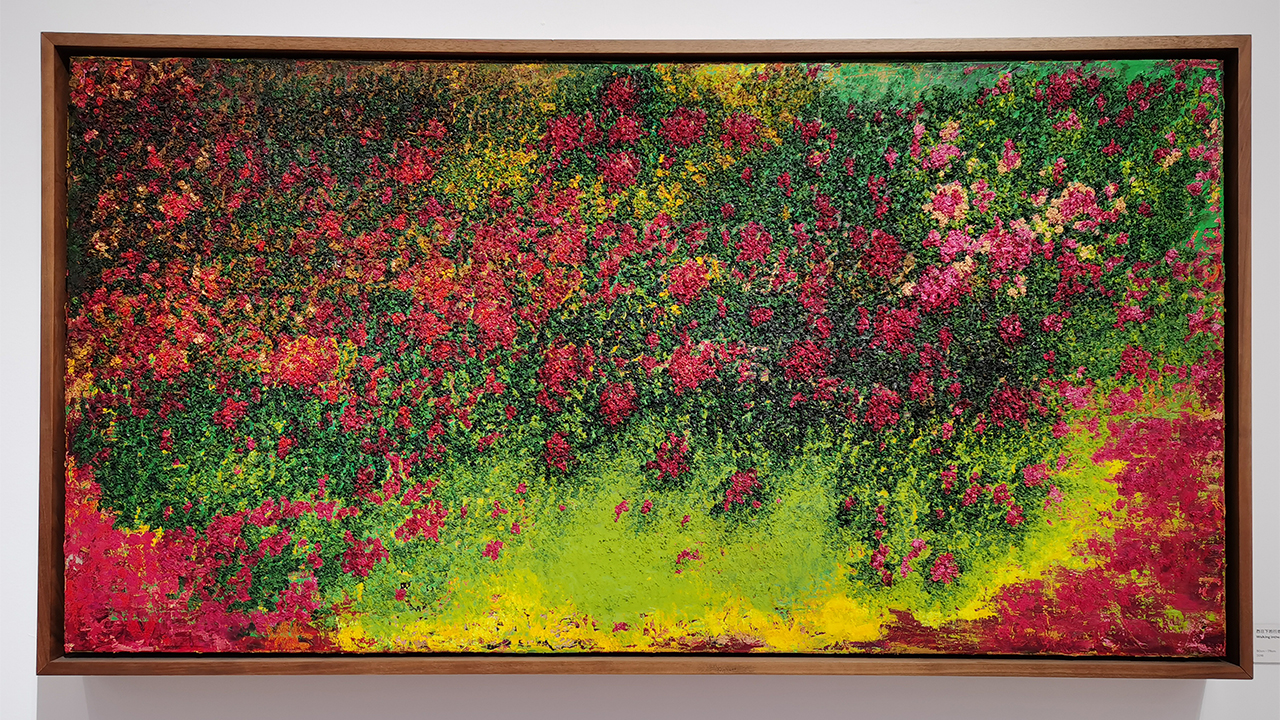
“Walking in the Sun #6”
Yan Weixin, director of MOCAUP, said that Ai began her journey from Shenyang, later moved to other Chinese cities, and ultimately entered a broader world. This geographic trajectory, he said, is not only an unfolding of personal experience, but also an important part of her artistic practice.
“Walking, love and power form the exhibition. As a cross-disciplinary artist, Ai Jing transitioned from music to visual art, integrating multiple media — painting, installation and video — into a multisensory expression,” Yan said.
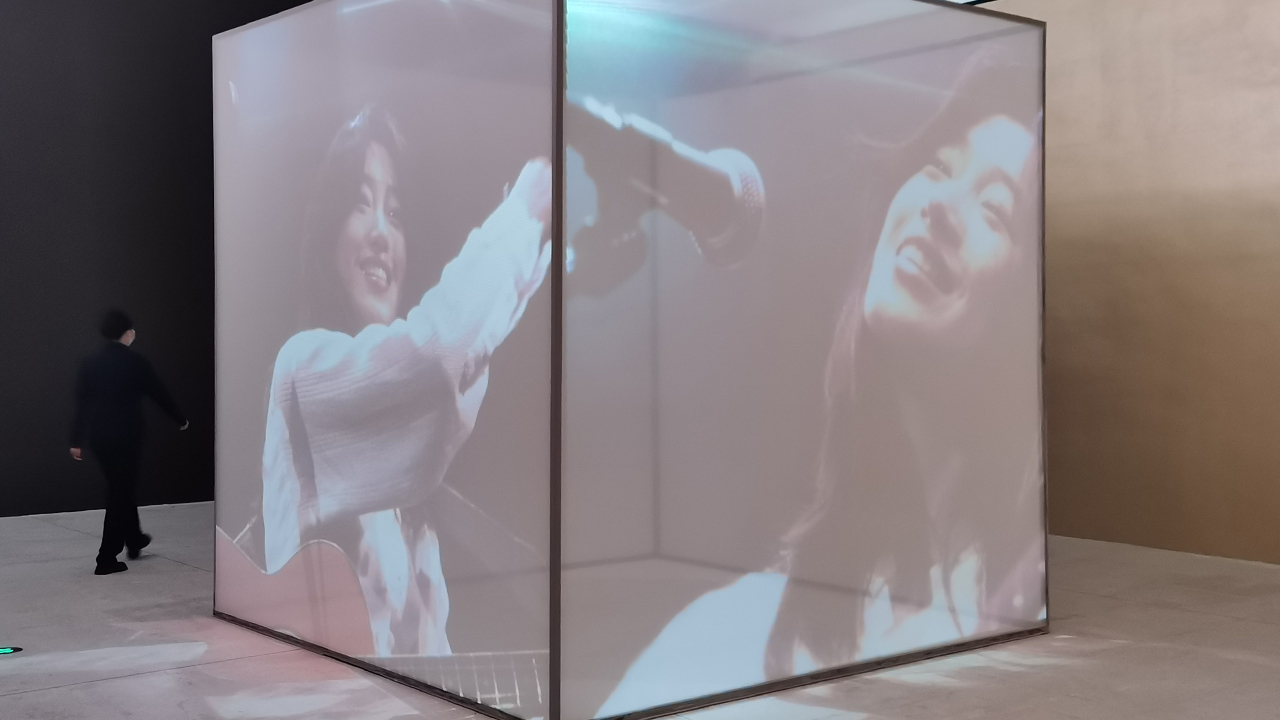
A video installation features Ai Jing.
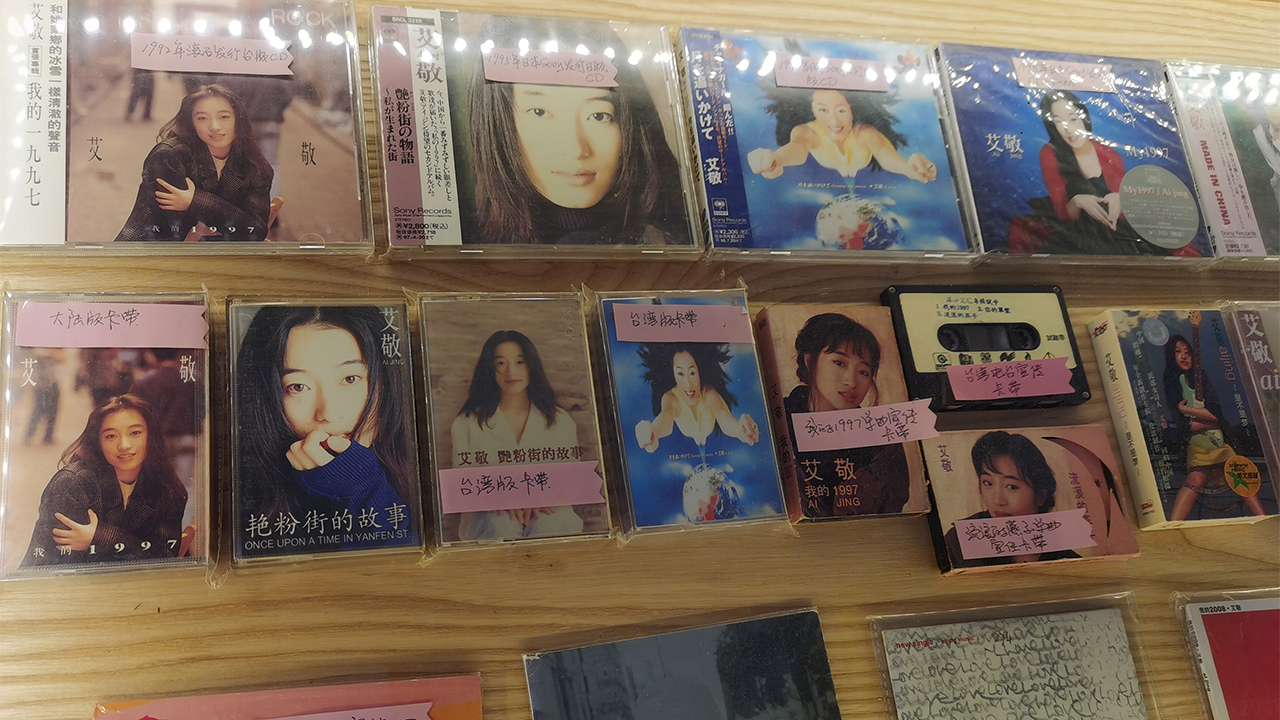
Ai Jing’s cassettes and CDs on display.
Ai has released five solo albums and several EP singles. Many of her songs tell her stories in a smooth, lyrical way, filled with a deep sense of drifting — earning her the nickname “the Wandering Swallow.” Her music, expressed through a micro-perspective on personal emotions, resonates strongly with listeners and continues to inspire them.
Ai began painting in 1999 and participating in exhibitions as an artist in 2007. She has also published several books.
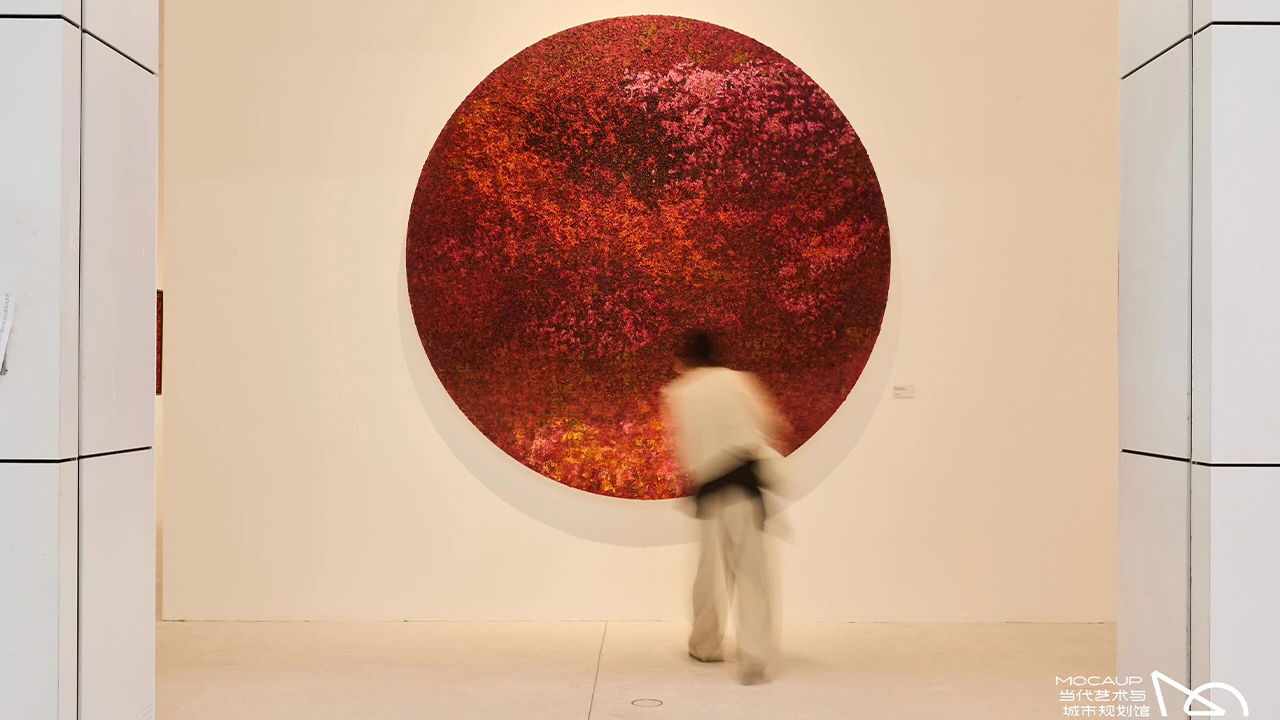
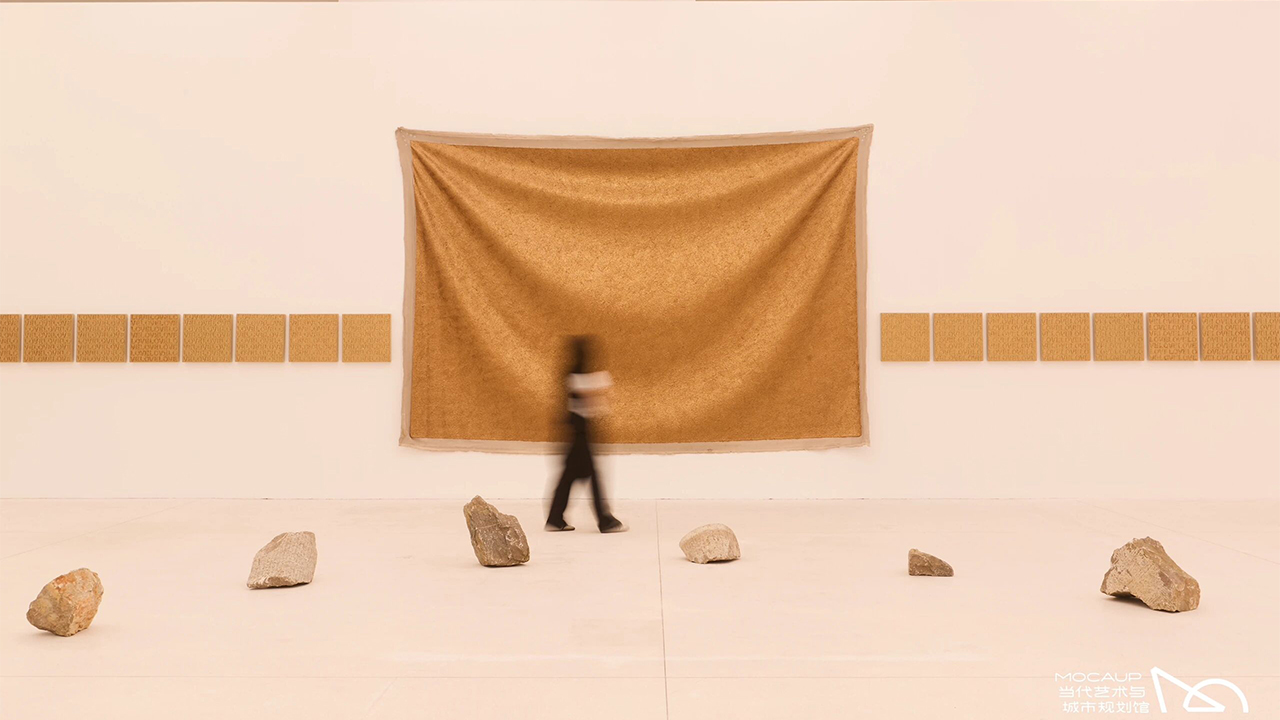
More photos from the organizers:
Dates: Through June 21
Hours: 10 a.m.-6 p.m., closed Mondays
Tickets: 68-88 yuan
Venue: Shenzhen Museum of Contemporary Art and Urban Planning, Futian District (深圳市当代艺术与城市规划馆)
Metro: Line 3 or 4 to Children’s Palace Station (少年宫站), Exit A2