
 Share
Share


 Print
PrintFrom Shenzhen to Los Angeles: Young scholars find shared rhythms in culture and science
Writer: Zhang Yu | Editor: Zhang Chanwen | From: Original | Updated: 2026-03-18
In the heart of China's most dynamic tech hub, a conversation between two young scholars is redefining what it means to be "open." As Shenzhen takes center stage during the “APEC China 2026," the city is not only showcasing its technological prowess but also its ability to foster genuine human connection across 10,000 kilometers of Pacific Ocean.
During the International Young Scholars Exchange Week at Shenzhen University of Advanced Technology (SUAT), Xie Meiyi, a local student, and Sydney Reil, a visiting scholar from Los Angeles, discovered that their cities — though worlds apart in geography — share a surprising kinship in spirit, diversity, and the pursuit of innovation.
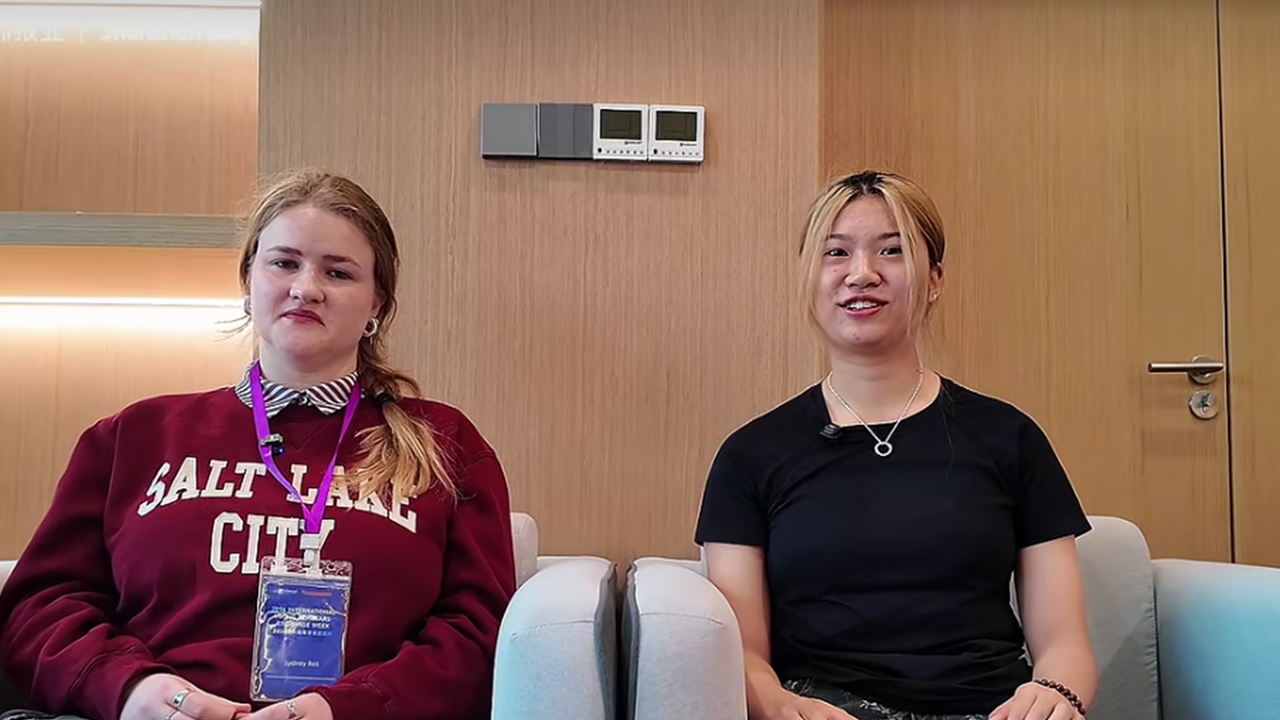
Xie Meiyi (R) and Sydney Reil exchange views during the International Young Scholars Exchange Week. File photos
For Reil, the journey has been as much about exploring laboratories as it has been about exploring alleyways. "It's been a really great experience to get together with neuroscientists from around the world, and to experience Chinese academic culture," she said.
Her itinerary included tours of cutting-edge neuroscience facilities, but also visits to Nantou Ancient City, Zhongshan Park, and the bustling shopping streets of Dongmen. "I think Shenzhen became very modern and very advanced while still holding onto its roots and culture," she observed. "That was really cool."
Xie offered a nuanced view of her city, noting the striking contrasts that define it. "In Nanshan, the CBD area has high buildings, grand and bright. But there are also urban villages where you can see the hustle and bustle of ordinary people's lives," she said. It's this layering of old and new, tradition and futurism, that gives Shenzhen its unique character.
When asked about Los Angeles, Reil's eyes lit up. "LA is massive, very big. It's really beautiful. It has so much diversity, so many different types of food and people from not only all over our country, but also from all over the world." Xie nodded in recognition, adding with a smile, "There are many movies and songs about LA. So we can complement each other in this aspect."
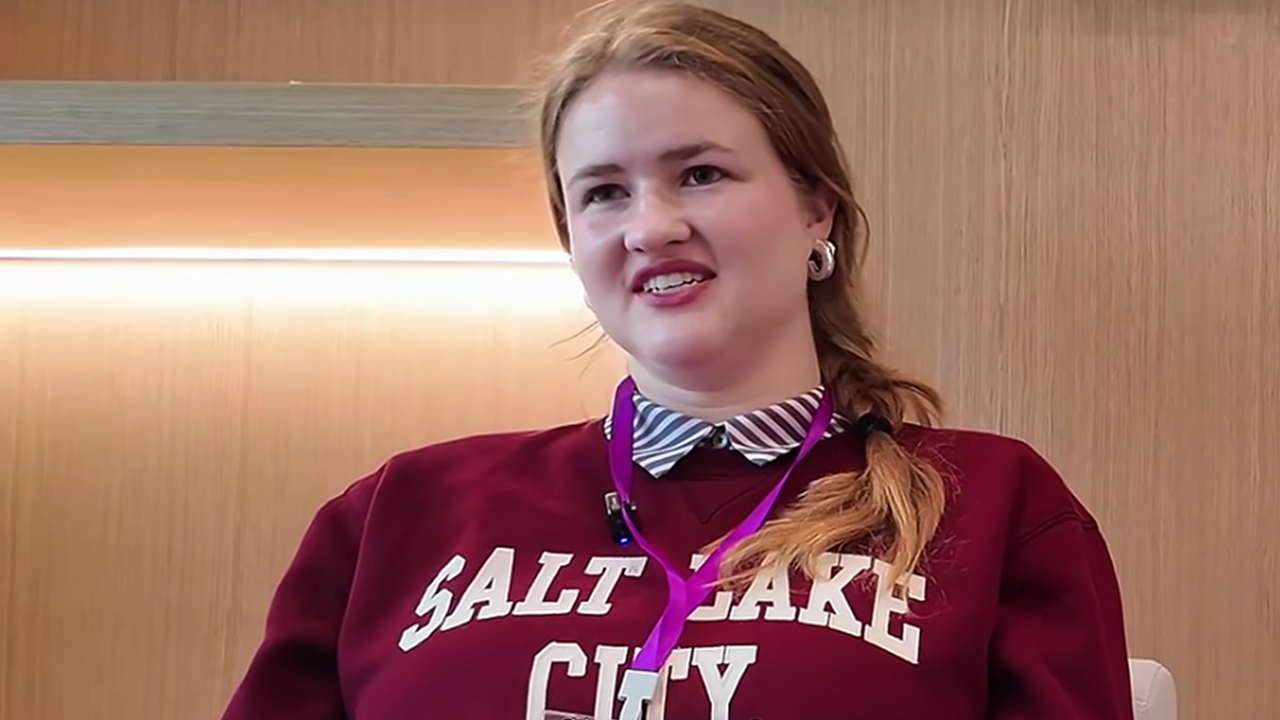
Sydney Reil discusses openness.
But beyond sightseeing and pop culture, the two scholars found common ground in a shared philosophy: that openness is the engine of progress. "It's going into every situation with the intention to learn something and to be open to new ideas," Reil said. "Openness is the only way you can have true innovation, and cooperation is also a key component of that. I think I can speak for the youth of LA that we're very happy that goal is being pursued at this APEC meeting."
Xie expanded on that idea, framing openness as a value that scales — from global initiatives to personal encounters. "Openness can be at different levels," she explained. "It can be big, like the Belt and Road Initiative and the APEC meeting. Or it can be small, like this exchange, to experience different cultures. That is also a kind of openness."
Perhaps the most delightful cultural discovery came when the conversation turned to food and street life. Reil recounted a surprising sight: outdoor nail salons in Shenzhen, where locals get manicures in public spaces. "I almost got my nails done just because it looked so fun," she laughed.
She also drew a playful comparison between Shenzhen's night markets and a beloved market back home. "We have this one really great night market in LA called the 626 Night Market. It's like an Americanized version of a Chinese night market." The familiarity of the experience, she said, made her feel unexpectedly at home.