
 Share


 Print
International students explore Chinese culture through winter camp
Writer: | Editor: Zhang Chanwen | From: Shenzhen Daily | Updated: 2026-01-16
International students at Harbin Institute of Technology, Shenzhen, explored traditional Chinese arts and folk performances during a winter camp in January, building cross-cultural connections through hands-on activities and teamwork.
The “Art & Motion: Winter Cultural Experience for International Students” camp was held on Jan. 12 and 14, 2026, offering students from different countries an opportunity to experience Chinese culture and share their own cultural perspectives.
Jointly organized by the university’s International Education Center and College of Future Studies, the program featured four sessions covering calligraphy, paper-cutting, dragon dance and lion dance. Through these activities, participants discovered the artistic traditions and festive customs associated with Chinese New Year while learning from one another.
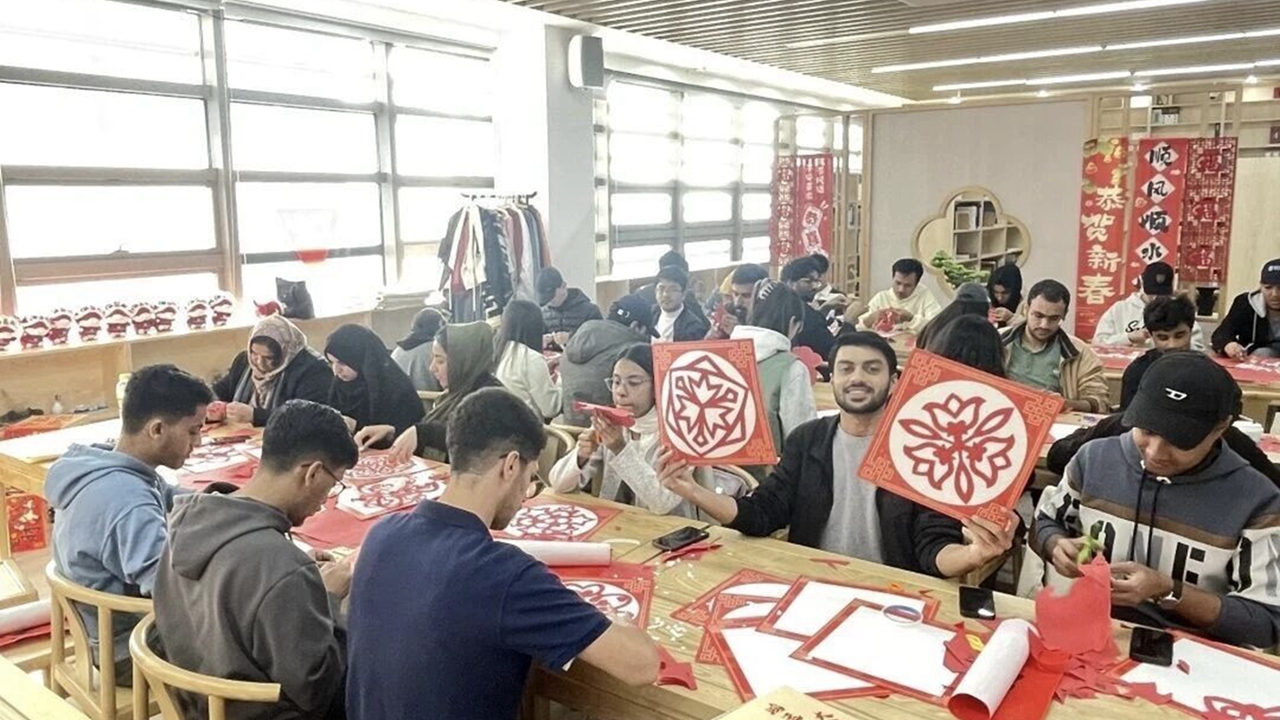
A paper-cutting workshop. Courtesy of event organizer
The first day focused on calligraphy and paper-cutting. Instructors introduced the history and cultural significance of Chinese calligraphy, tracing the evolution of its scripts from ancient inscriptions to regular, running and cursive styles. Students then practiced writing the Chinese character “福,” meaning blessing or good fortune, on red paper.
In the paper-cutting workshop, participants created designs featuring the zodiac horse, while some incorporated elements from their own cultures. As they exchanged ideas and helped one another with their creations, the students found opportunities to connect through art despite their different linguistic and cultural backgrounds.
On Jan. 14, the camp shifted from traditional crafts to folk performance. After learning about the origins and symbolism of dragon and lion dances, students worked in groups to try the two art forms themselves.
The dragon dance required participants to coordinate their movements to bring the long dragon prop to life, while the lion dance group combined traditional movements with modern dance steps. Although most were beginners, repeated practice and mutual encouragement helped them perform with increasing confidence.
At the end of the camp, participants displayed their artwork and shared their experiences. The exchange allowed them to learn about Chinese traditions while gaining insights into the cultural backgrounds of their peers.